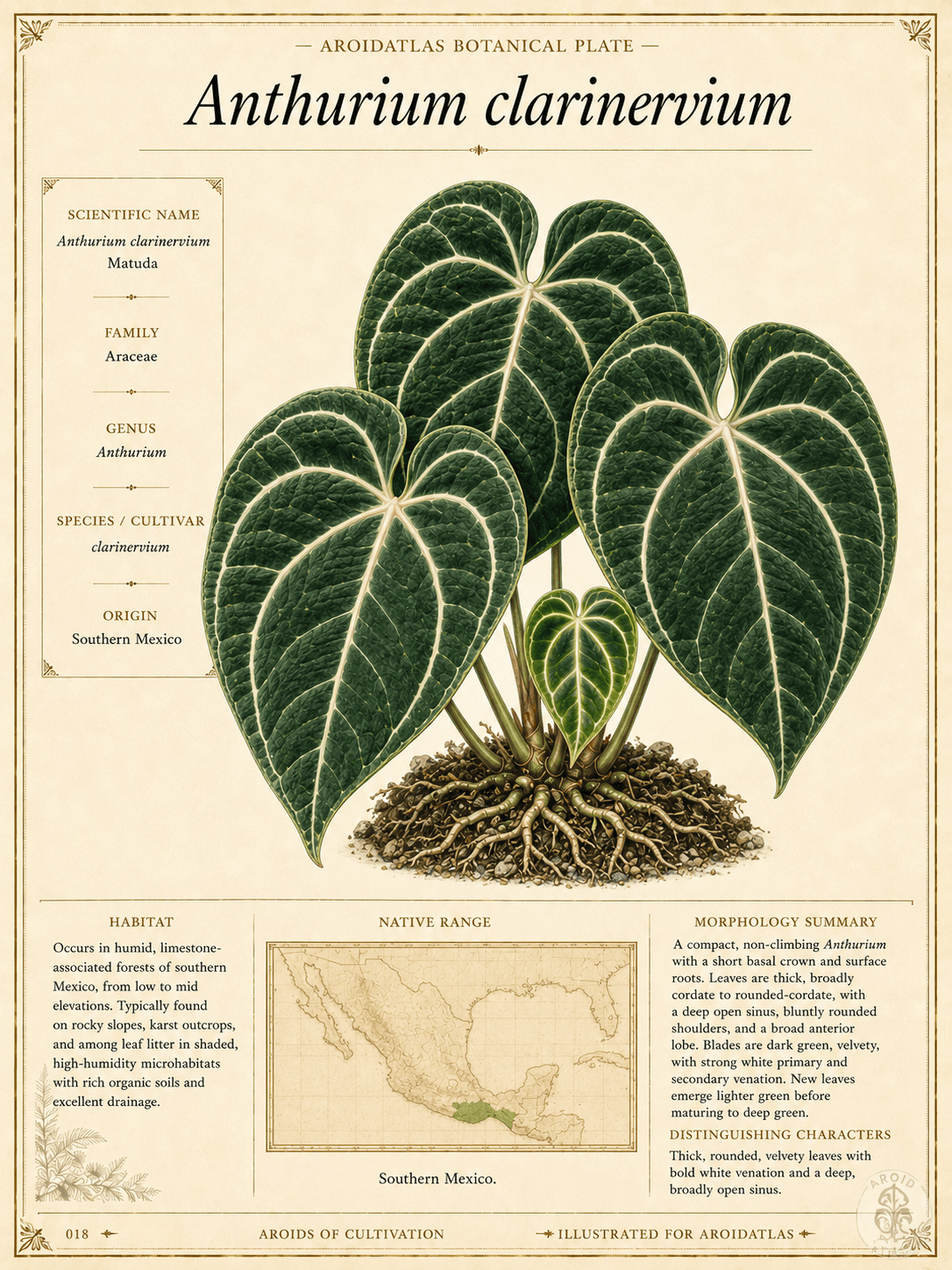
Scroll to explore forms of Anthurium clarinervium
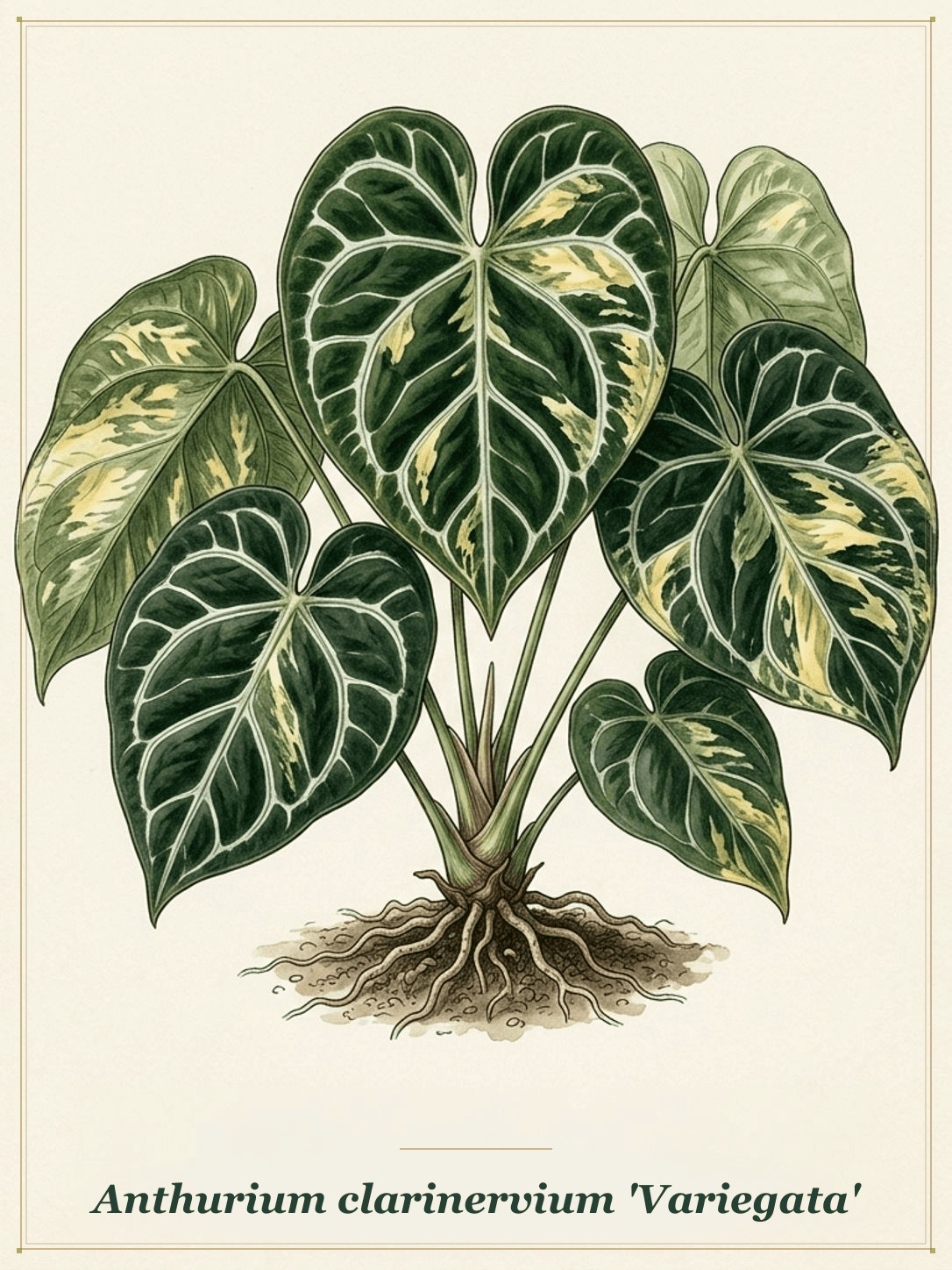
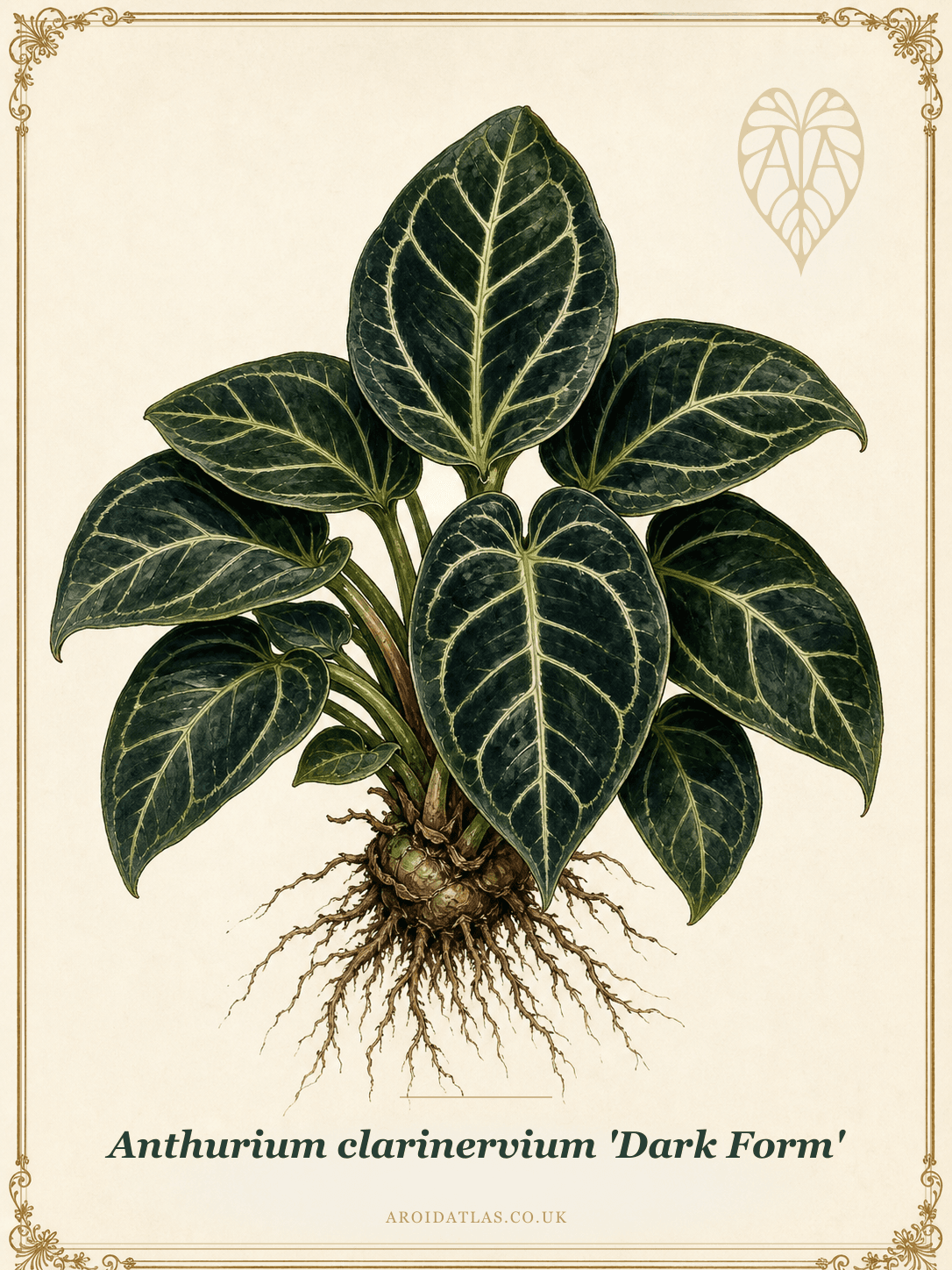
Full Specimen Plate
Anthurium clarinervium 'Variegata'
Variegated Velvet Cardboard Anthurium
Aroid Atlas Price Guide
Select Plant Size
Pricing Data Key
Anthurium clarinervium 'Variegata' Morphology
About Anthurium clarinervium 'Variegata'
Anthurium clarinervium 'Variegata' is a variegated form of the popular Mexican species, layering irregular cream-yellow patching over the deeply cordate, velvety blade already famous for its stark, geometric white venation. The result is a leaf with three-way contrast (dark green ground colour, bright white veining, and cream sectorial variegation) that reads as one of the most visually complex leaves in cultivation. Like most variegated aroids it grows more slowly than the straight species, and pale sectors are prone to scorch if light runs too bright, so careful placement is essential. Stable, well-variegated specimens remain scarce even among collectors who already grow the standard clarinervium.
Native Range
Mexico
Market Analysis
Anthurium clarinervium 'Variegata' Price Guide & Auction Value
Historical eBay auction metrics and live retailer listings updated weekly.
No eBay auction history available yet. Data is collected automatically as sales appear on eBay UK.
Before You Buy
Shared checklist for Anthurium clarinervium and its cultivated forms
- Inspect the venation for a crisp, unbroken silver-white pattern; faded or patchy venation suggests a weaker specimen.
- Check for unblemished, symmetrical cordation, which commands the highest resale value.
Propagation Guide
How to Propagate Anthurium clarinervium 'Variegata'
Shared across every form of Anthurium clarinervium — see this form's own Morphology for variegation-specific propagation notes.
6-9 months
Cultivar character is preserved through vegetative cuttings
Slow to establish; offsets from the base are more reliable than stem cuttings on this species.
Care Guide
Anthurium clarinervium 'Variegata' Care Guide & Growing Conditions
General care shared across all forms of Anthurium clarinervium — cultivated forms may need brighter light or higher humidity than the plain species; check this form's Quick Facts above.
Well-draining aroid mix: potting compost, perlite and orchid bark in roughly equal parts. Avoid overly chunky mixes that dry too fast for its slow root system.
Water when the top 3-4cm of substrate is dry. Slow growth means it uses water more slowly than fast-growing Anthurium; err on the side of underwatering.
70-80%. The velvety leaf surface is prone to fungal spotting if humidity is high but airflow is poor.
Low-nitrogen liquid fertiliser at quarter strength every 4-6 weeks; overfeeding pushes soft growth that loses the leaf's stiff, coriaceous texture.
Every 2-3 years. A compact rosette does not need frequent repotting.
Common Problems
Loss of leaf sheen and geometric venation contrast
Insufficient light
Move to a brighter spot with strong indirect light; venation contrast is most pronounced under good light.