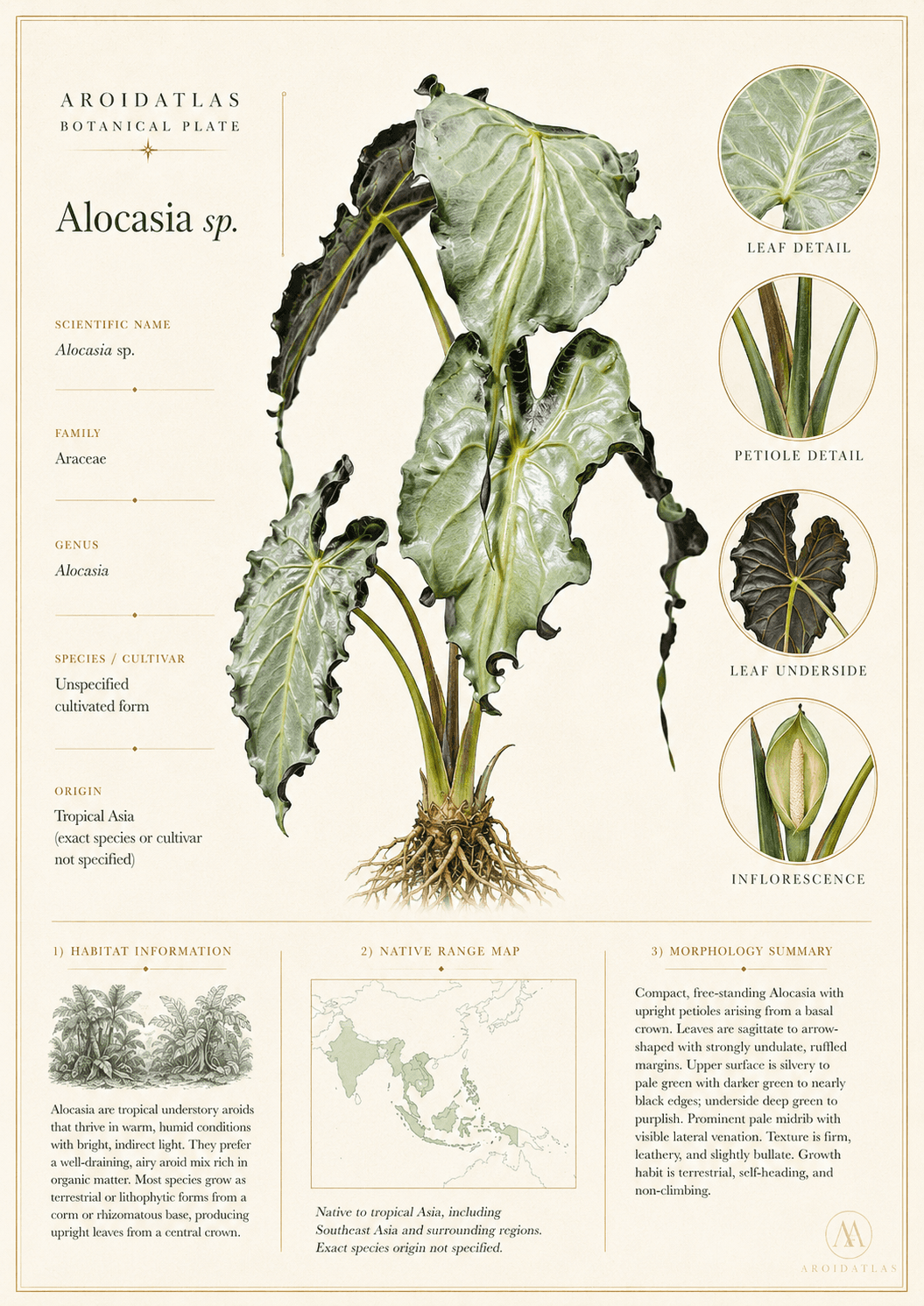
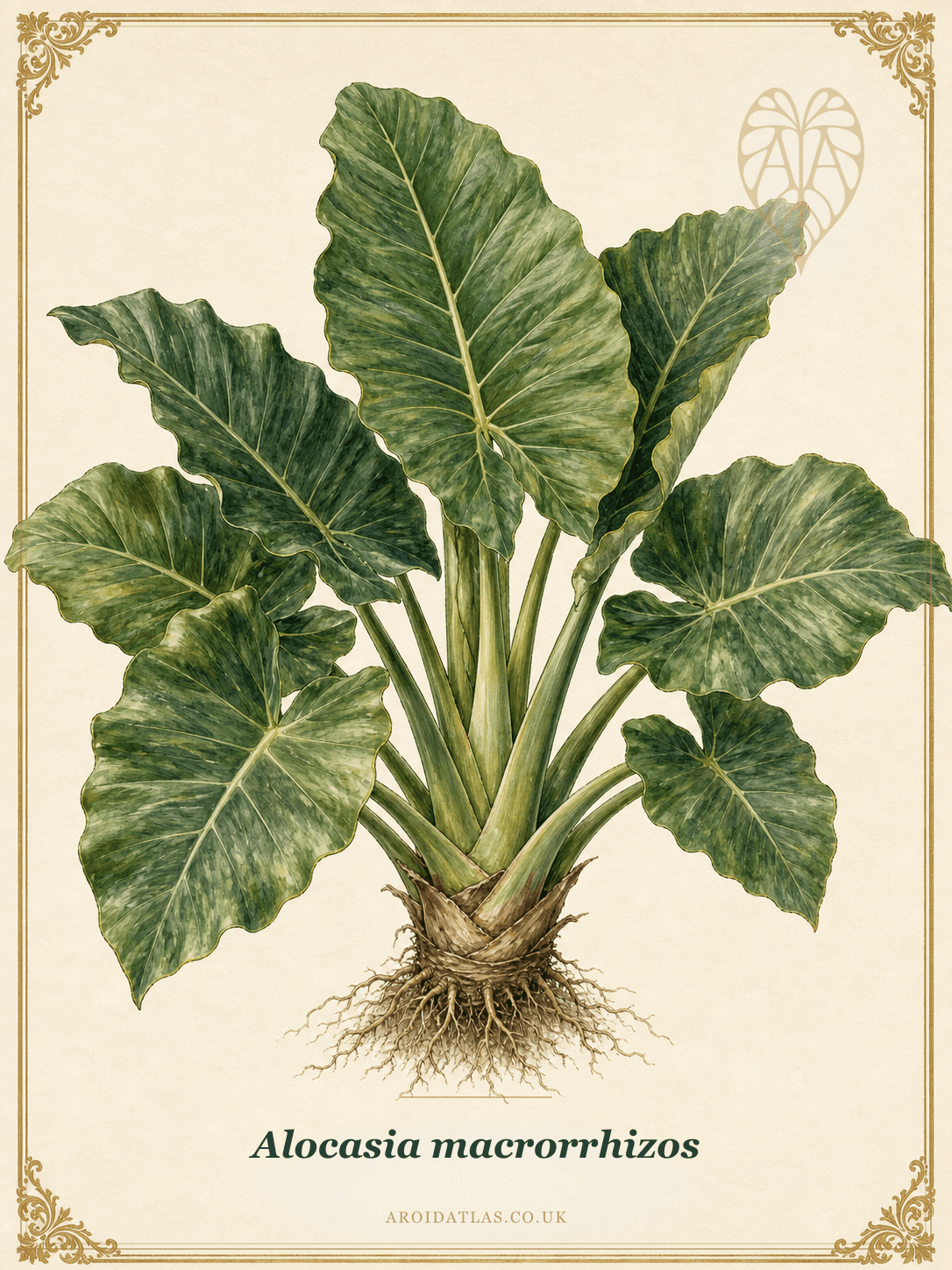
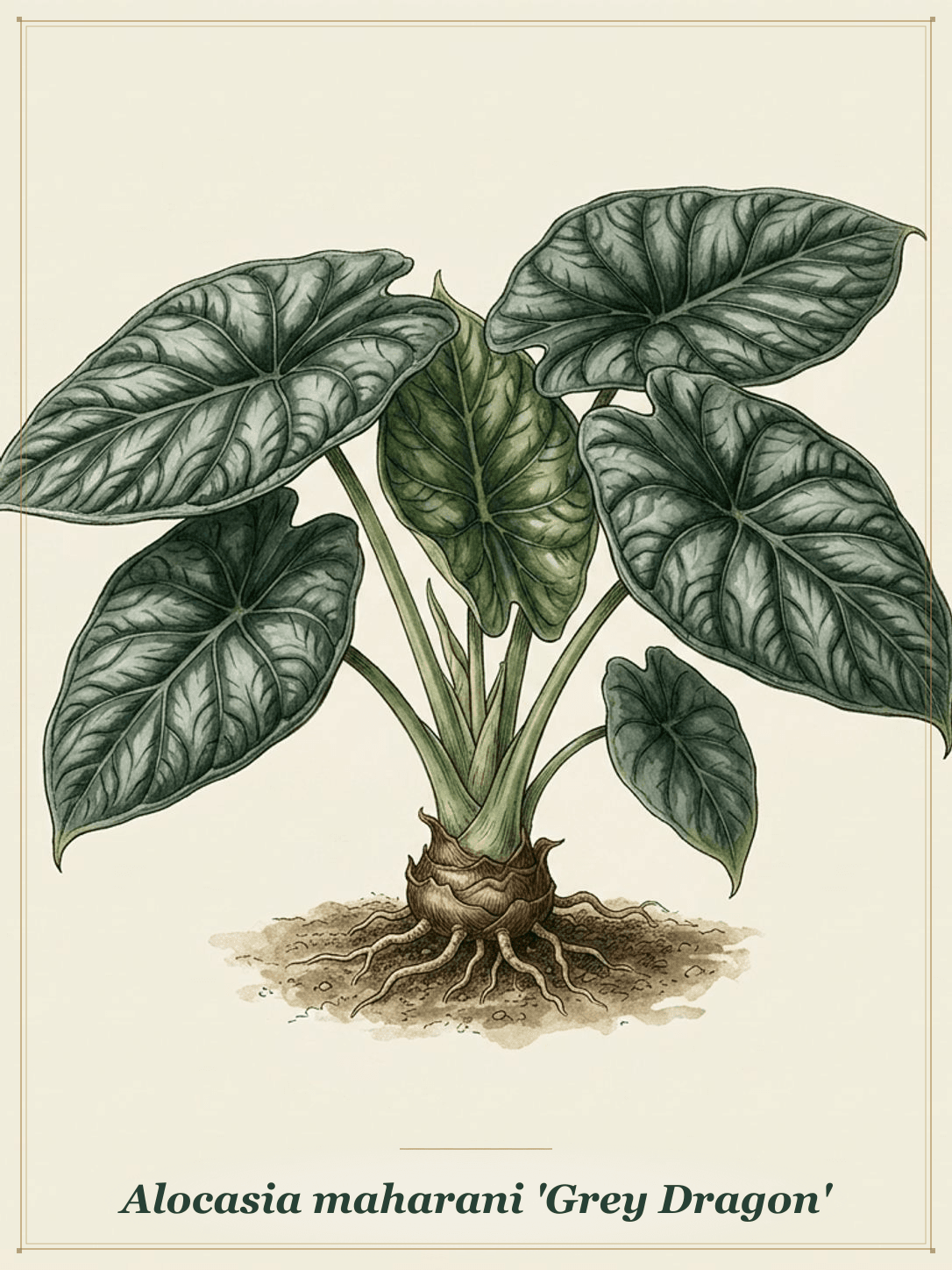
Scroll to explore forms of Alocasia chaii
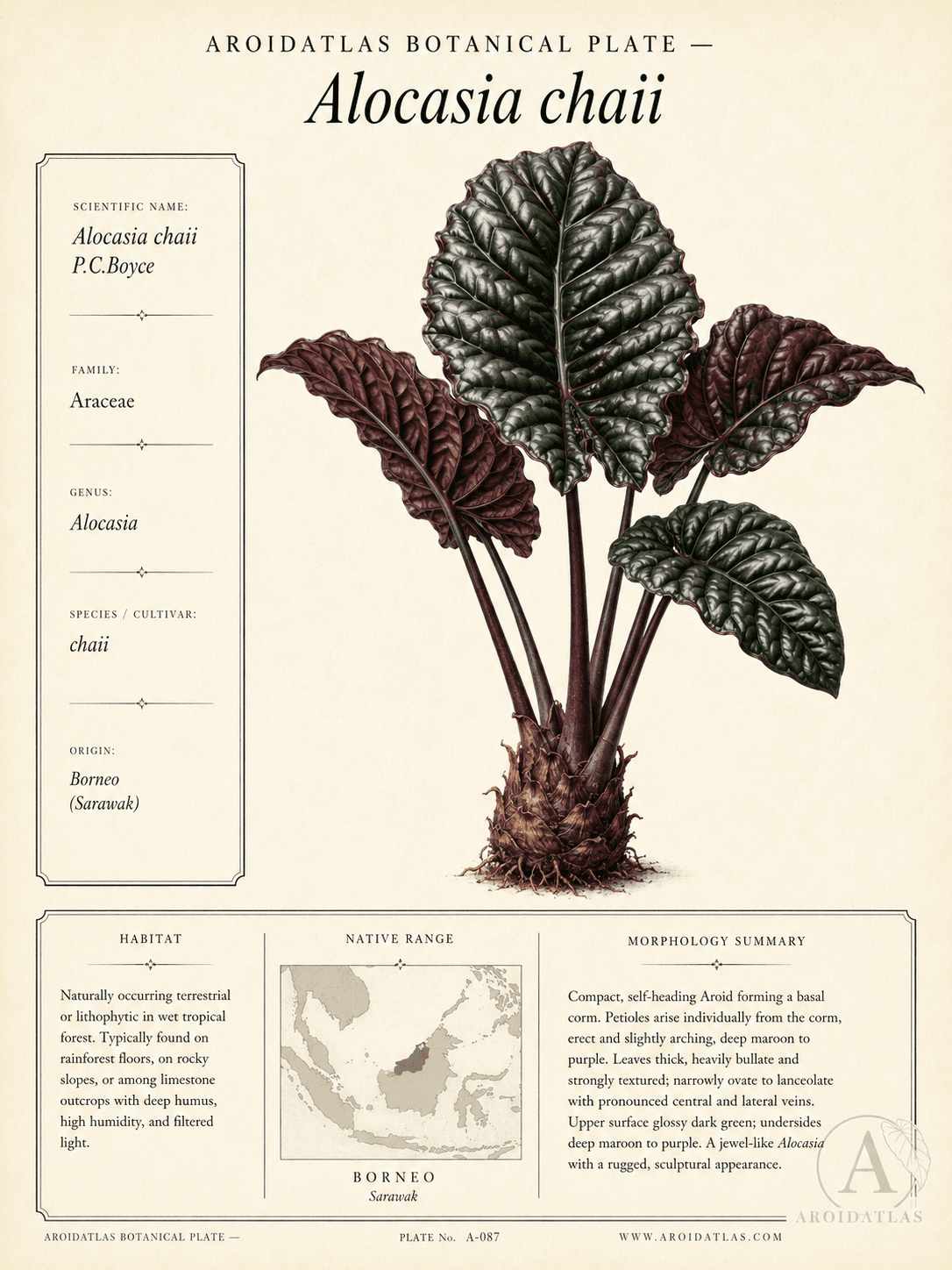
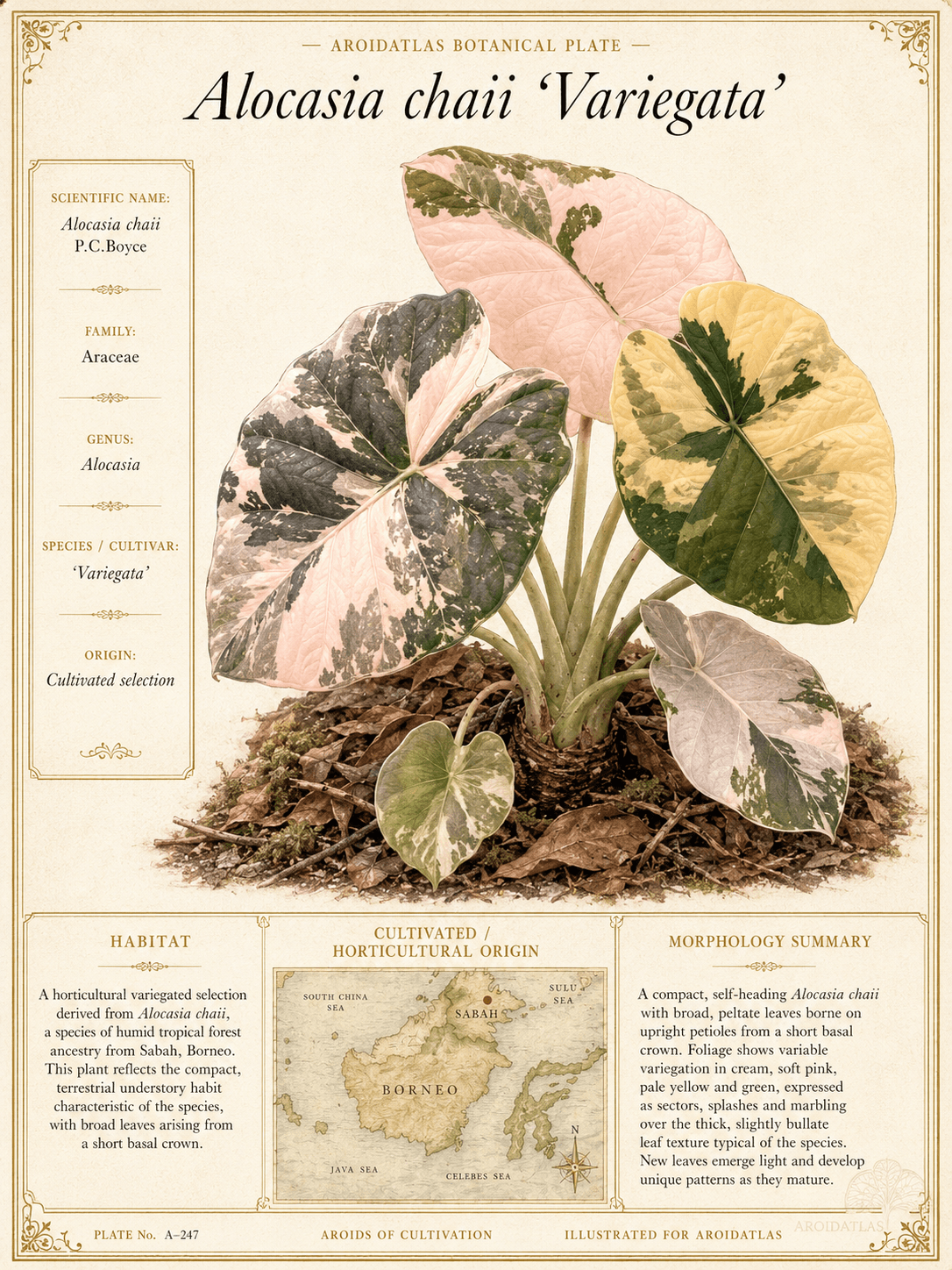
Full Specimen Plate
Alocasia chaii 'Variegated'
Chaii Variegated Alocasia
Alocasia chaii P.C.Boyce Morphology
About Alocasia chaii P.C.Boyce
Alocasia chaii 'Variegated' is a horticultural selection derived from Alocasia chaii, native to the humid tropical forests of Sabah, Borneo. This compact, self-heading plant has variable variegation that appears as sectors, splashes, and marbling in cream, soft pink, and pale yellow. Inheriting the terrestrial understory habits of its parent species, it produces broad, peltate leaves with a slightly bullate texture. As a rare mutation, each new leaf shows an unpredictable pattern.
Native Range
Sabah, Malaysian Borneo
Market Analysis
Alocasia chaii P.C.Boyce Price Guide & Auction Value
Historical eBay auction metrics and live retailer listings updated weekly.
No eBay auction history available yet. Data is collected automatically as sales appear on eBay UK.
Before You Buy
Shared checklist for Alocasia chaii and its cultivated forms
- Check the corm is firm — a soft or shrunken corm indicates dehydration or rot and is very difficult to recover
- Verify there is at least one established leaf; avoid bare corms from unknown sellers unless you have experience germinating alocasia corms
- Spider mites are the most common pest: inspect leaf undersides for fine webbing or stippling, especially in dry indoor environments
- Alocasias can enter dormancy when stressed by shipping — a plant arriving with no leaves but a firm corm is not necessarily dead
Propagation Guide
How to Propagate Alocasia chaii P.C.Boyce
Shared across every form of Alocasia chaii — see this form's own Morphology for variegation-specific propagation notes.
Wait for the mother plant to produce corms or pups before dividing. Larger, well-established plants produce offsets most readily. Alocasias do not propagate reliably from stem cuttings.
Care Guide
Alocasia chaii P.C.Boyce Care Guide & Growing Conditions
General care shared across all forms of Alocasia chaii — cultivated forms may need brighter light or higher humidity than the plain species; check this form's Quick Facts above.
Well-draining loamy mix: 40% potting compost, 30% perlite, 20% orchid bark, 10% worm castings. Alocasias need moisture retention unlike most aroids but still require good drainage.
Keep evenly moist during the growing season — never waterlogged, never bone dry. Check soil every 3–4 days in summer. Reduce significantly in winter when growth slows.
60–80%. Lower humidity causes brown leaf edges; very low humidity combined with dry compost will trigger dormancy.
Balanced fertiliser at half strength every 2 weeks during spring and summer. Stop feeding in winter.
Every 12–18 months in spring. Alocasias like being slightly snug in their pots — don't overpot.
Common Problems
Leaves yellowing and dropping
Overwatering, cold temperatures, or natural dormancy
Reduce watering; ensure temperatures stay above 16°C; dormancy is normal in winter
Brown leaf edges
Low humidity or irregular watering
Increase humidity and maintain consistent watering routine
Spider mites
Most common pest; thrive in hot, dry conditions
Mist regularly; treat with neem oil or insecticidal soap; increase humidity