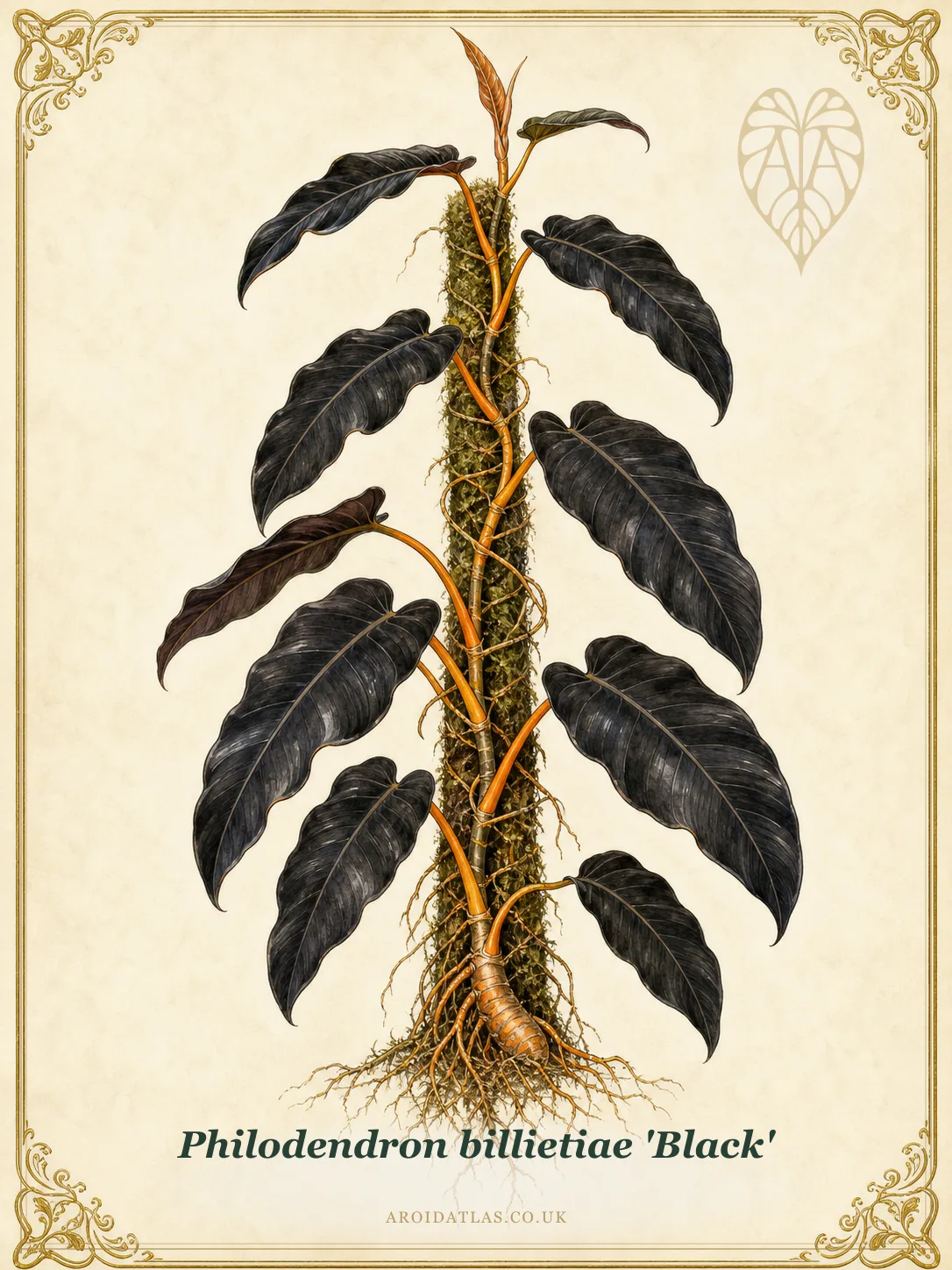
Full Specimen Plate
Philodendron 'Xanadu'
Xanadu Philodendron
- Coir Moss Pole, 120cm (4-Pack)Coco coir totem for climbing aroids to root into as they grow upward.
- Natural Rooting Powder, 3 x 75gRooting hormone powder for stem and leaf cuttings.
- Precision Bonsai Pruning Scissors, 200mmFine-bladed snips for clean node cuts when taking a cutting.
Amazon links — we may earn commission on qualifying purchases.
7cm Target Price
£18.00
Thaumatophyllum xanadu (syn. Philodendron xanadu) Morphology
About Thaumatophyllum xanadu (syn. Philodendron xanadu)
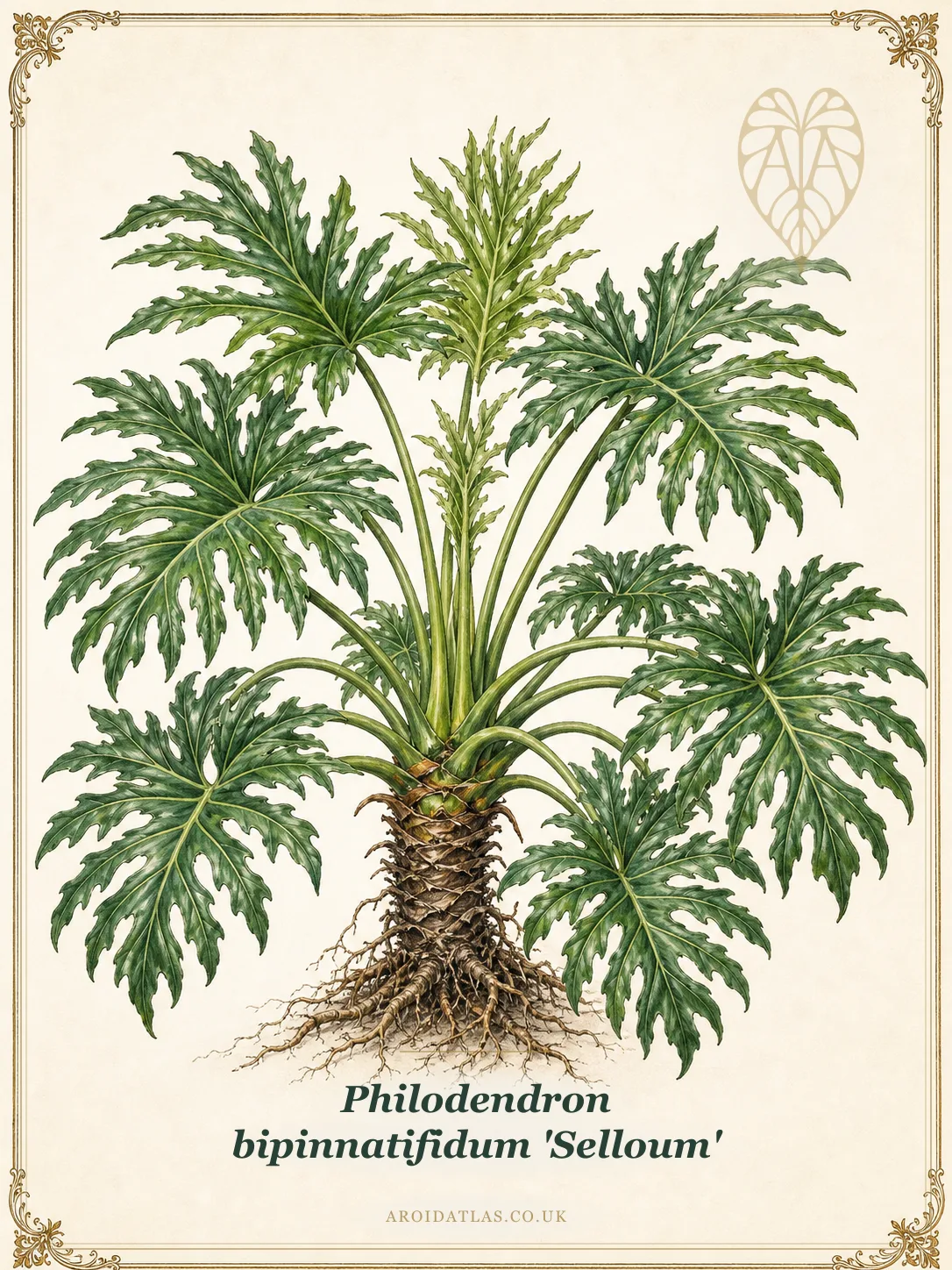
Xanadu is a compact, dwarf relative of the much larger Tree Philodendron ('Selloum'), selected specifically for its manageable size, reaching only around a metre across even at maturity, compared to Selloum's several metres. It forms a dense, self-heading mound with no climbing stem at all, sending out deeply lobed, glossy dark green leaves from a slowly thickening central crown. Its compact size, tolerance of low light, and undemanding care have made it one of the most widely planted landscape and interior-scape aroids worldwide, equally at home in a shopping-centre atrium or a garden border in frost-free climates.
Native Range
Australia
Market Hub
Thaumatophyllum xanadu (syn. Philodendron xanadu) Sold Prices & Live Market
What the Target Price above is based on: eBay sold prices by plant size, live listings, and retailer stock.
No eBay sales recorded yet. Sold listings are collected as they appear on eBay.
Before You Buy
Species-specific things to check when evaluating a listing
- Look for a dense, full crown with several actively unfurling leaves rather than a leggy, sparse one
- Check the substrate isn't waterlogged; this species is generally hardy but resents sitting in soggy soil
- Widely available and inexpensive, so be cautious of inflated prices for an ordinary specimen
- Confirm the root ball is well established if buying a smaller division
Propagation Guide
How to Propagate Thaumatophyllum xanadu (syn. Philodendron xanadu)
Propagation Guide
How to Propagate Thaumatophyllum xanadu (syn. Philodendron xanadu)
2-4 months
Cultivar character is preserved through vegetative cuttings
Mature clumps can be divided at the crown, each division needing its own roots. Basal offsets can also be separated once they have established their own root system.
Care Guide
Thaumatophyllum xanadu (syn. Philodendron xanadu) Care Guide & Growing Conditions
Care Guide
Thaumatophyllum xanadu (syn. Philodendron xanadu) Care Guide & Growing Conditions
Well-draining mix: 50% potting compost, 30% perlite, 20% orchid bark.
Water when the top 4-5 cm of substrate is dry. Tolerant of some inconsistency once established.
Adapts well to average household or outdoor humidity; not a demanding species.
Balanced liquid fertiliser at half strength monthly during spring and summer.
Every 1-2 years, or when the crown outgrows its container; Xanadu stays compact but its root mass is substantial.
Common Problems
Small, sparse leaves
Insufficient light
Move to a brighter spot with indirect light; leaf size and lobing improve markedly with more light
Yellowing lower leaves
Overwatering or natural older-leaf shedding
Check substrate moisture before watering; some lower-leaf loss is normal as the plant matures
Field Reference
In the Wild
Field Reference
In the Wild
Field Notes
The Sensible Sibling
Where the Tree Philodendron sprawls across an entire conservatory given the chance, Xanadu was bred with restraint in mind, the same deeply lobed, glossy foliage in a package that stays under a metre across for most of its life. It is, frankly, everywhere: shopping centres, office lobbies, motorway service station planters. There are worse fates for a plant than being this reliable. A fine choice for anyone who wants the tropical, architectural look of a Selloum without eventually needing to rehome a small tree.
Also in: Arborescent (Meconostigma)
Self-heading species from subgenus Meconostigma that grow a visible trunk rather than climbing, eventually reaching tree-like proportions.