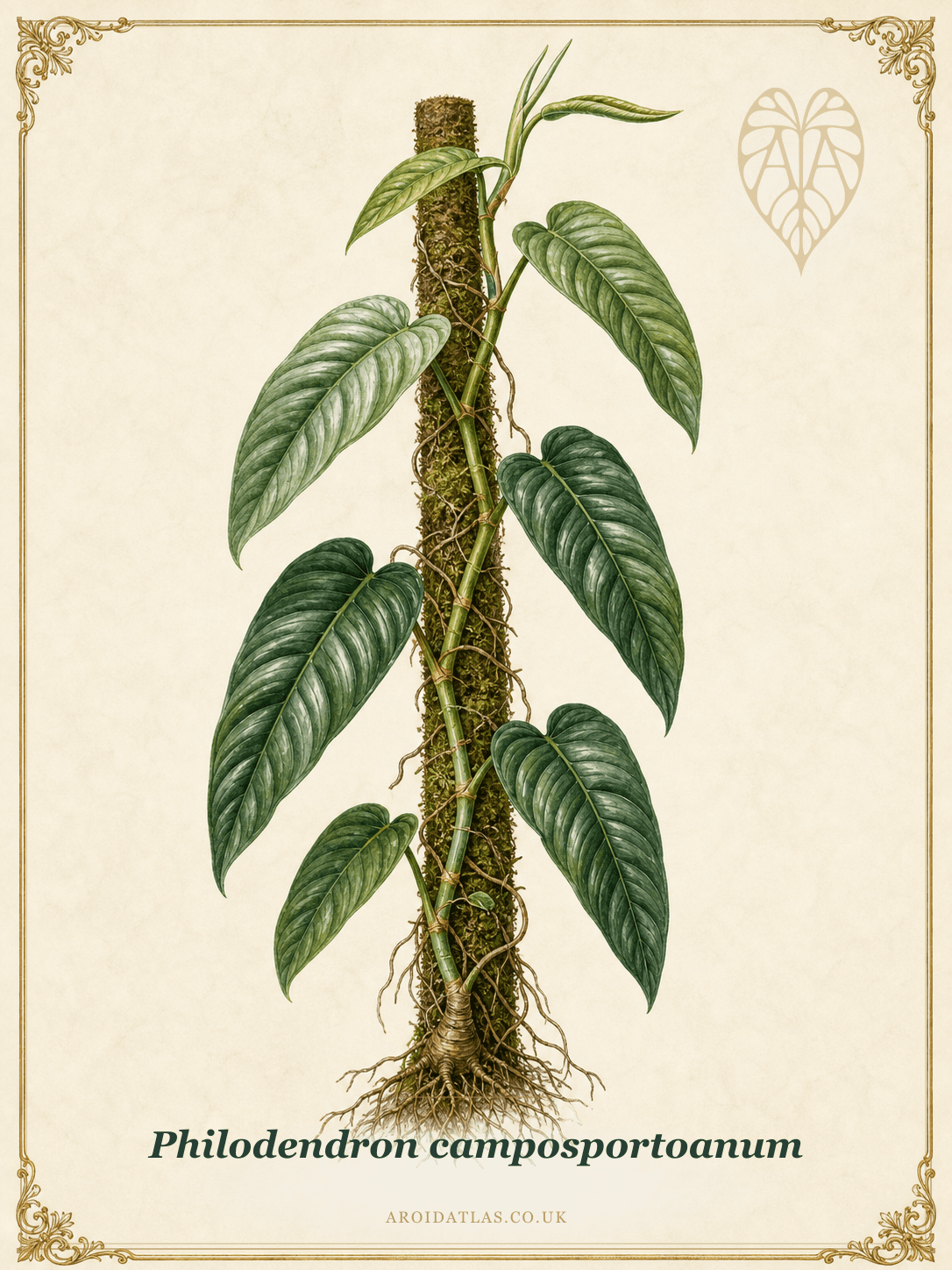
Scroll to explore forms of Philodendron imbe
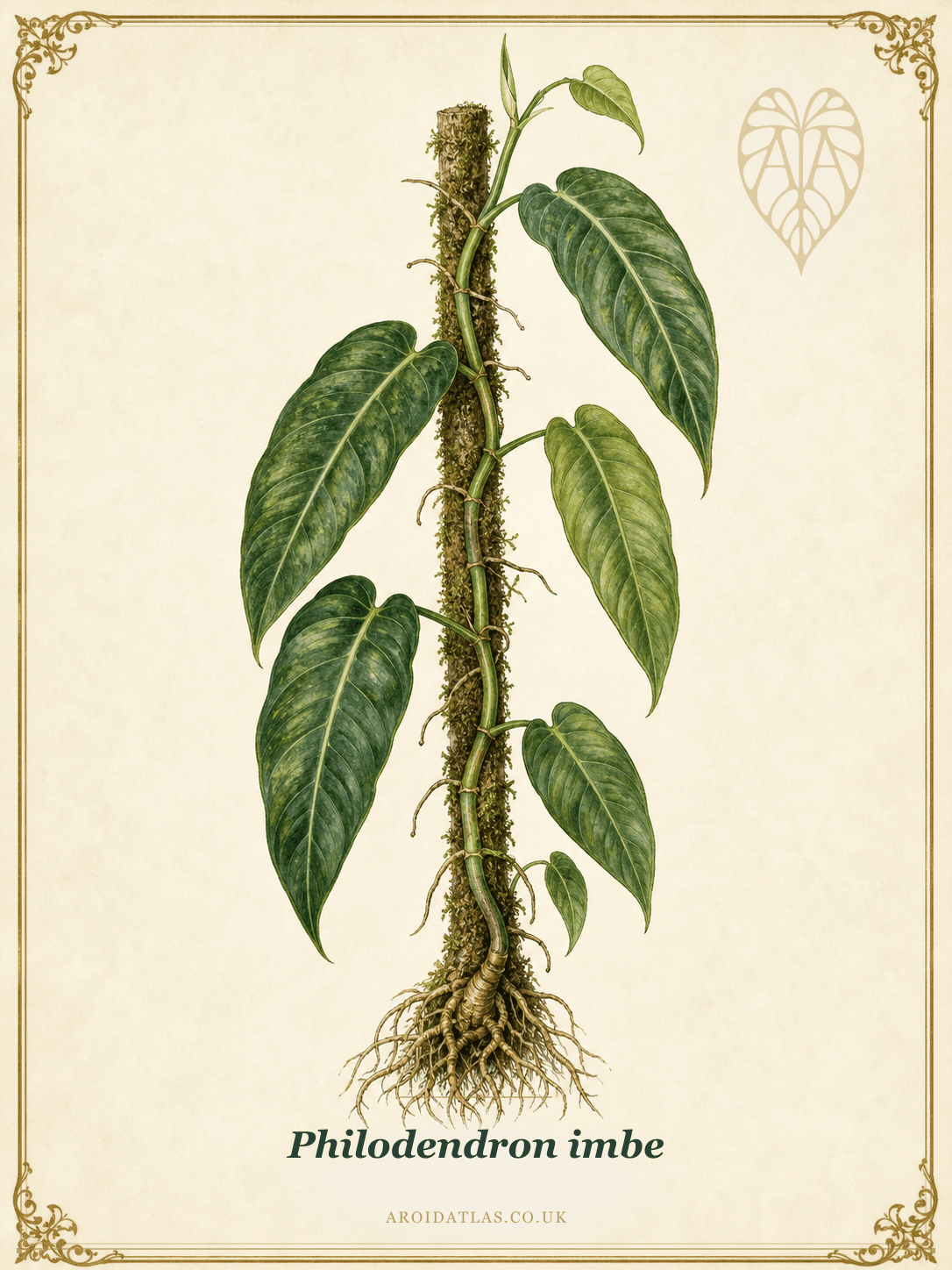
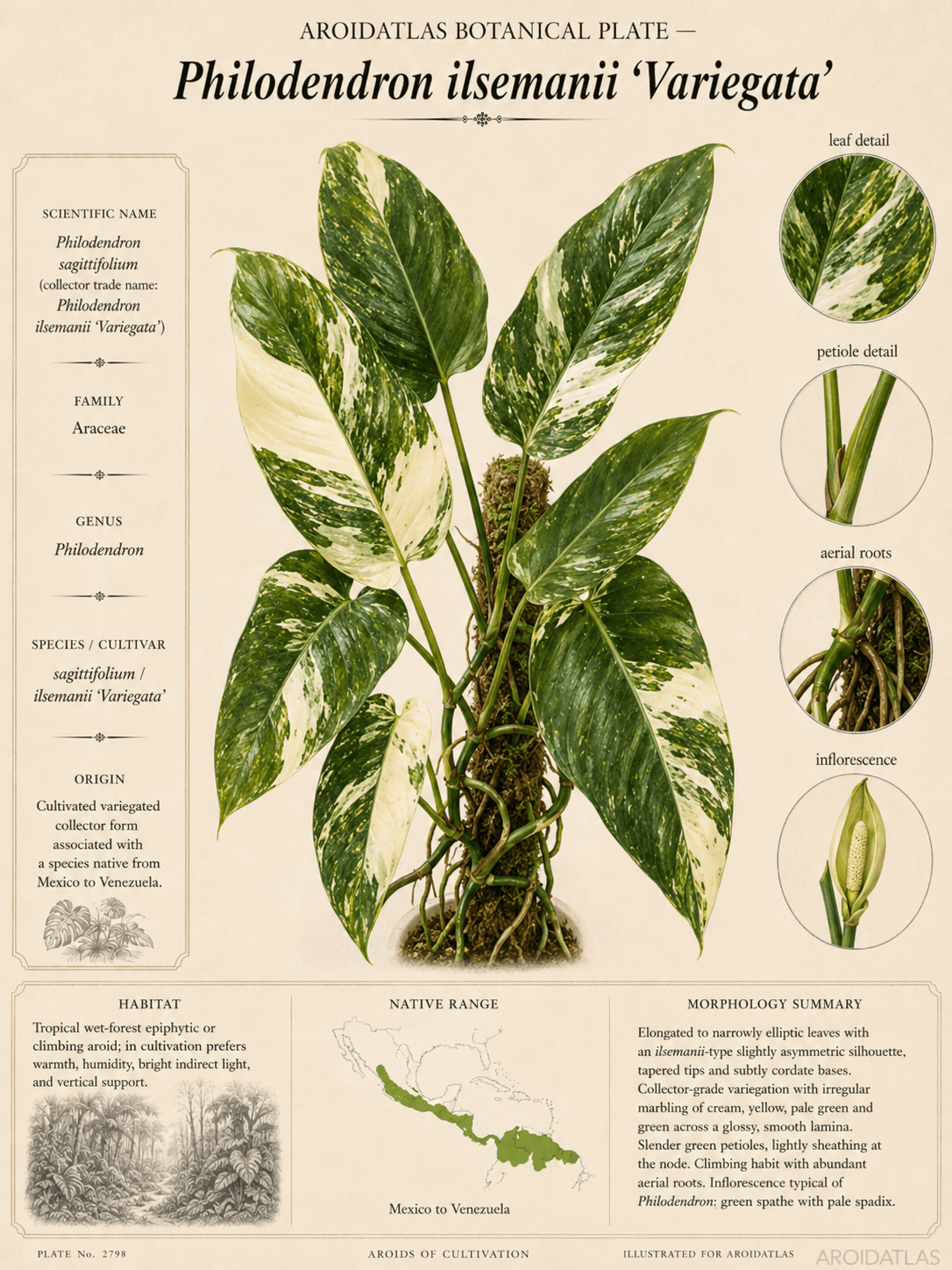
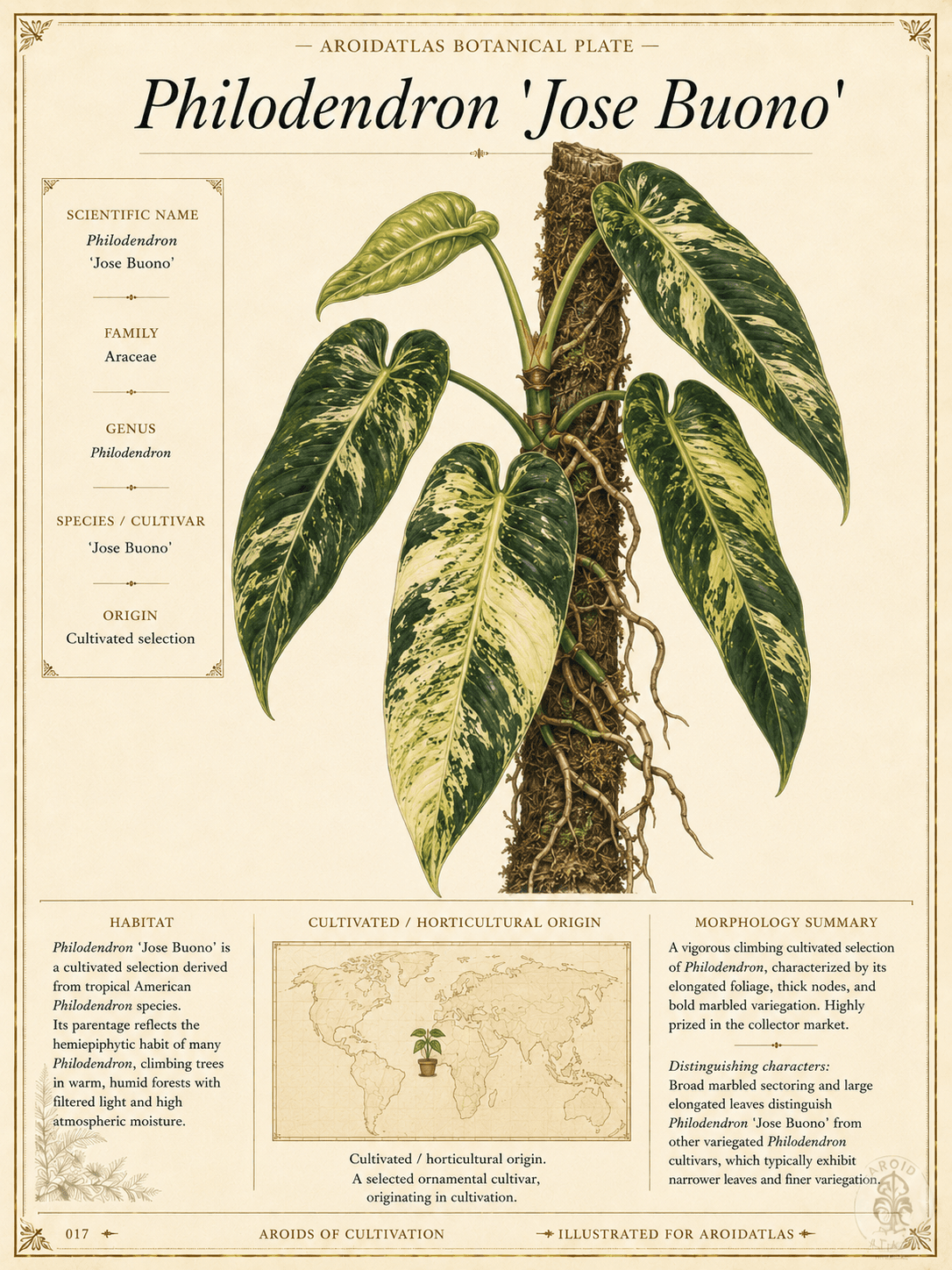
Full Specimen Plate
Philodendron 'Jose Buono'
Jose Buono Philodendron
Aroid Atlas Price Guide
Select Plant Size
Pricing Data Key
Community price estimate based on limited sales history
Other colour-form prices
Philodendron 'Jose Buono' Morphology
About Philodendron 'Jose Buono'
Philodendron 'Jose Buono' is a vigorous climbing cultivar developed through selective breeding of tropical American Philodendron species. It has large, elongated foliage with bold, marbled variegation ranging from creamy white to pale yellow. As a hemiepiphyte, it grows well when provided with a support structure that mimics its natural habitat of climbing trees in warm, humid forest environments. It is a stable cultivar valued for its scale and persistent leaf patterns.
Market Analysis
Philodendron 'Jose Buono' Price Guide & Auction Value
Historical eBay auction metrics and live retailer listings updated weekly.
No eBay auction history available yet. Data is collected automatically as sales appear on eBay UK.
Before You Buy
Shared checklist for Philodendron imbe and its cultivated forms
- For 'Ilsemannii' or 'Jose Buono', check the balance of green-to-white tissue in photos — near-pure-white cuttings are fragile and slow to establish
- Confirm which cultivar name the seller means, as both circulate under overlapping trade names
- All Philodendron are toxic if ingested — keep away from pets and children
Propagation Guide
How to Propagate Philodendron 'Jose Buono'
Shared across every form of Philodendron imbe — see this form's own Morphology for variegation-specific propagation notes.
8-12 weeks
Cultivar character is preserved through vegetative cuttings
Roots from stem or node cuttings. The heavily variegated 'Ilsemannii'/'Jose Buono' forms need a cutting taken at a node with enough chlorophyll-bearing tissue to survive — pure-white cuttings frequently fail to establish.
Care Guide
Philodendron 'Jose Buono' Care Guide & Growing Conditions
General care shared across all forms of Philodendron imbe — cultivated forms may need brighter light or higher humidity than the plain species; check this form's Quick Facts above.
Chunky, well-draining aroid mix: 40% orchid bark, 30% potting compost, 20% perlite, 10% sphagnum moss.
Allow the top few centimetres of substrate to dry between waterings.
60-80%. Heavily variegated forms benefit from the higher end of this range.
Balanced liquid fertiliser at half strength every 3-4 weeks during the growing season.
Every 12-18 months, or when roots fill the pot.
Common Problems
Reversion to solid green
Insufficient light
Increase light levels and prune reverted growth to favour variegated tissue
Cutting fails to establish
Cutting taken from a section with too little chlorophyll-bearing tissue
Select cuttings with a healthy balance of green and white leaf tissue