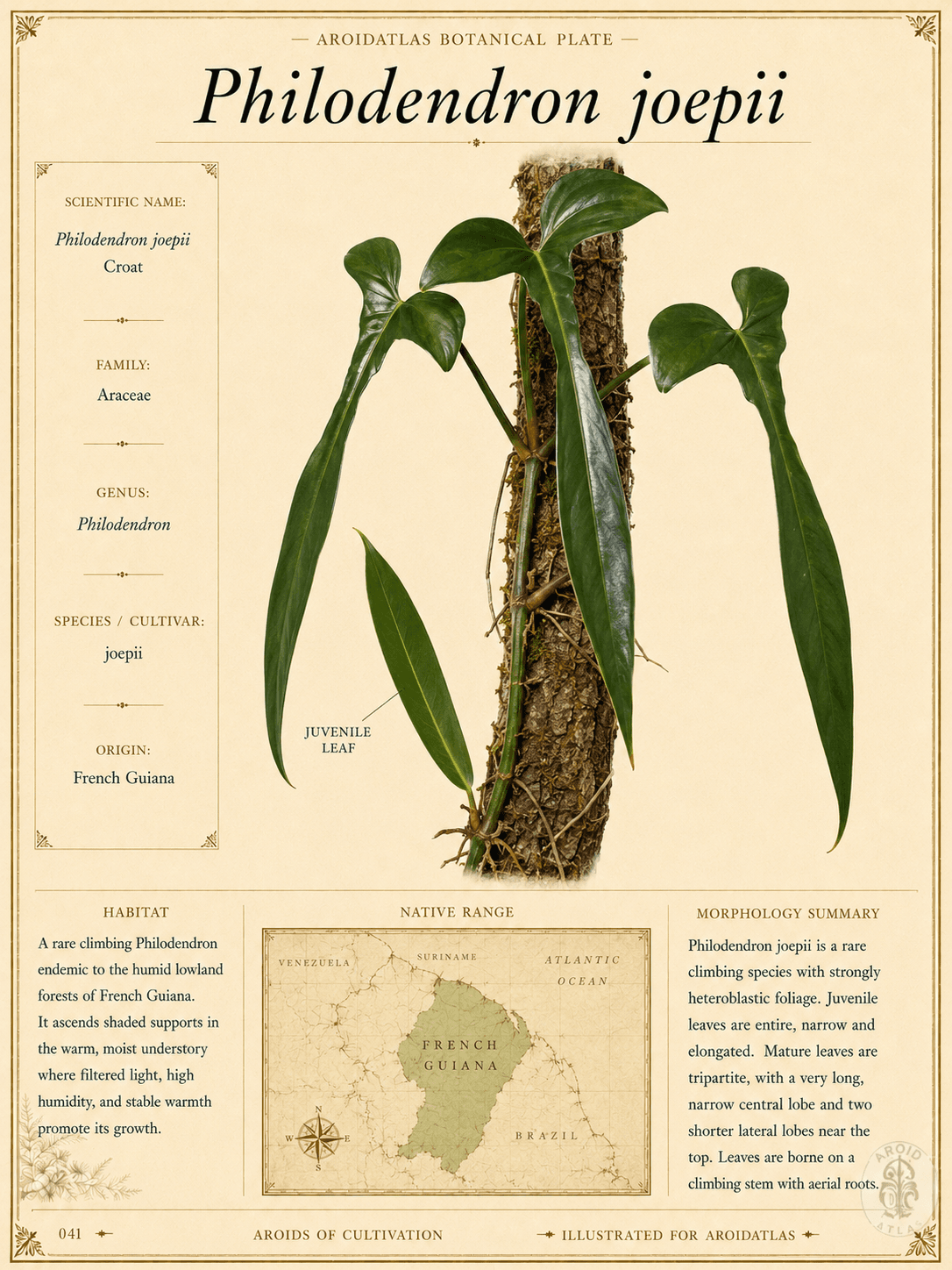
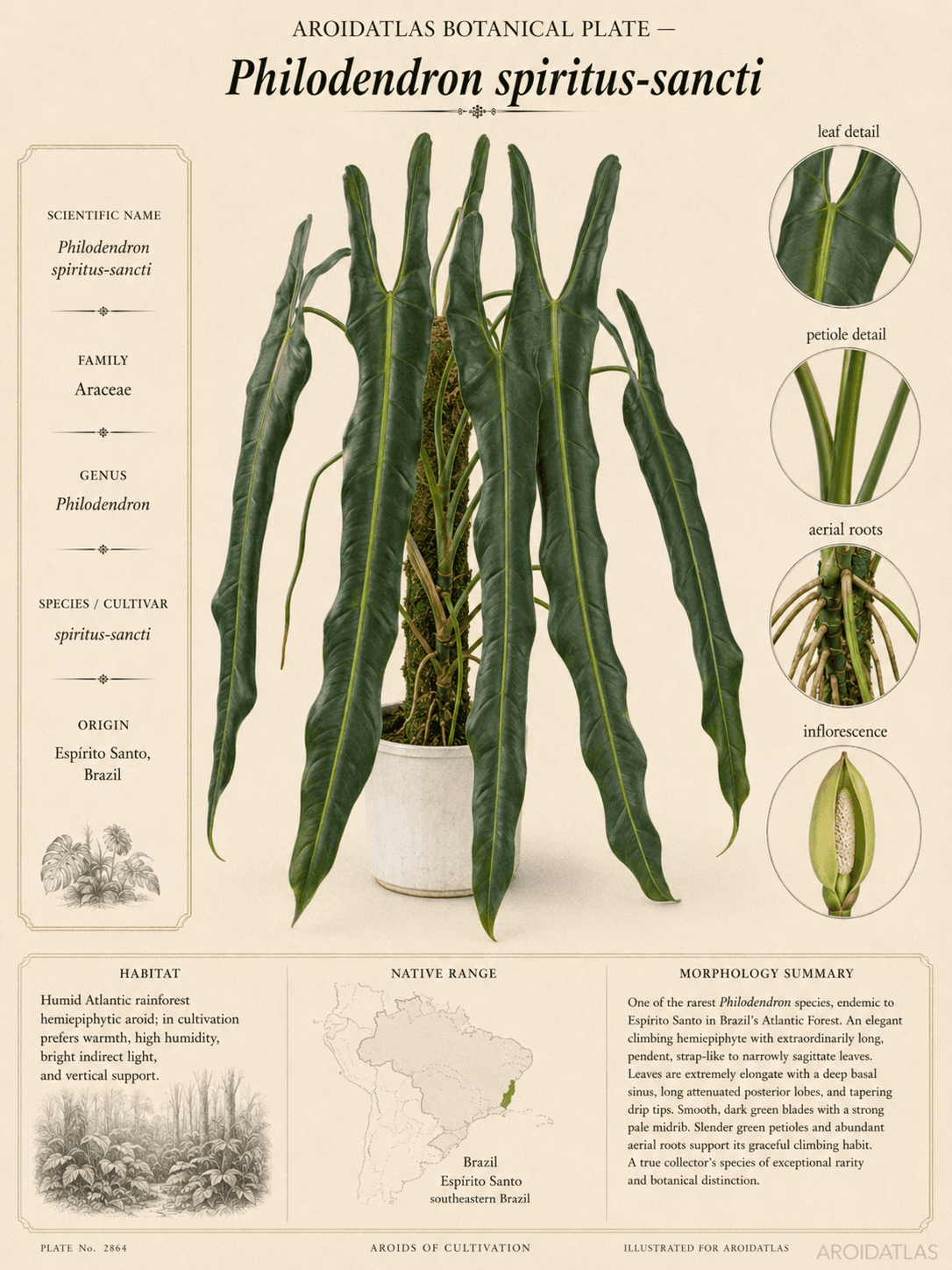
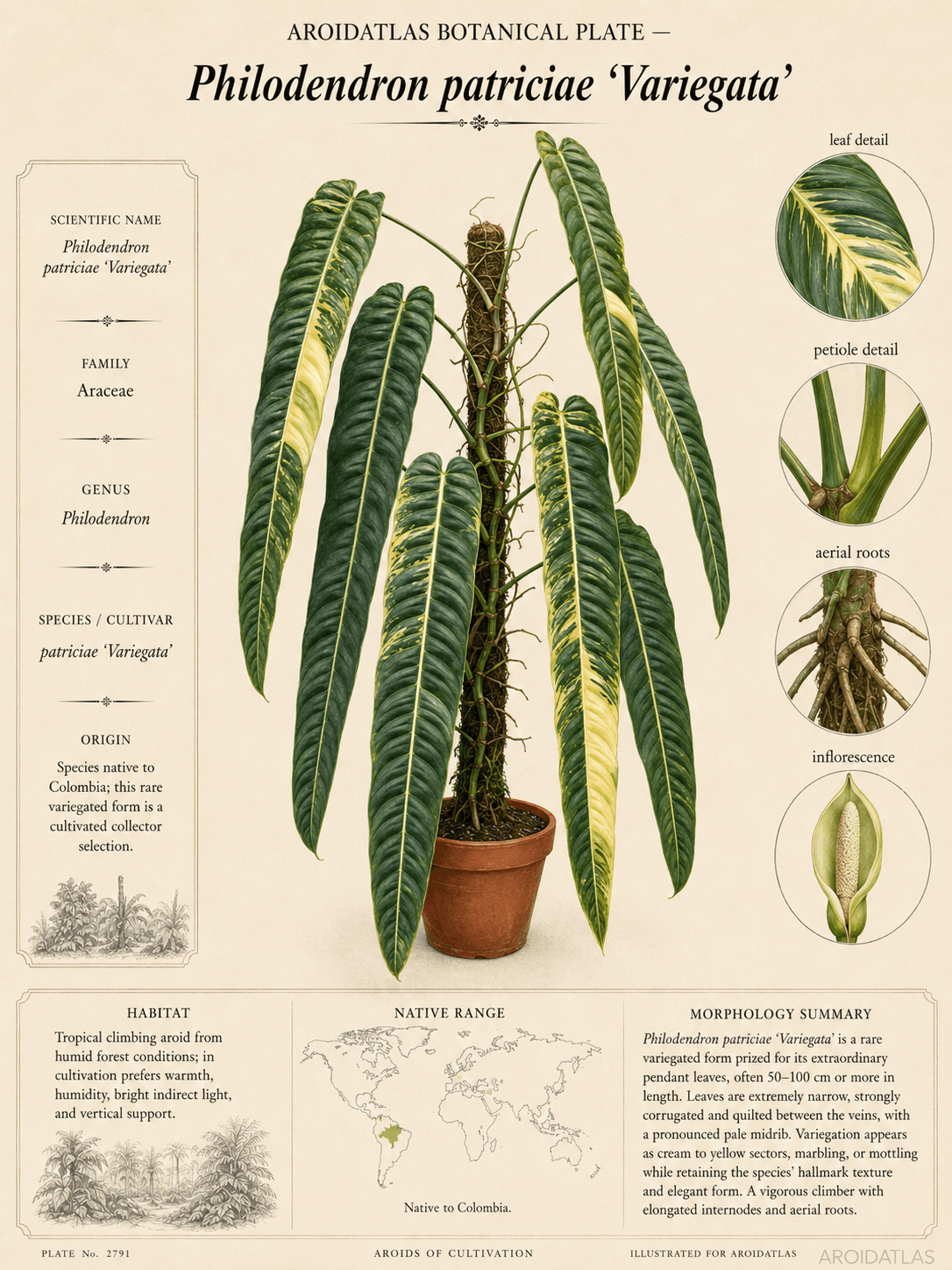
Full Specimen Plate
Philodendron x joepii 'Aurea Variegata'
Variegated Joepii Philodendron
Aroid Atlas Price Guide
Select Plant Size
Pricing Data Key
Community price estimate based on limited sales history
Market Analysis
Philodendron x joepii 'Aurea Variegata' Price Guide & Auction Value
Historical eBay auction metrics and live retailer listings updated weekly.
No eBay auction history available yet. Data is collected automatically as sales appear on eBay UK.
Before You Buy
Species-specific things to check when evaluating a listing
- Check that roots are firm and white to tan — avoid plants with black, slimy, or absent roots
- Verify the variegation pattern extends into new emerging growth — if the newest leaf is fully green, the plant may be reverting
- Inspect leaf undersides for thrips (silvery stippling) and mealybugs (white cottony residue at leaf bases)
- On eBay, compare the listed plant to multiple recent sold comps to confirm the asking price is realistic for the variegation level shown
Philodendron x joepii 'Aurea Variegata' Morphology
About Philodendron x joepii 'Aurea Variegata'
Philodendron x joepii 'Aurea Variegata' is a variegated selection of the tri-lobed hybrid lineage first associated with French Guiana. It has a distinctive leaf shape, with a narrow constricted midsection and elongated lateral and terminal lobes. The aurea variegation appears as marbled and sectoral splashes of yellow and chartreuse against a deep green base. It climbs using aerial roots and benefits from a moss pole or vertical support.
Native Range
French Guiana
Propagation Guide
How to Propagate Philodendron x joepii 'Aurea Variegata'
4-8 months
Cultivar character is preserved through vegetative cuttings
Single-node cuttings root readily in moist sphagnum or water. Maintain 70%+ humidity and bottom warmth for best results.
Care Guide
Philodendron x joepii 'Aurea Variegata' Care Guide & Growing Conditions
High-porosity mix: 50% perlite, 30% orchid bark, 20% coco coir. Good aeration is essential — philodendrons are prone to root rot in dense substrates.
Water thoroughly when the top 3–4 cm of substrate is dry. Ensure free drainage and never allow to sit in water. Reduce frequency in winter.
60–80% preferred. UK tap water can cause brown tips — use rainwater or filtered water where possible.
Balanced liquid fertiliser (e.g. 20-20-20) at quarter strength every two weeks in spring and summer. Monthly at most in winter.
Every 12–18 months or when roots circle the base of the pot. Move up one pot size only — oversized pots increase rot risk.
Common Problems
Brown leaf tips
Low humidity or fluoride/chlorine in tap water
Increase ambient humidity and switch to rainwater or filtered water
Yellow leaves
Overwatering or compacted substrate
Allow substrate to dry further between waterings; check root health and repot if necessary
Leggy growth with small leaves
Insufficient light
Move to a brighter position with more indirect light
Joep Moonen's Oddity in Gold
Philodendron x joepii has one of the strangest shapes in the plant kingdom: a three-lobed leaf that looks like it has been eaten away in the middle, leaving a thin waist. Discovered in French Guiana by naturalist Joep Moonen in 1991, it is believed to be a natural hybrid. The 'Aurea Variegata' cultivar adds splashes of bright yellow to this bizarre silhouette. In a 2005 article in the Aroideana journal, Moonen recounted finding the single wild specimen on a river bank. Its unique waist-like constriction is likely a defense mechanism against herbivores or a structural adaptation. The variegated form is exceptionally rare.