Scroll to explore forms of Syngonium podophyllum
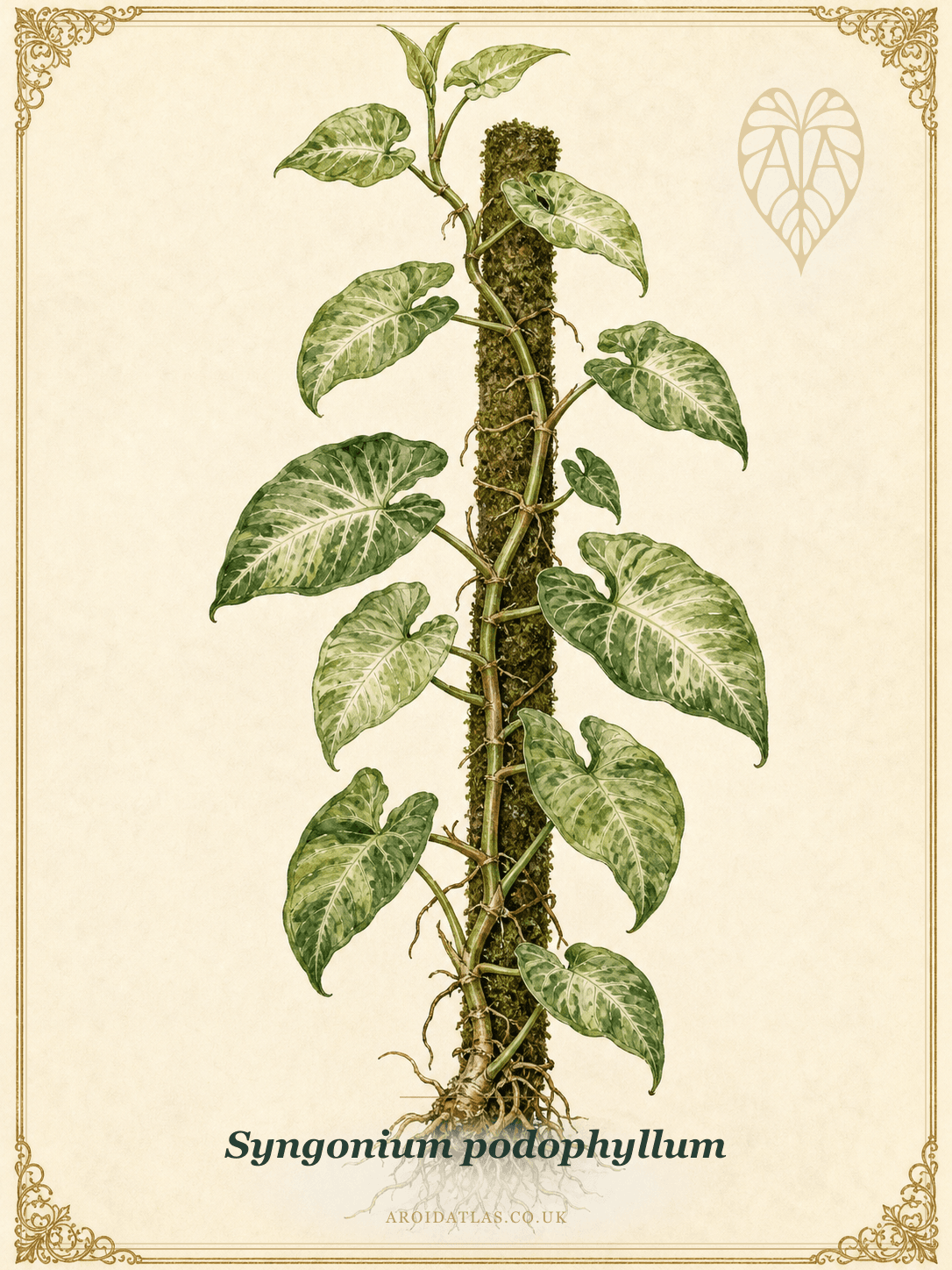 Base
BaseSyngonium podophyllum
Base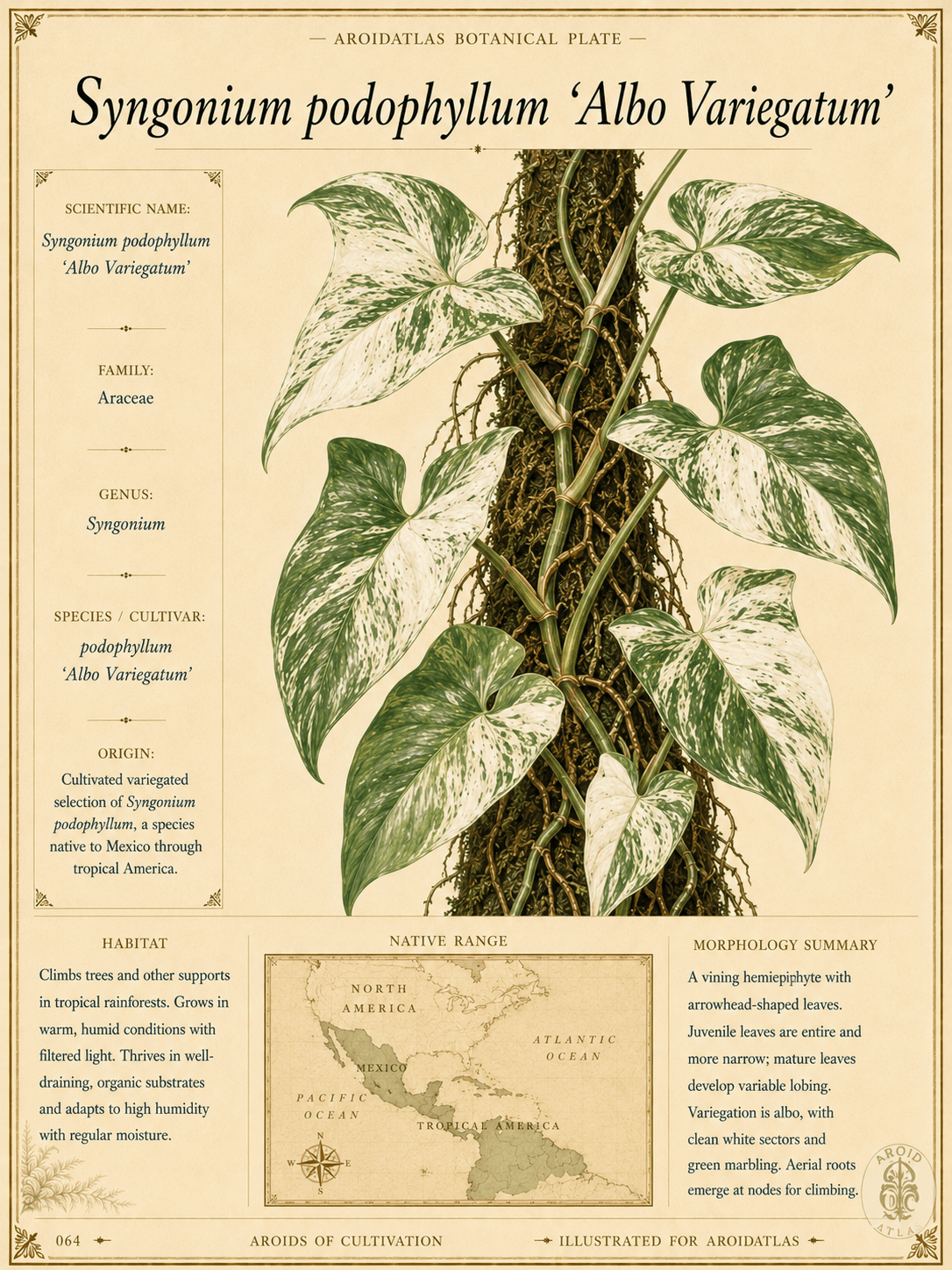
Albo Variegatum
Albo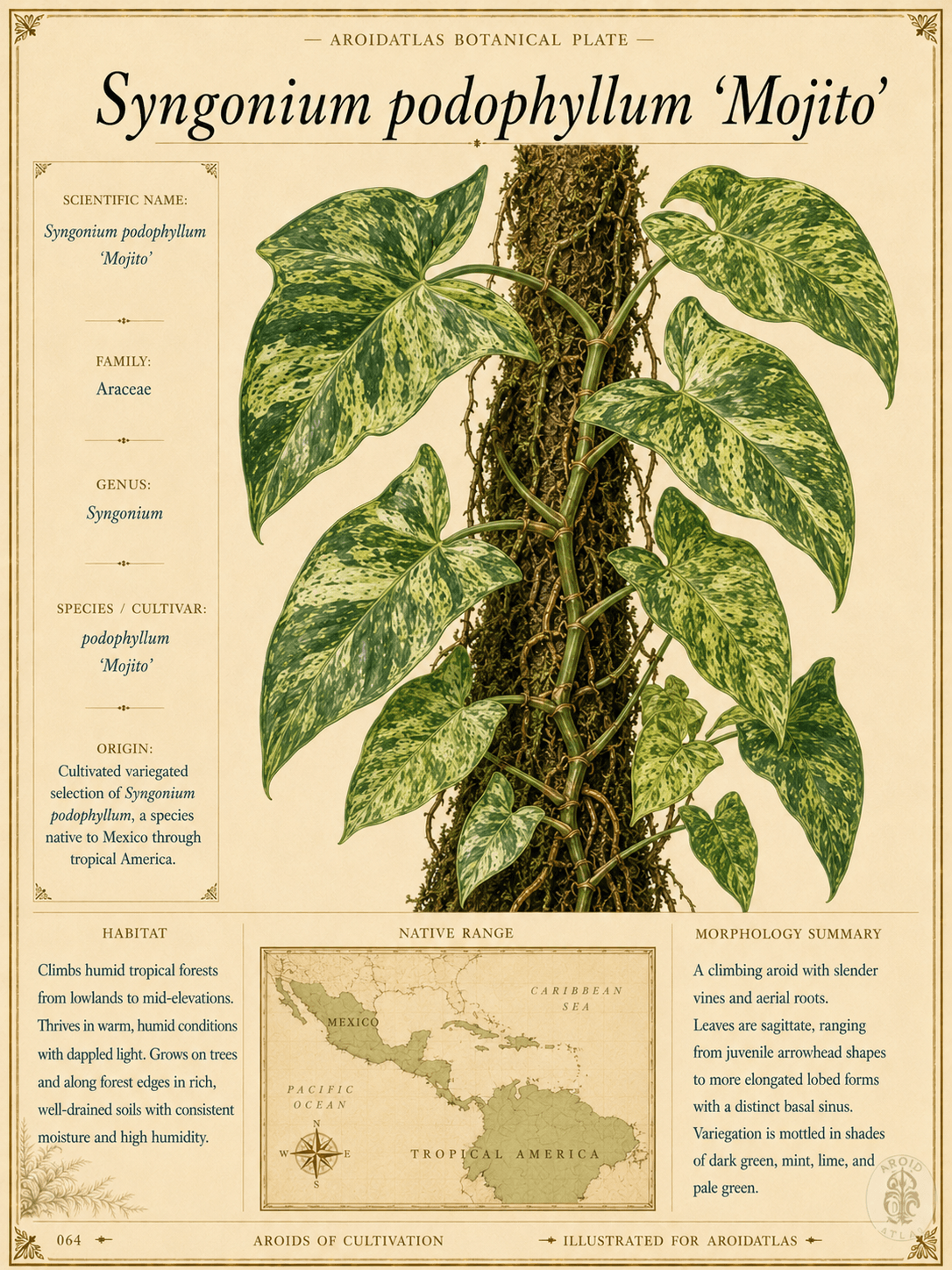
Mojito
Base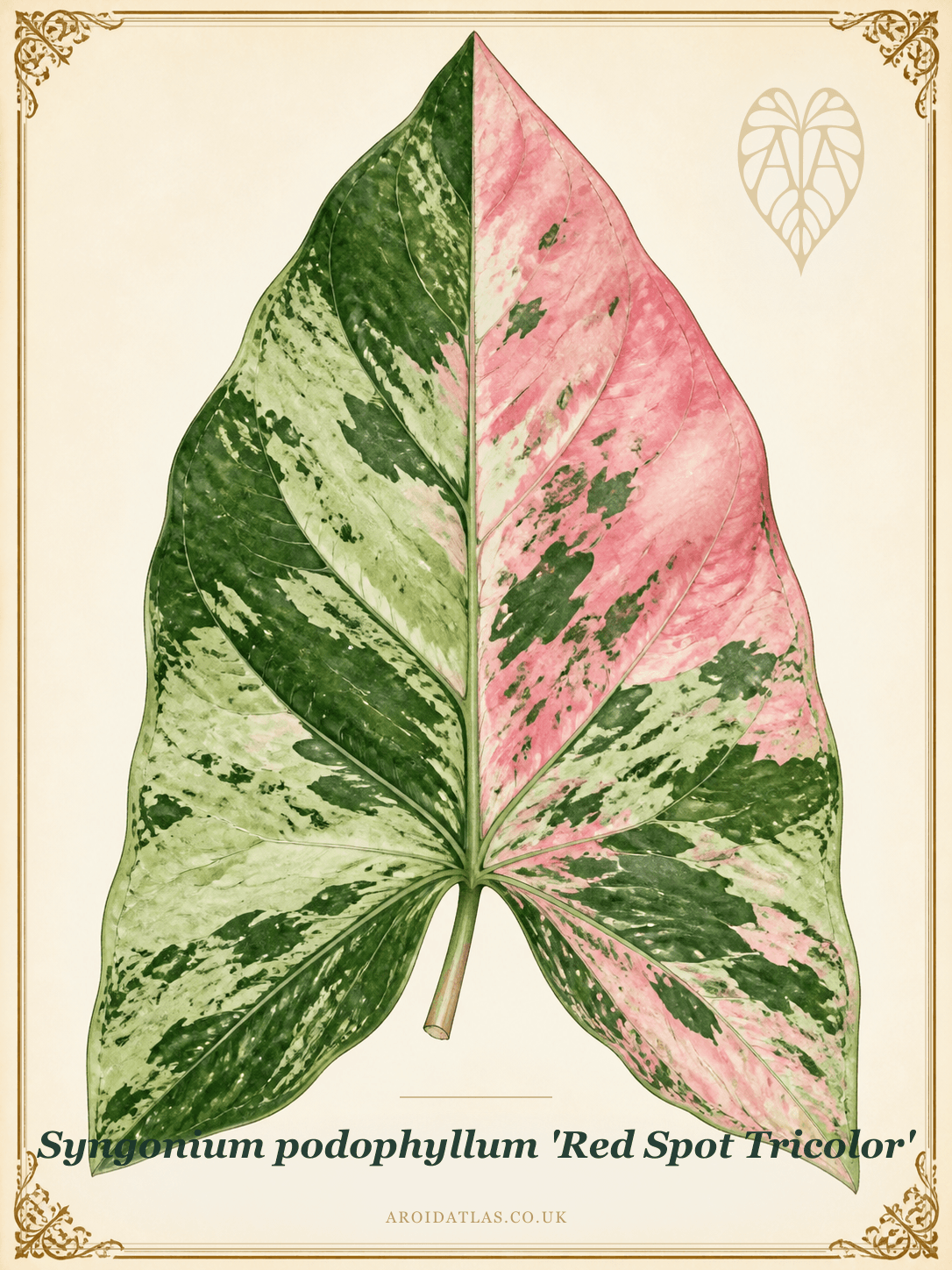
Red Spot Tricolor
Tricolour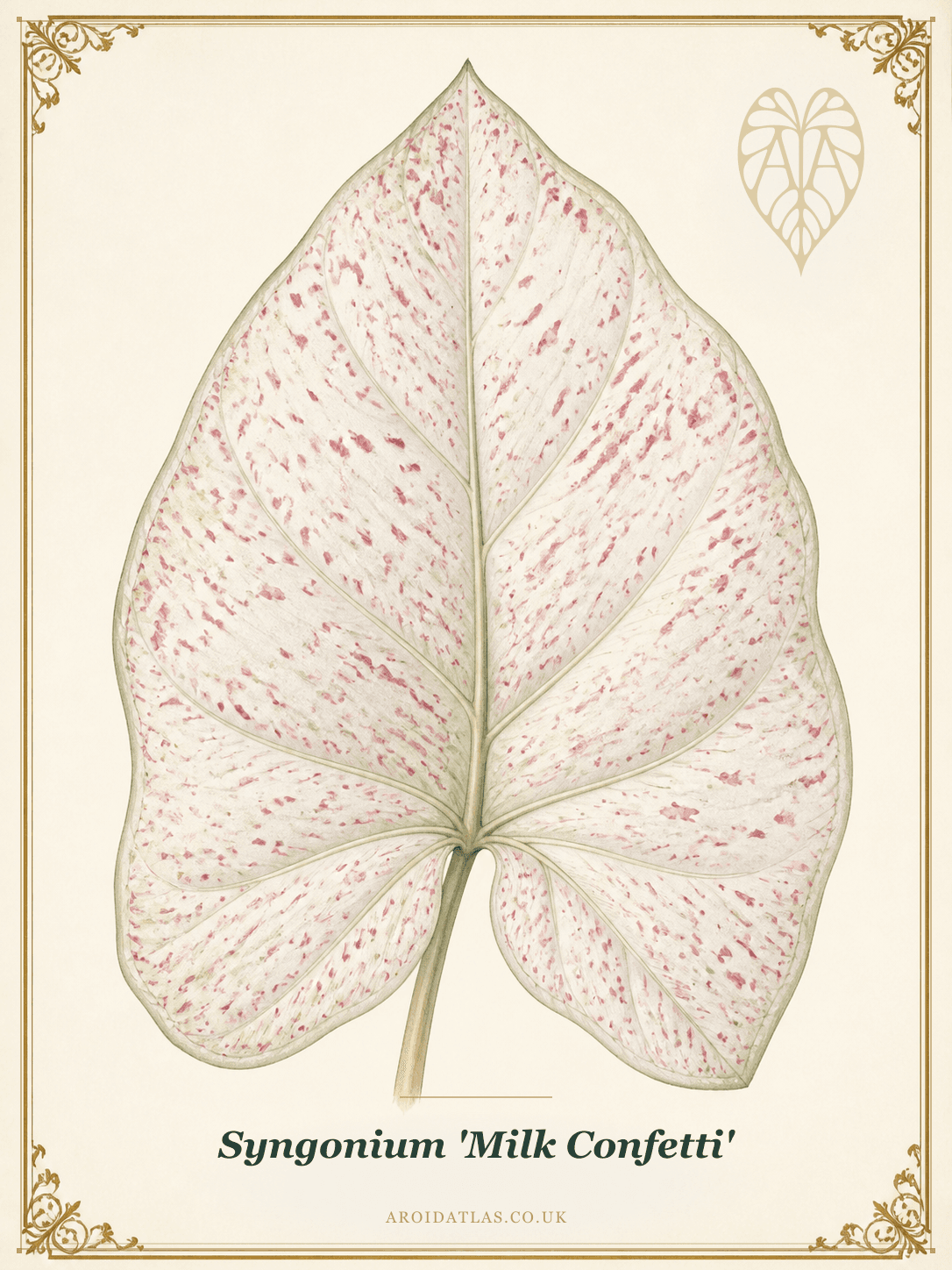
Milk Confetti
Base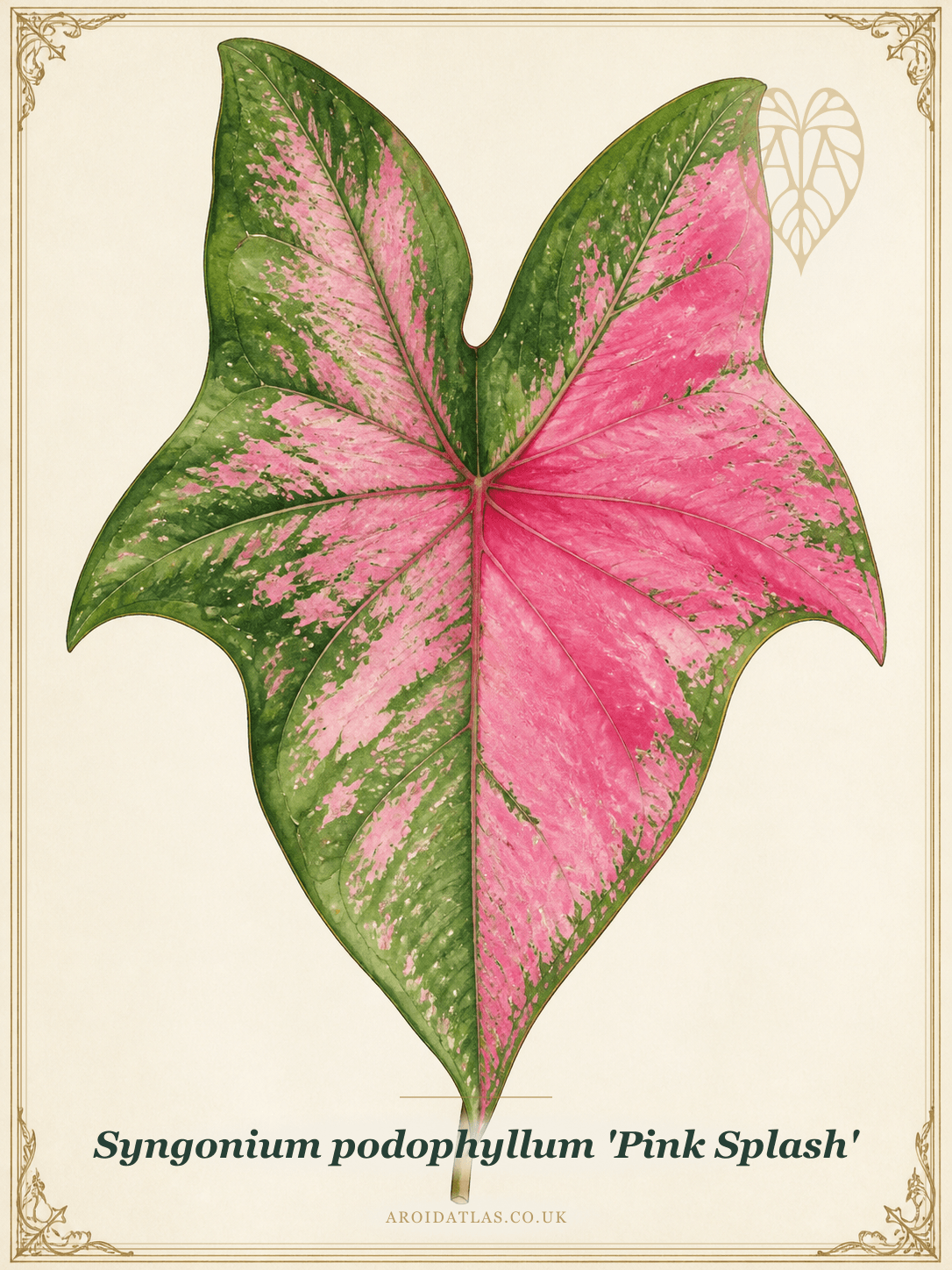
Pink Splash
Pink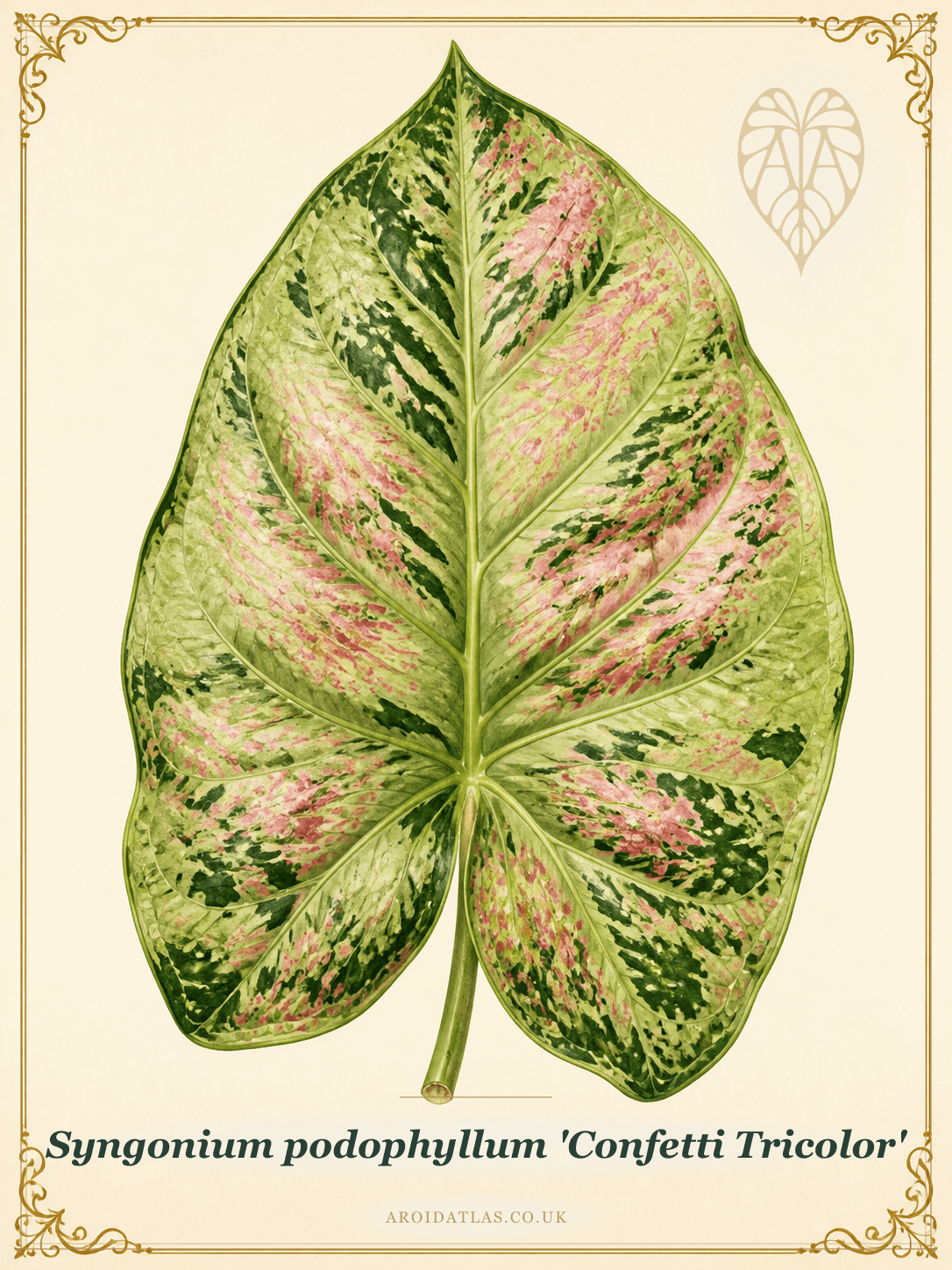 Current
Confetti Tricolor
Tricolour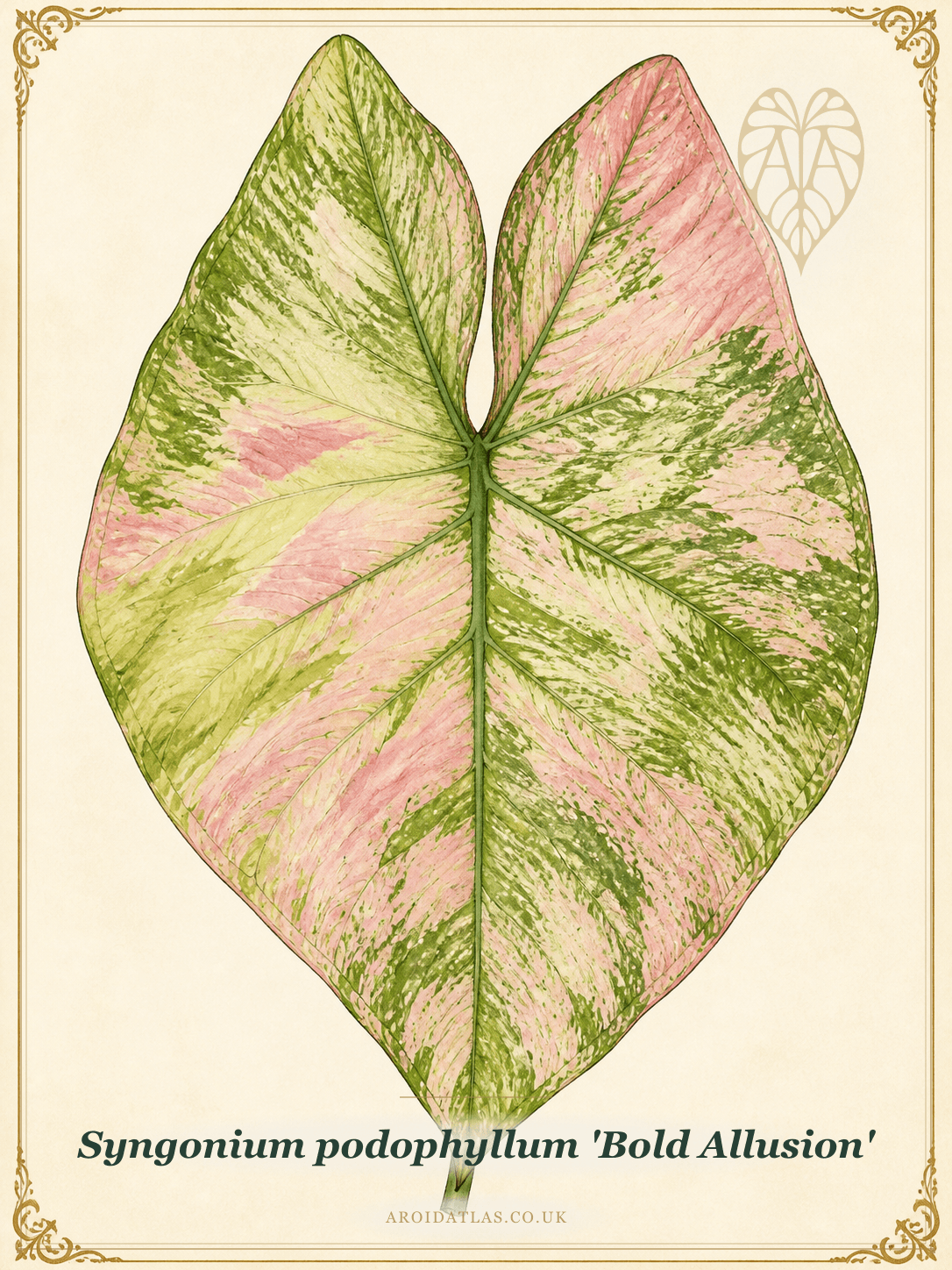
Bold Allusion
Base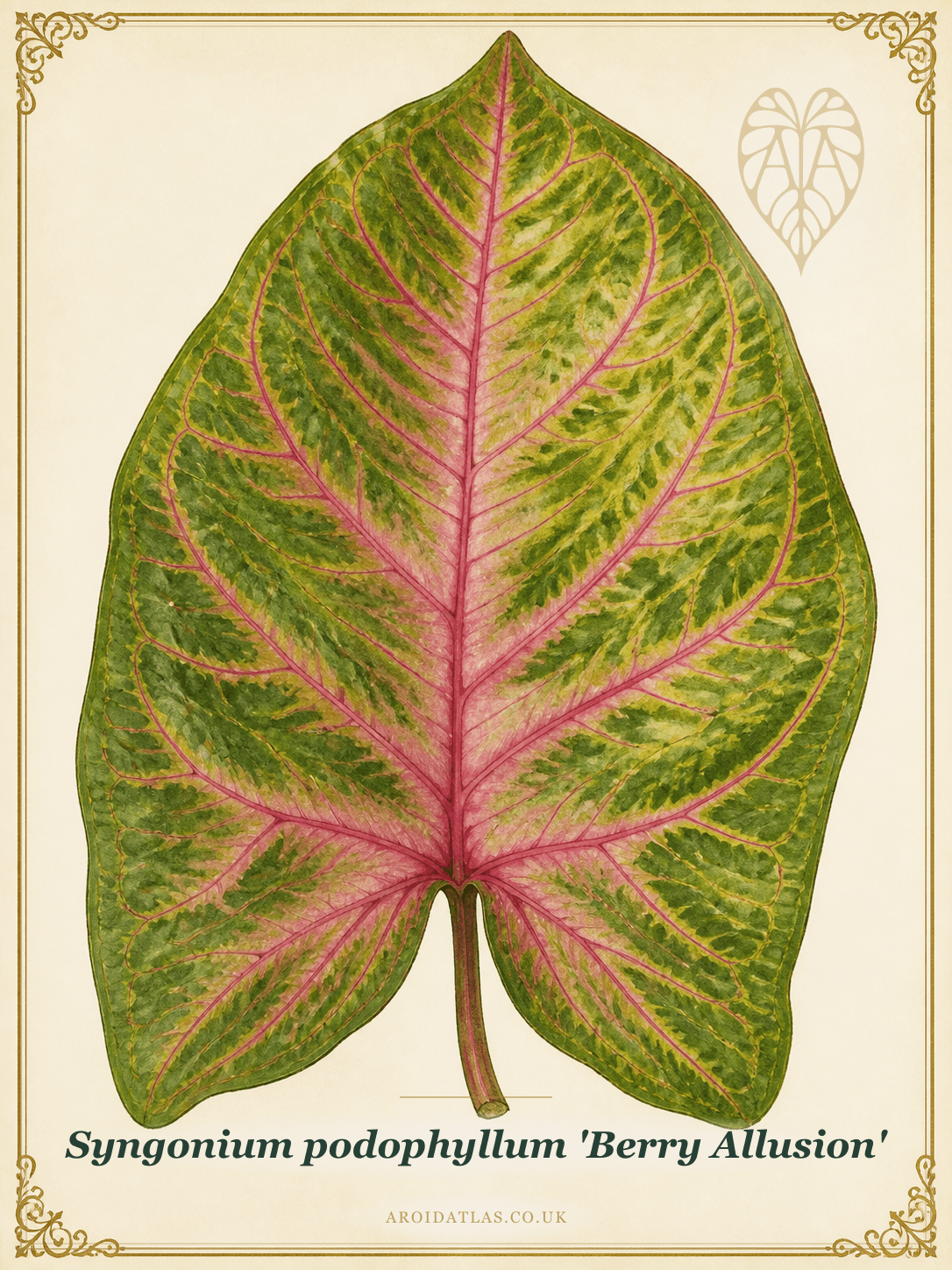
Berry Allusion
Base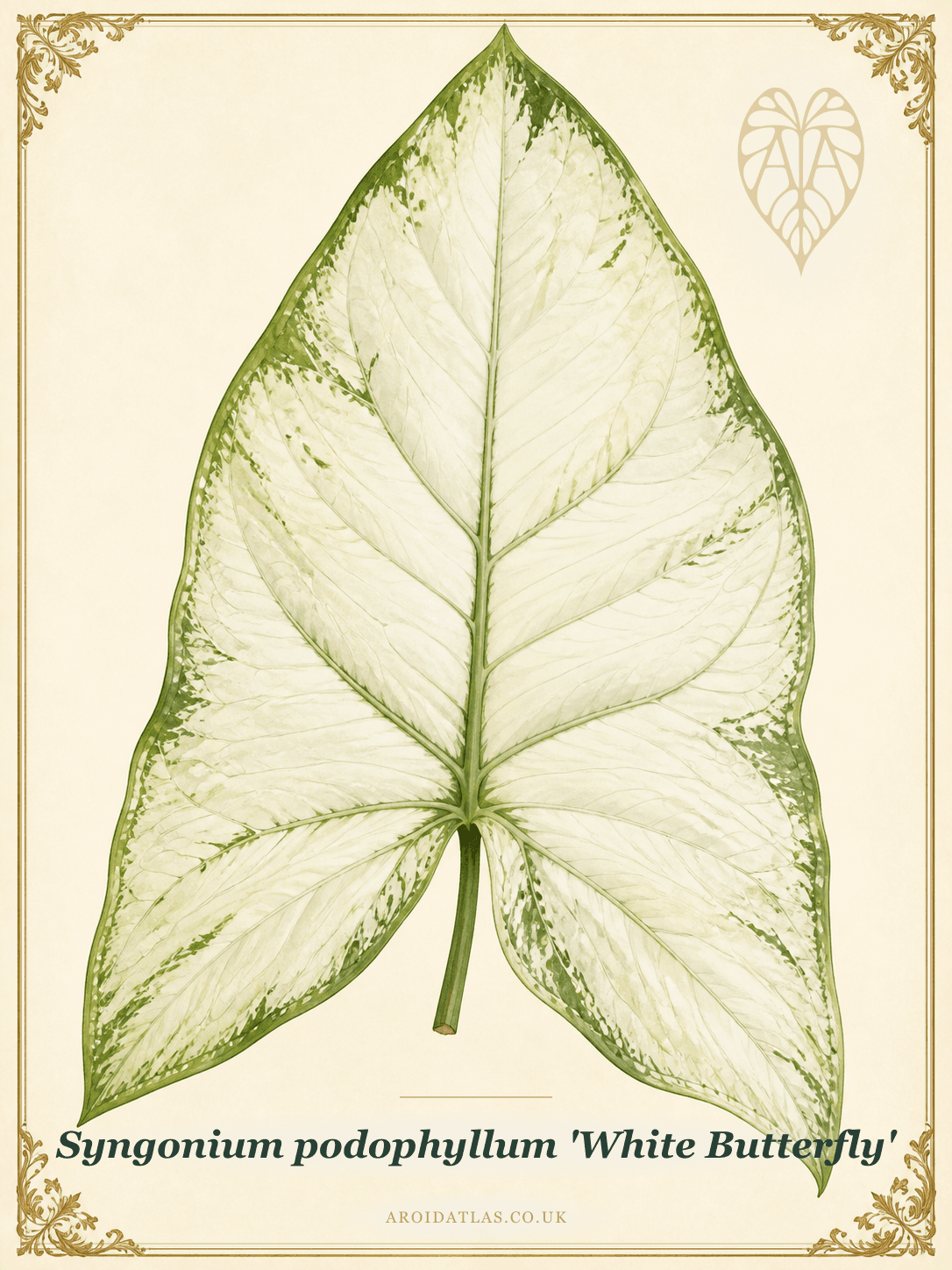
White Butterfly
Base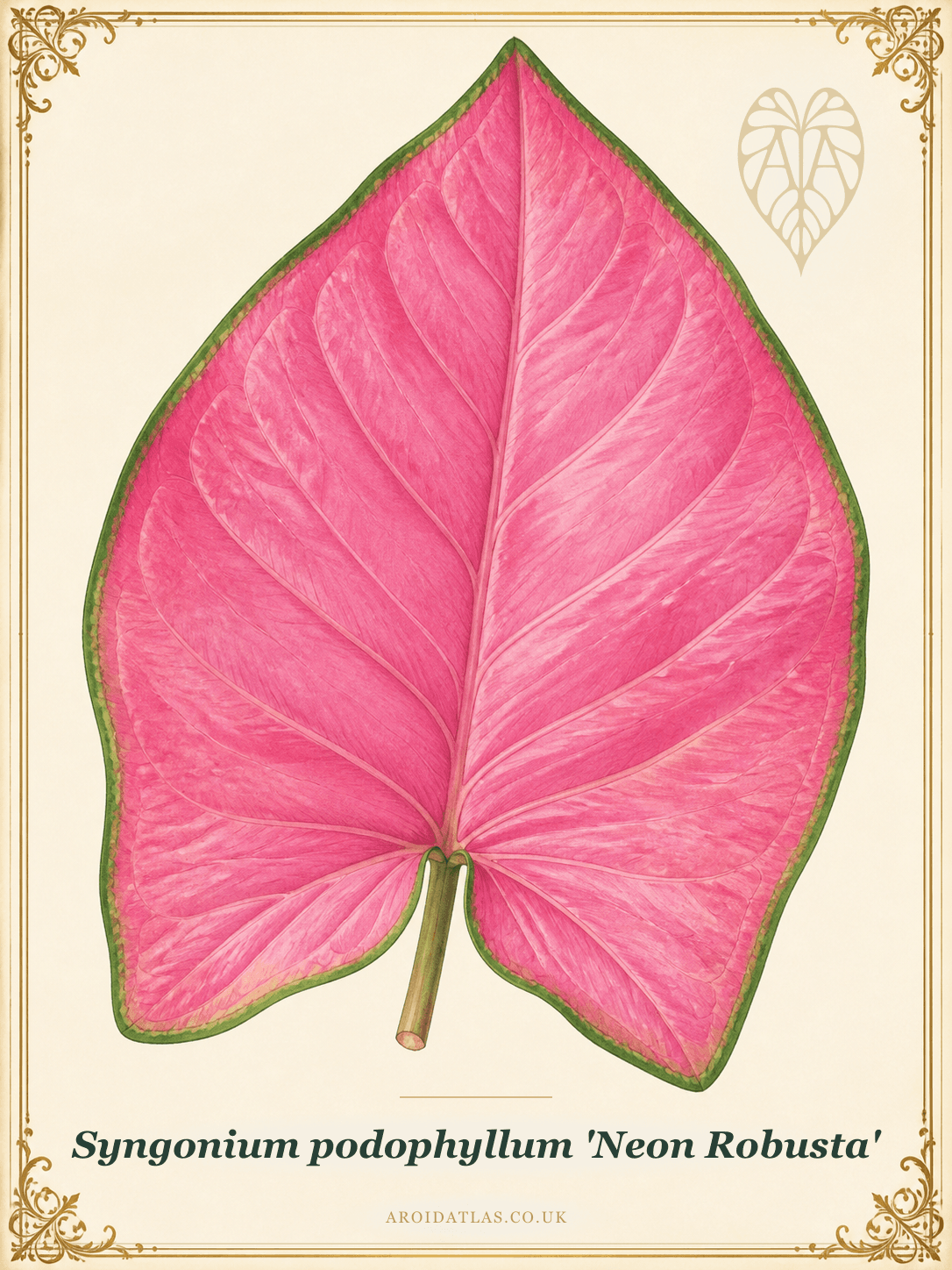
Neon Robusta
Base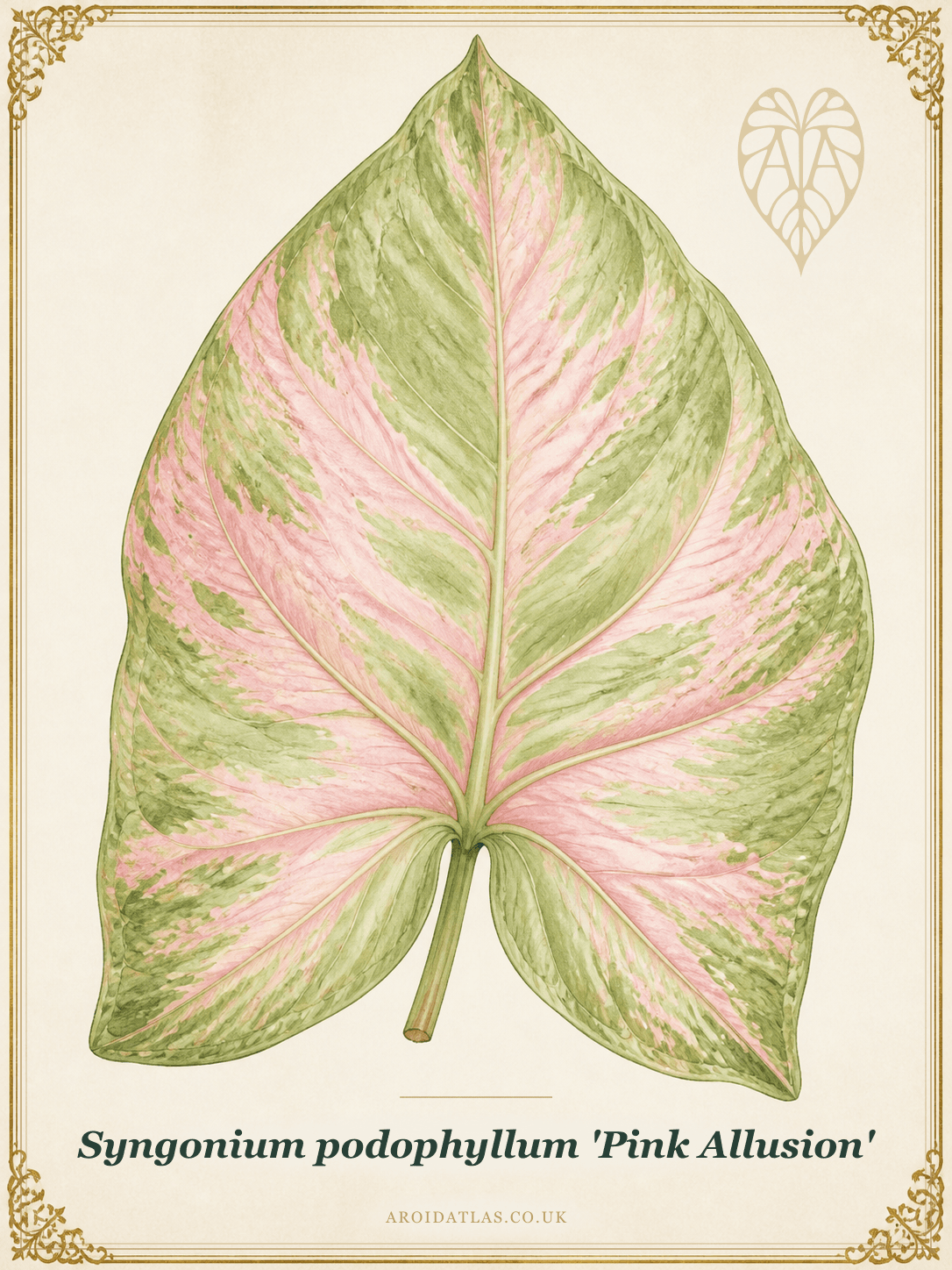
Pink Allusion
Pink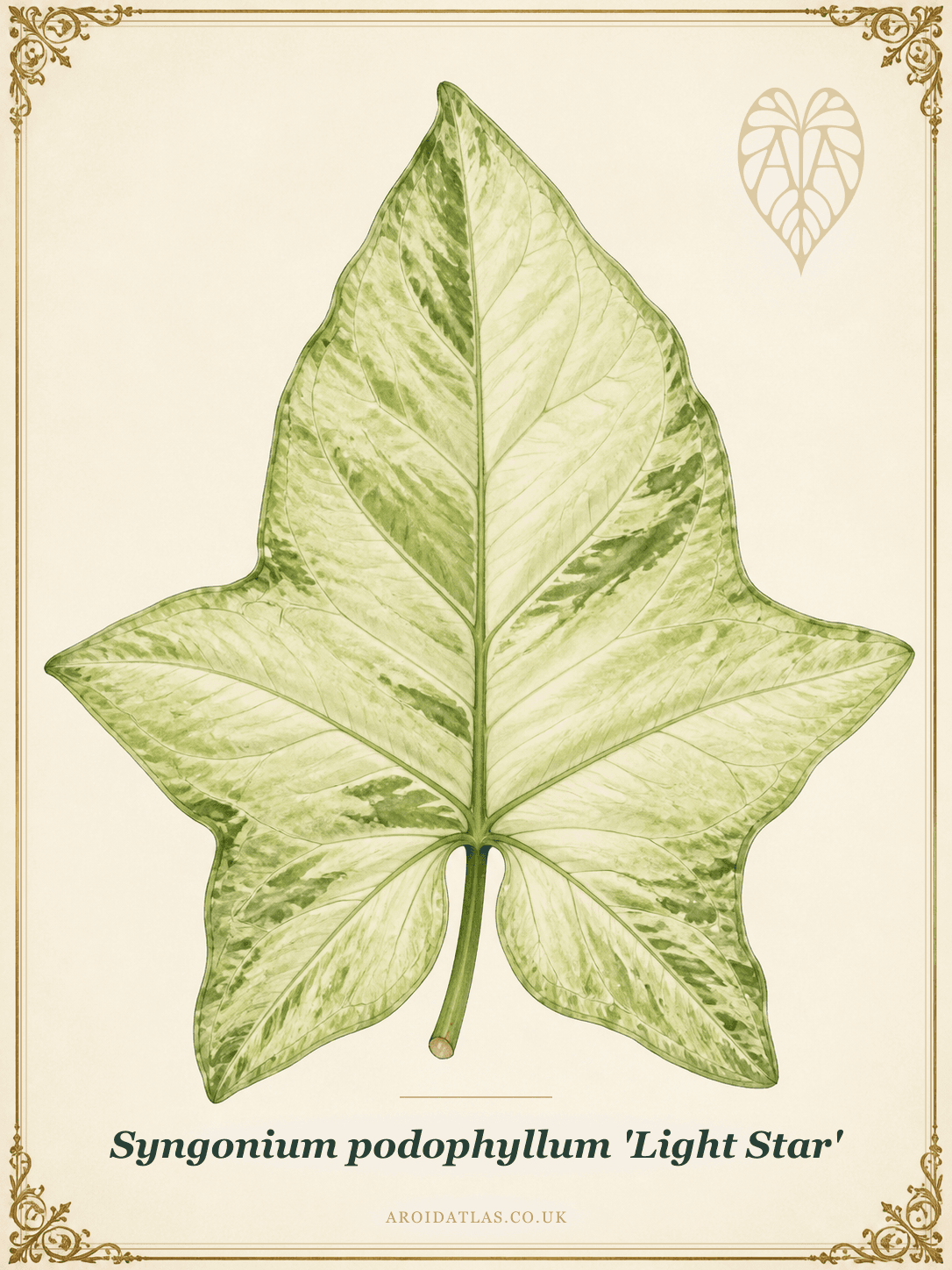
Light Star
Base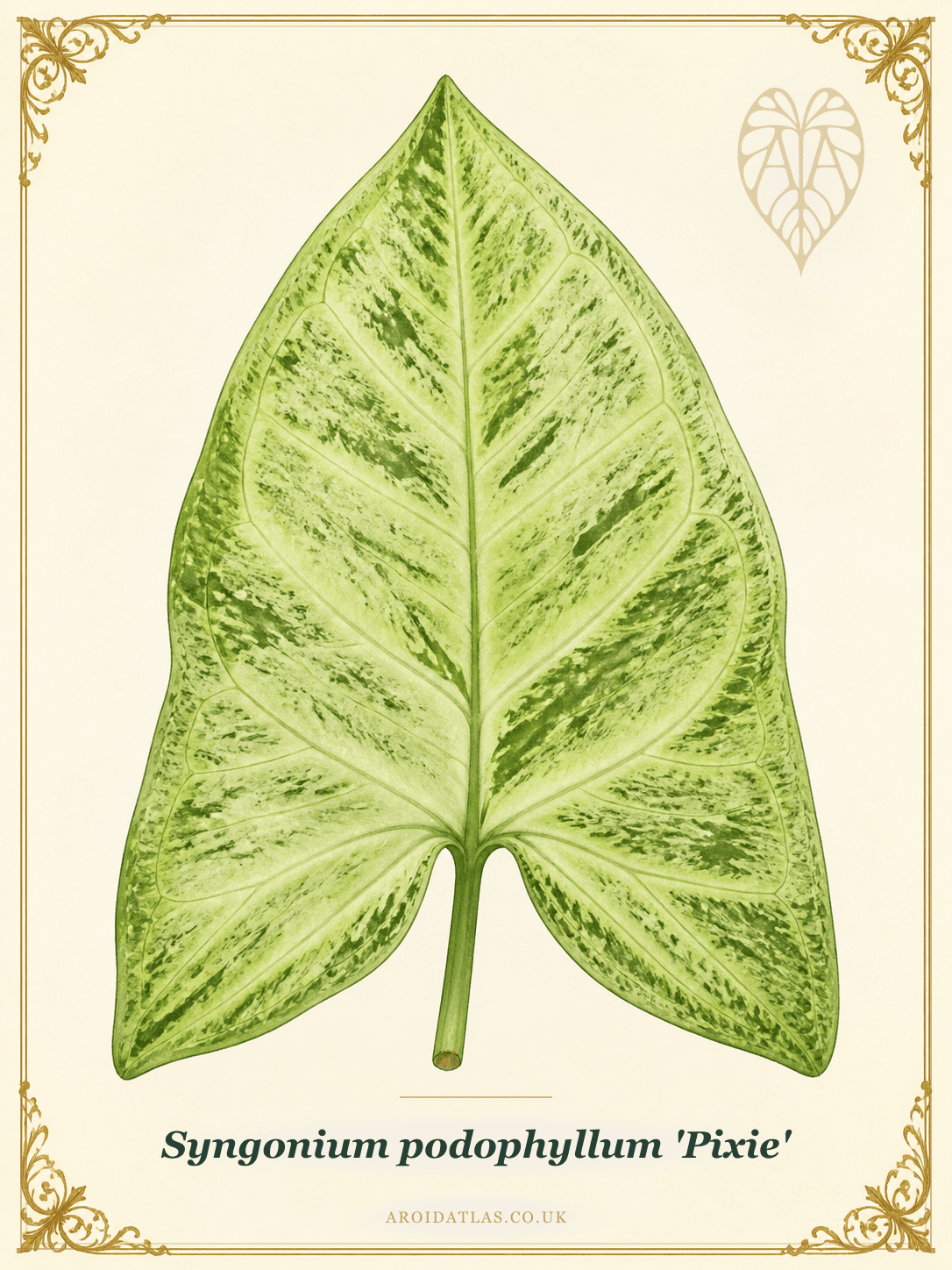
Pixie
Base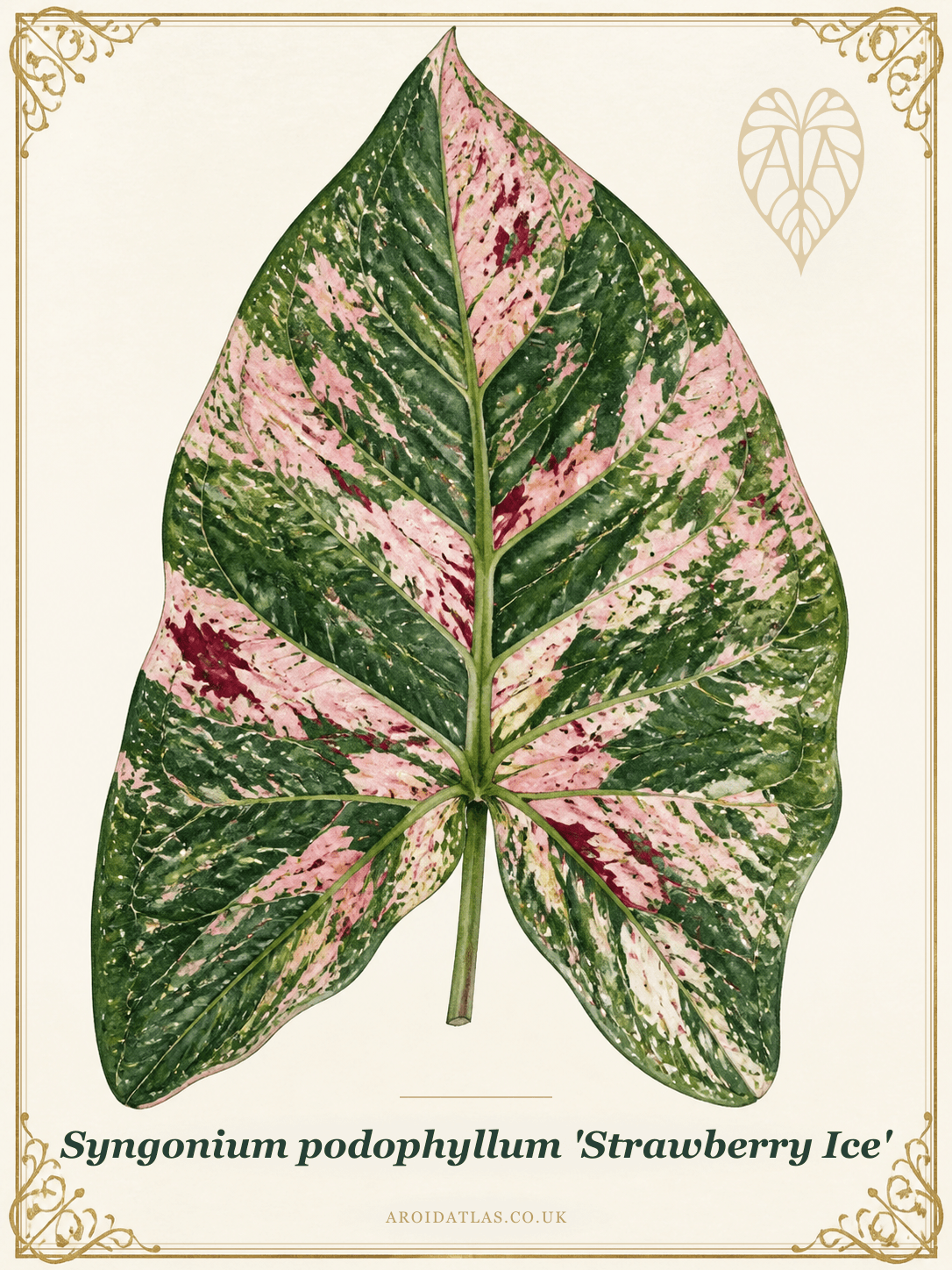
Strawberry Ice
Base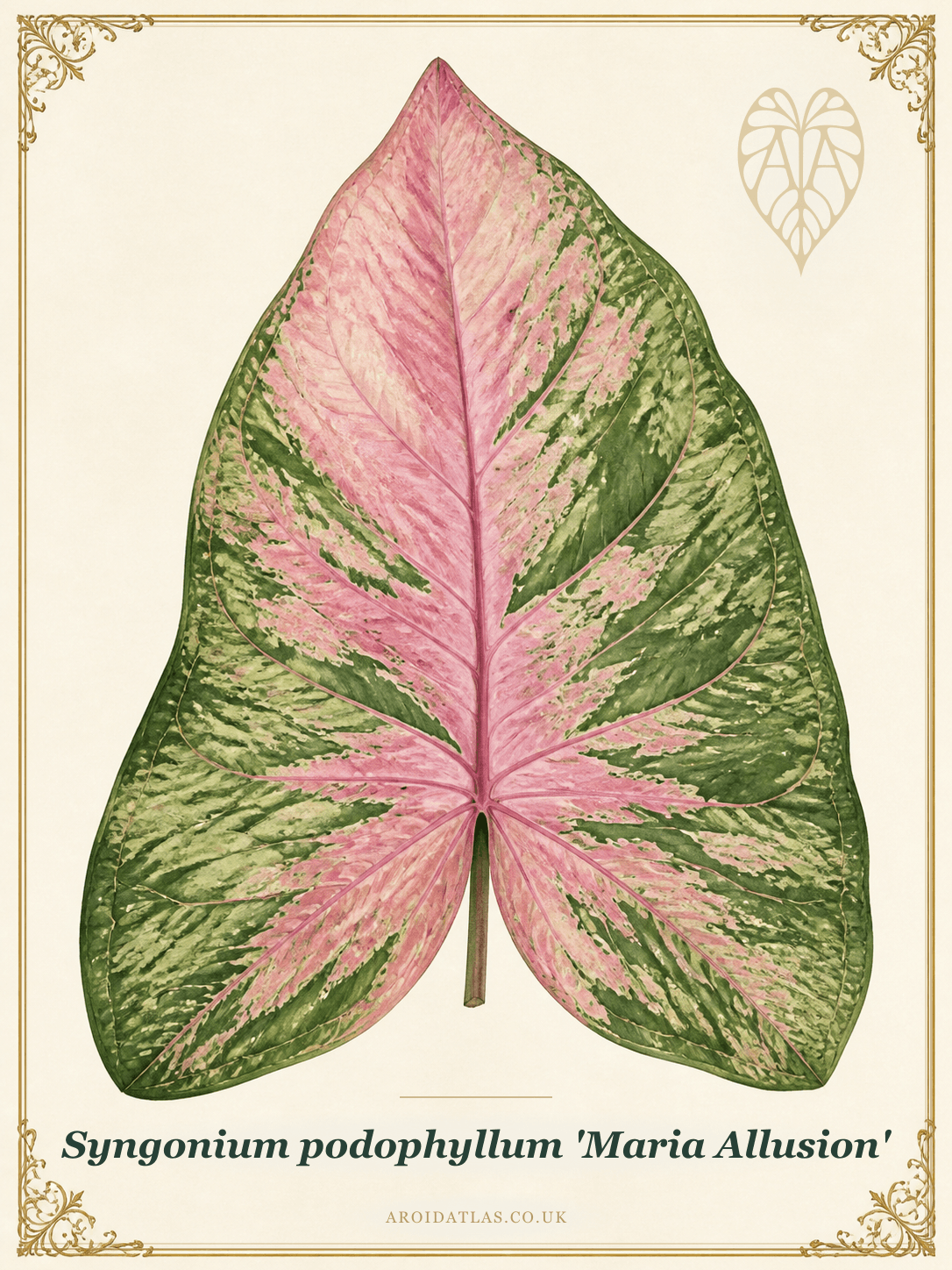
Maria Allusion
Base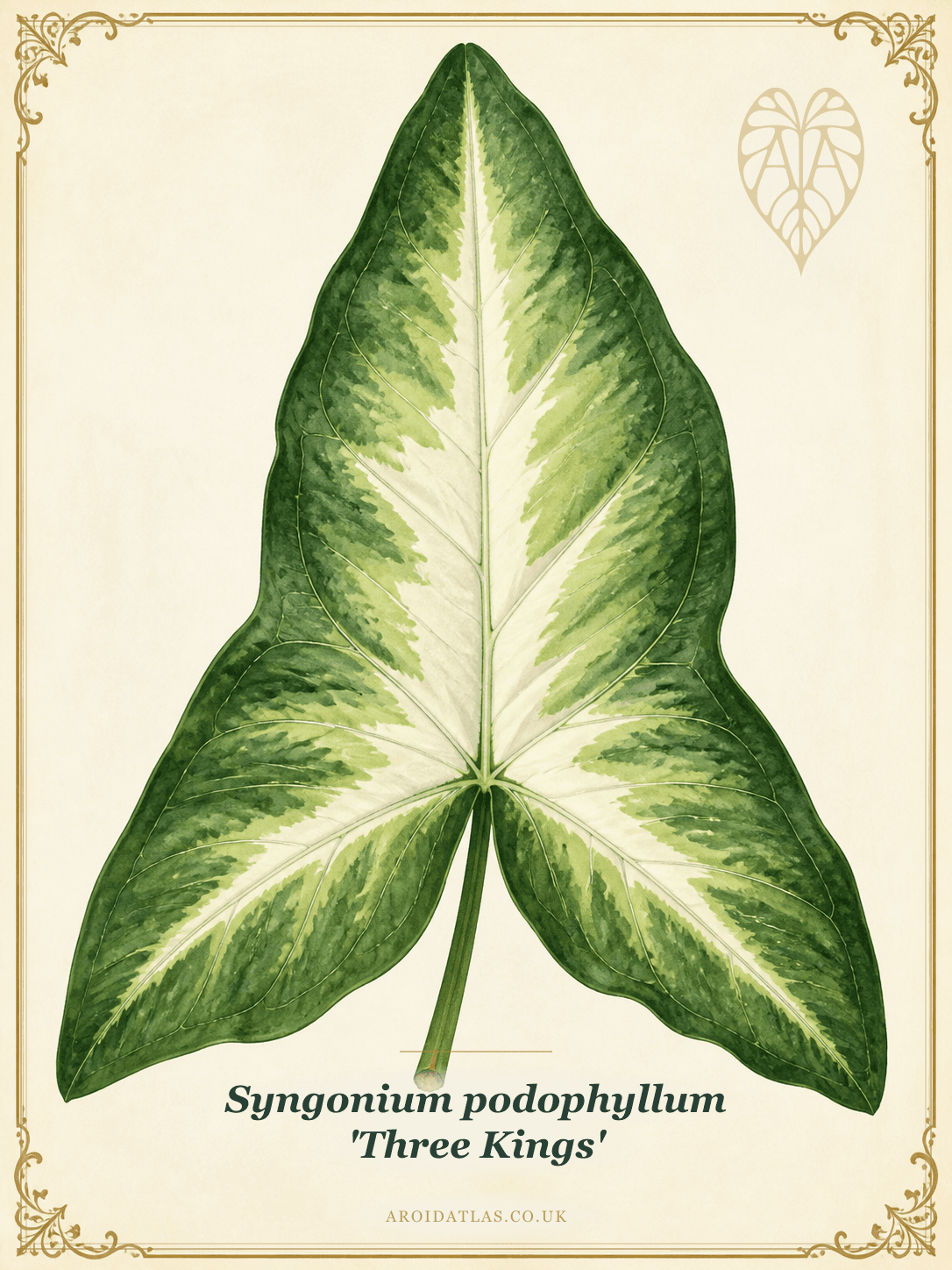
Three Kings
BaseLeaf Detail Portrait
Syngonium podophyllum 'Confetti Tricolor'
Confetti Tricolor Arrowhead Vine
Aroid Atlas Price Guide
Select Plant Size
Pricing Data Key
Other colour-form prices
Syngonium podophyllum 'Confetti Tricolor' Morphology
About Syngonium podophyllum 'Confetti Tricolor'
Confetti Tricolor is one of the more compact Syngonium cultivars, its leaves mottled with pink spots alongside dark green accents on a lighter green base, a fine, scattered pattern that reads exactly like its namesake confetti. A tidy, manageable grower well suited to smaller pots.
Market Analysis
Syngonium podophyllum 'Confetti Tricolor' Price Guide & Auction Value
Historical eBay auction metrics and live retailer listings updated weekly.
No eBay auction history available yet. Data is collected automatically as sales appear on eBay UK.
Before You Buy
Shared checklist for Syngonium podophyllum and its cultivated forms
- The plain green species is very inexpensive and widely available: treat unusually high prices for unnamed 'Syngonium' listings with caution
- For named variegated cultivars, confirm the variegation pattern matches the named form, as labelling can be inconsistent
- Check stems for firm, undamaged nodes: this is where new growth and roots emerge
- Mild skin irritant sap: reasonable caution advised when handling cuttings, especially around pets and children
Propagation Guide
How to Propagate Syngonium podophyllum 'Confetti Tricolor'
Shared across every form of Syngonium podophyllum — see this form's own Morphology for variegation-specific propagation notes.
3-6 weeks
Cultivar character is preserved through vegetative cuttings
Roots readily from stem or node cuttings in water or moist substrate, often within a few weeks. One of the easiest aroids to propagate, a good starting point for beginners.
Care Guide
Syngonium podophyllum 'Confetti Tricolor' Care Guide & Growing Conditions
General care shared across all forms of Syngonium podophyllum — cultivated forms may need brighter light or higher humidity than the plain species; check this form's Quick Facts above.
Standard well-draining houseplant mix: 60% potting compost, 25% perlite, 15% orchid bark.
Allow the top few centimetres of substrate to dry between waterings. Tolerant of some inconsistency, though variegated forms prefer more even moisture.
Tolerates average household humidity well; higher humidity encourages larger, glossier leaves but is not essential.
Balanced liquid fertiliser at half strength every 4 weeks during the growing season.
Every 12-18 months, or when the plant becomes noticeably root-bound.
Common Problems
Leggy, sparse growth
Insufficient light
Move to a brighter spot with indirect light; pinch growing tips to encourage bushier habit
Reversion to green on variegated forms
Low light causing the plant to favour chlorophyll-rich tissue
Increase light levels and prune reverted all-green stems to redirect energy to variegated growth
Spider mites
Dry indoor air, especially in winter
Increase humidity and wipe leaves down or treat with insecticidal soap at first sign of stippling


