Scroll to explore forms of Dieffenbachia seguine
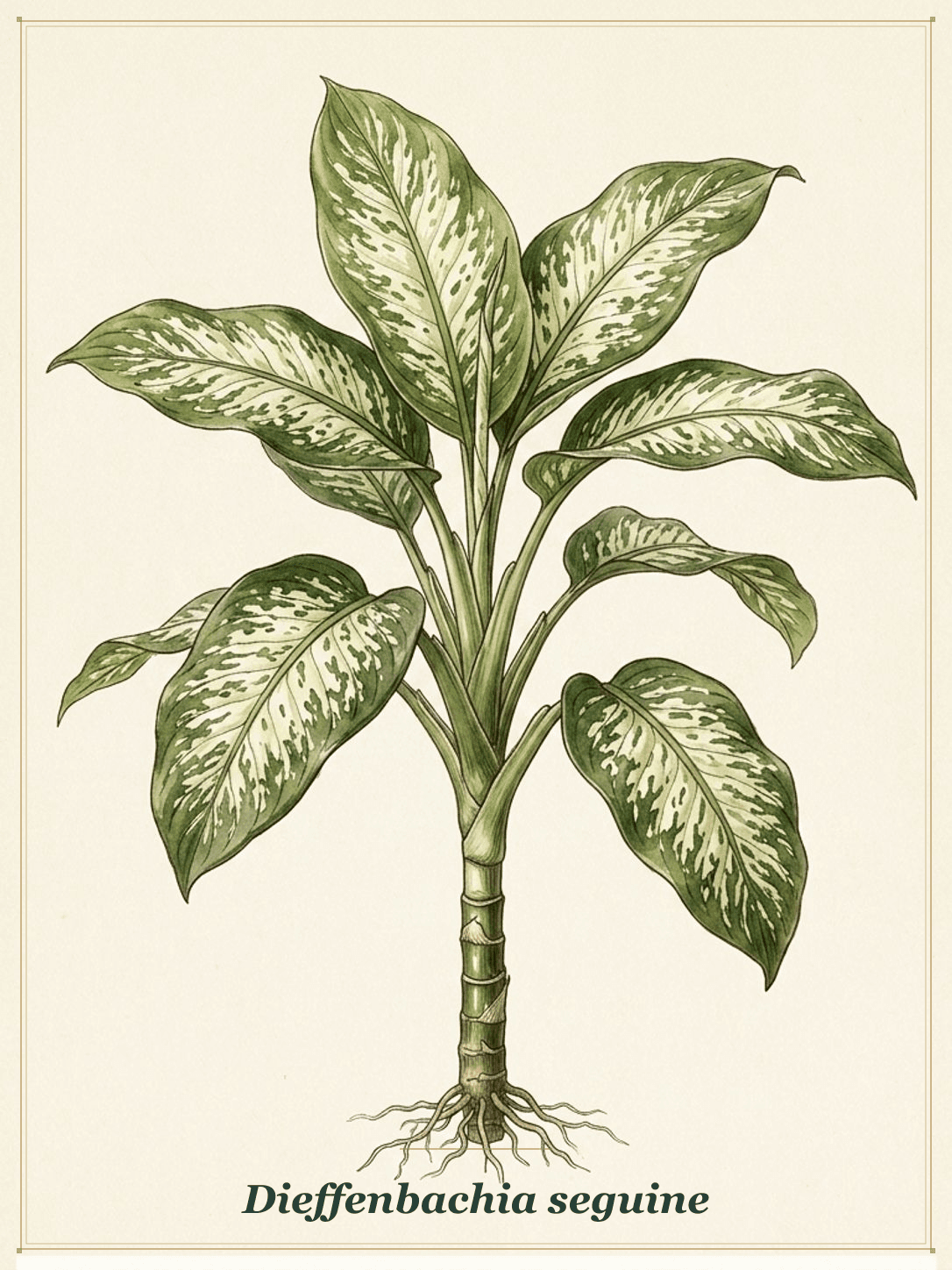
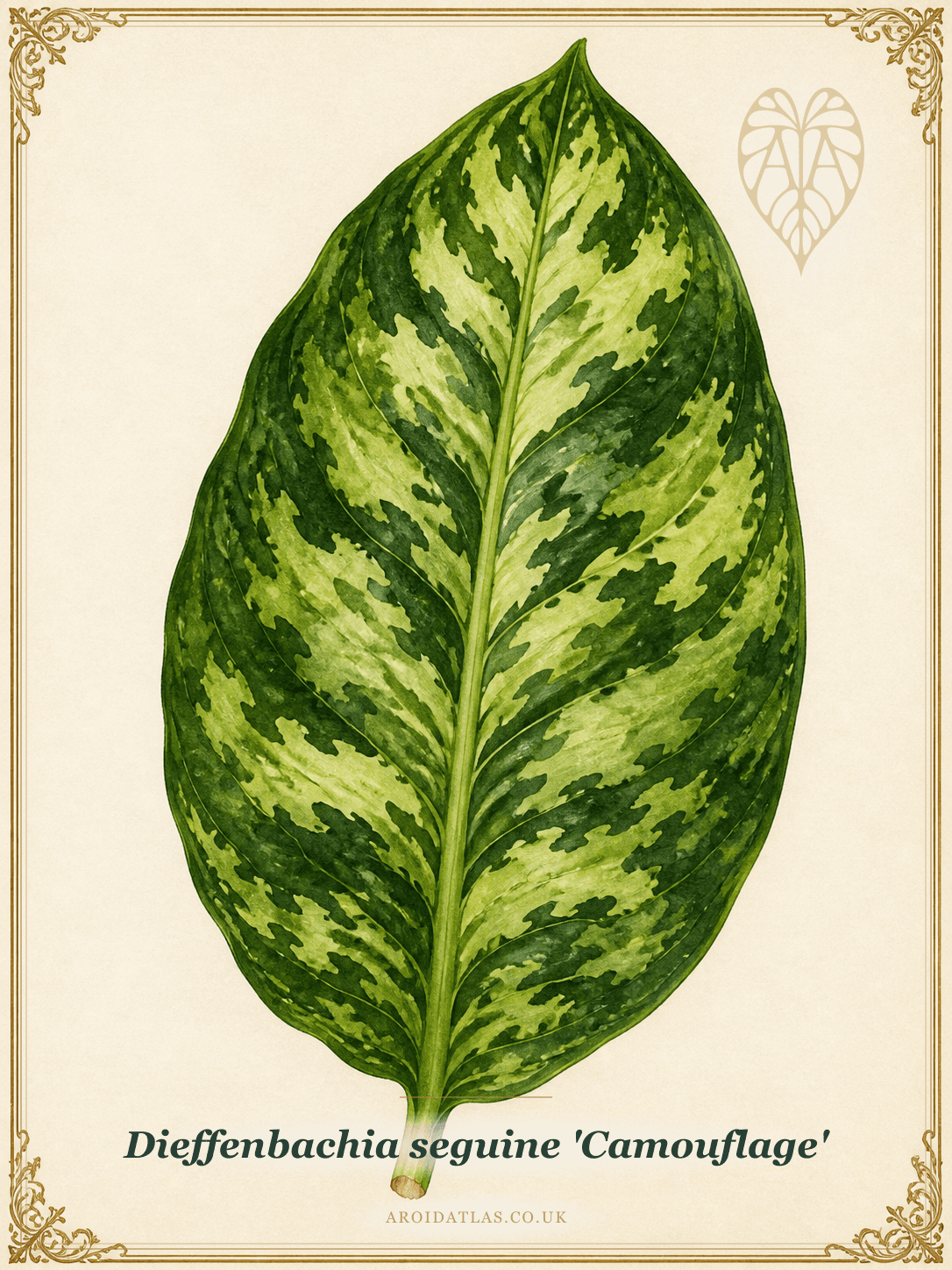
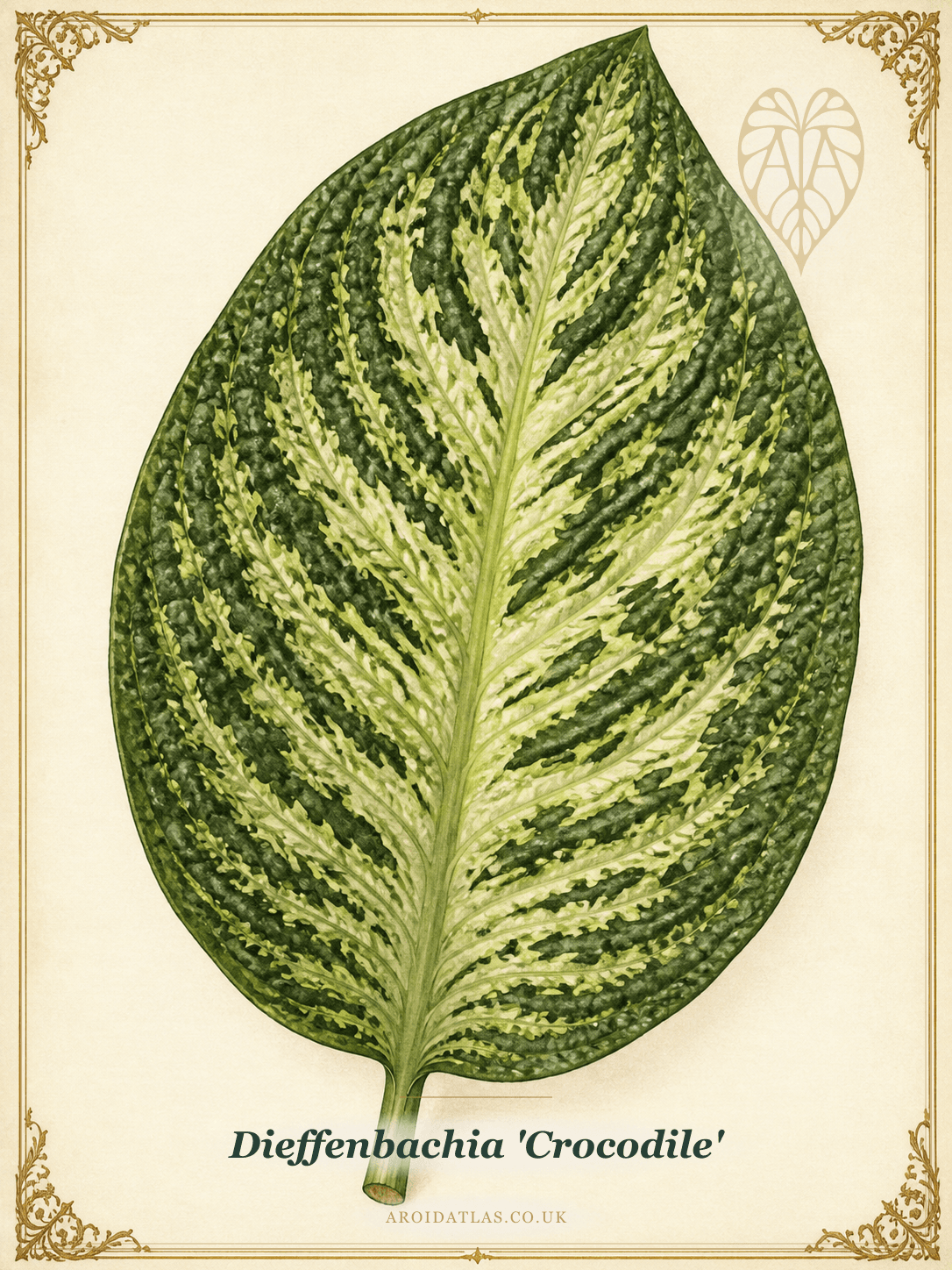
Full Specimen Plate
Dieffenbachia seguine
Dumb Cane
Aroid Atlas Price Guide
Select Plant Size
Pricing Data Key
Based on online retail prices, adjusted for private sales
Other colour-form prices
Dieffenbachia seguine Morphology
About Dieffenbachia seguine
Dumb Cane gets its common name from the calcium oxalate crystals in its sap, which cause a temporary numbing of the mouth and throat if chewed, a defence mechanism that has done little to dent its popularity as a bold, easy-care foliage plant. Its broad, cream-and-green mottled leaves grow from a thick, cane-like stem that closely resembles a small tropical tree by maturity. Native to the understorey of Caribbean and northern South American forests, it favours warm, humid conditions but adapts readily to average indoor environments. Older canes can be air-layered or cut back hard, since the plant readily resprouts from the base or along the remaining stem.
Market Analysis
Dieffenbachia seguine Price Guide & Auction Value
Historical eBay auction metrics and live retailer listings updated weekly.
No eBay auction history available yet. Data is collected automatically as sales appear on eBay UK.
Before You Buy
Species-specific things to check when evaluating a listing
- Sap contains calcium oxalate crystals that cause temporary numbing of the mouth and throat if chewed; keep well away from pets and children, and wash hands after handling cuttings
- Widely available and inexpensive; be cautious of pricing implying rarity for the plain species
- For a mature, tree-like specimen, check the cane is thick and self-supporting rather than thin and floppy
- Confirm you're buying the plain seguine species rather than the 'Camouflage' or 'Crocodile' named forms, which are priced and patterned differently
The Name Is Literal
Dumb Cane isn't a marketing name: it describes a real effect. The sap carries calcium oxalate crystals that cause temporary numbing of the mouth and throat if chewed, a defence mechanism against browsing animals in its native Caribbean and northern South American understorey that has done nothing to dent its popularity as a houseplant. What's more relevant day to day is how well it copes with cutting back: older canes readily resprout from the base or along the remaining stem, so a leggy, top-heavy specimen isn't a lost cause the way it might be with a less forgiving genus.


