Scroll to explore forms of Colocasia esculenta
Leaf Detail Portrait
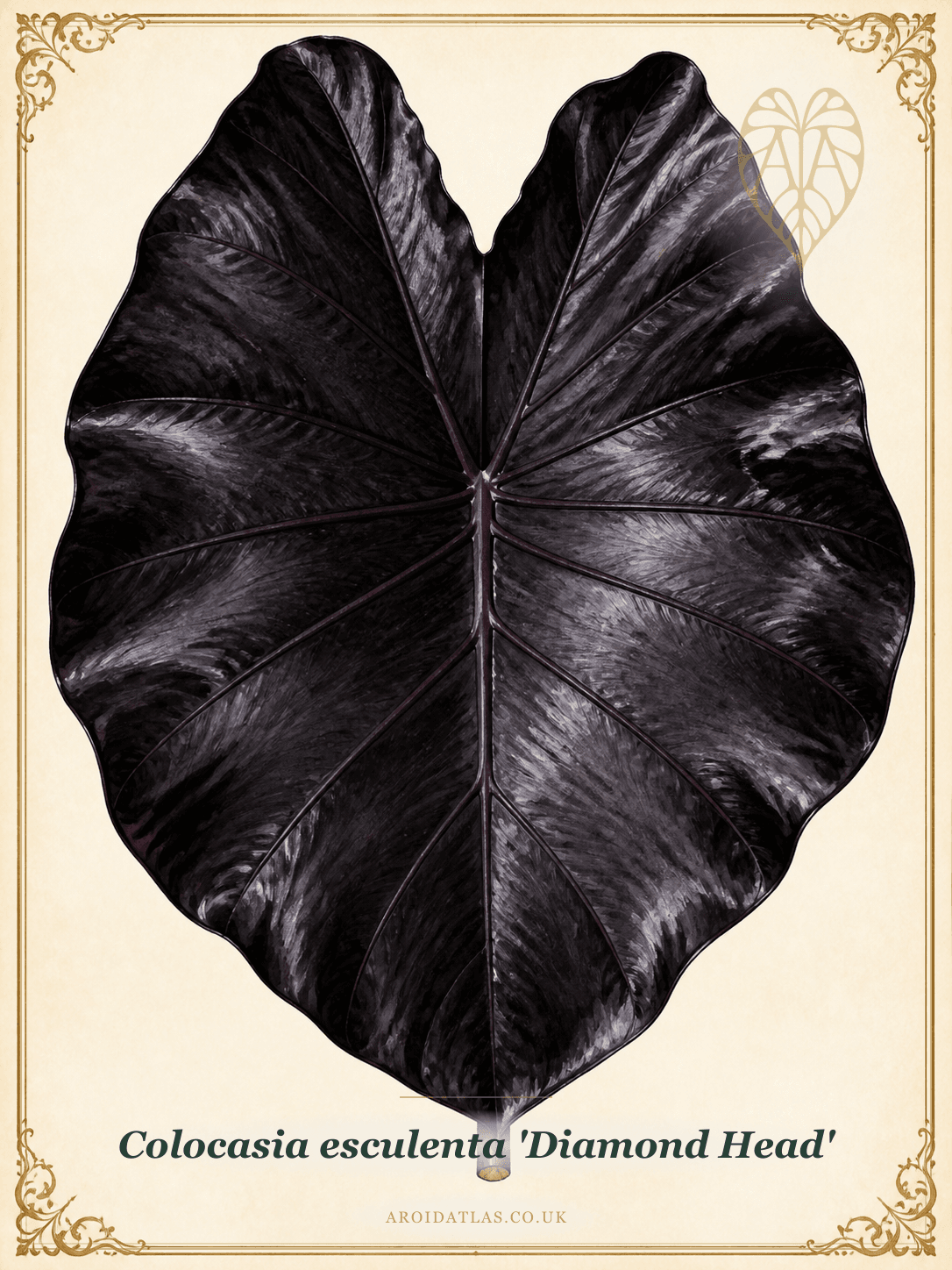
Colocasia esculenta 'Diamond Head'
Diamond Head Elephant Ear
Aroid Atlas Price Guide
Select Plant Size
Pricing Data Key
Other colour-form prices
Colocasia esculenta 'Diamond Head' Morphology
About Colocasia esculenta 'Diamond Head'
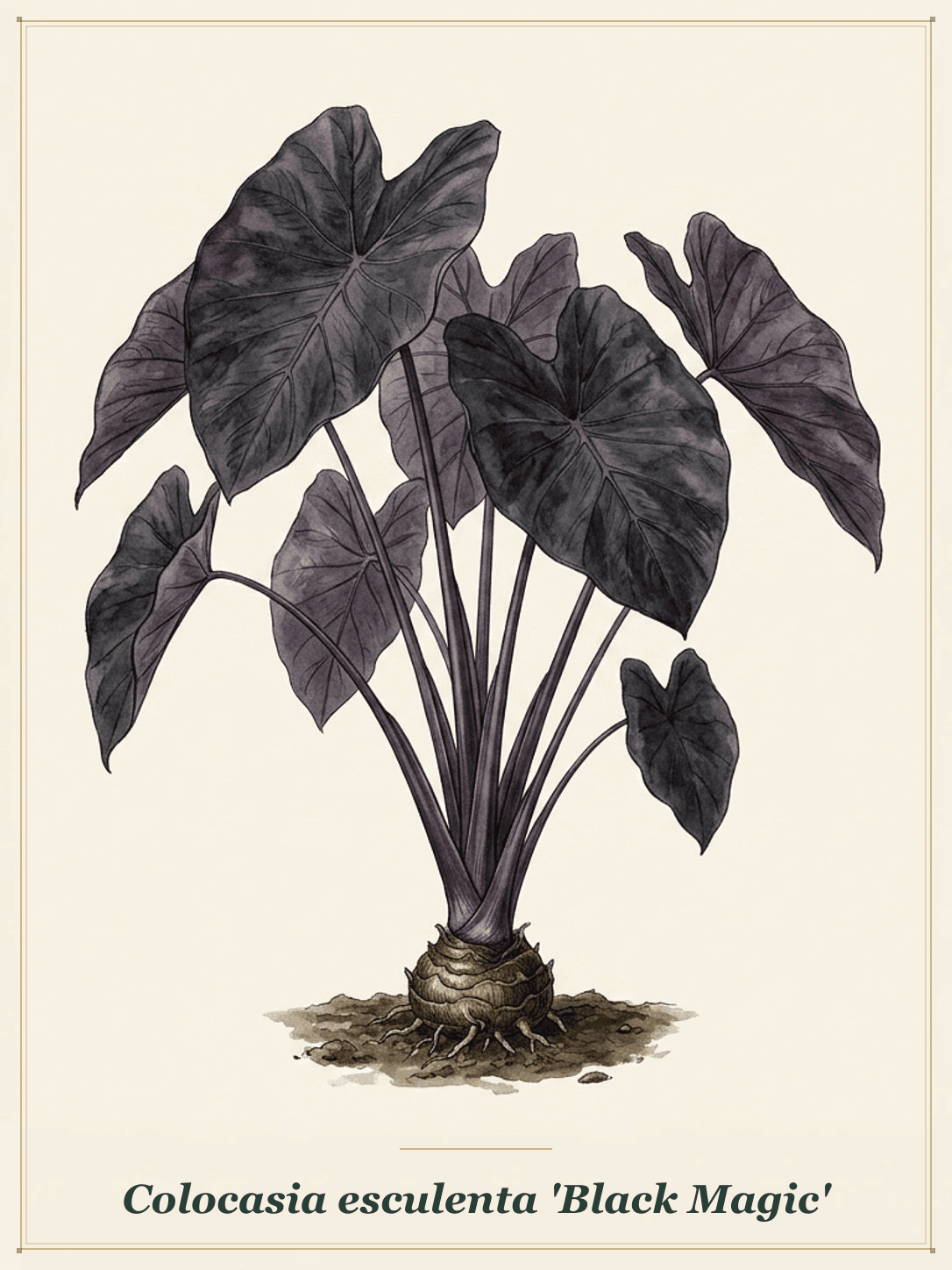
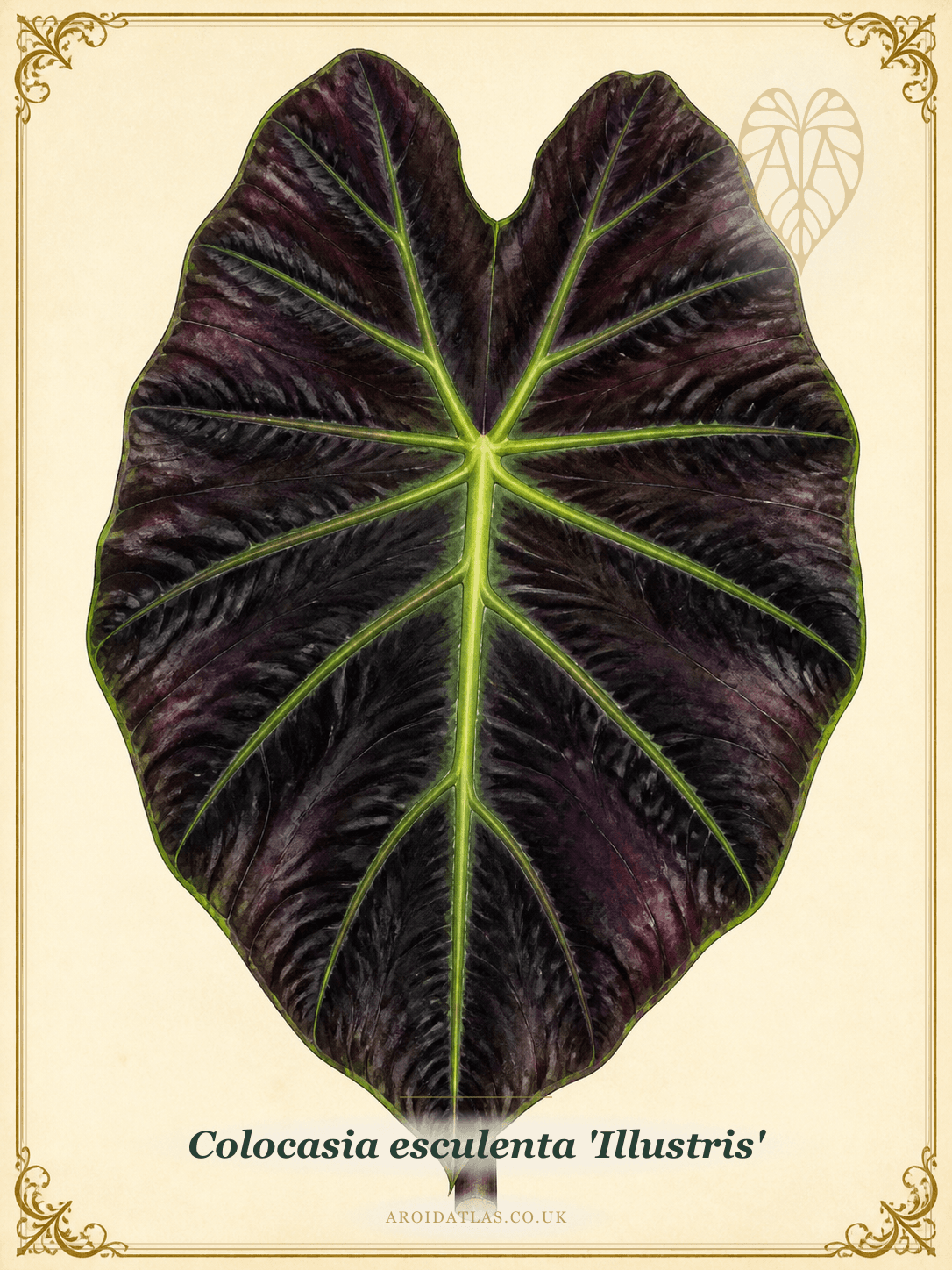
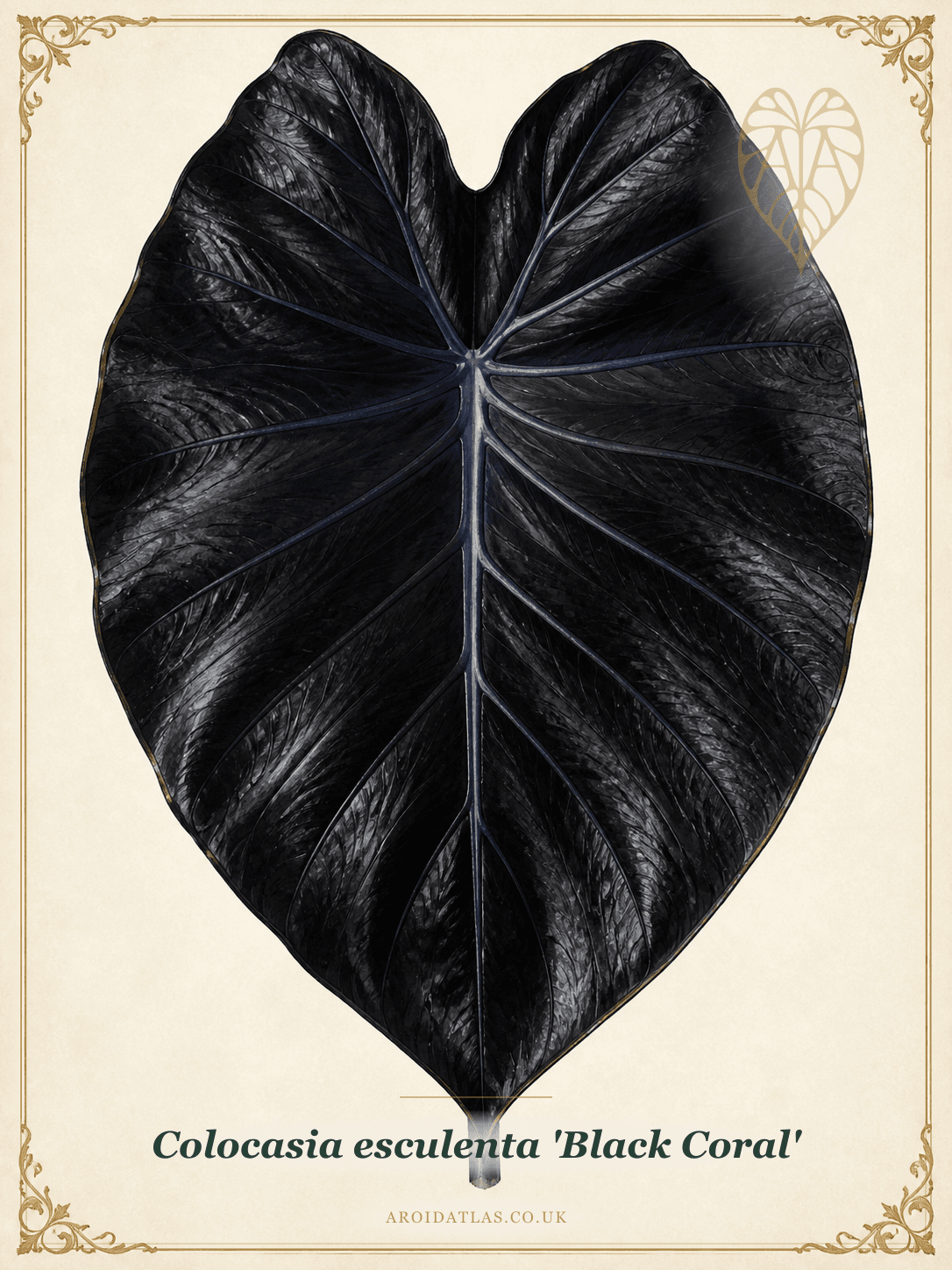
Diamond Head carries a glossy, near-black solid purple-black leaf held in an upward-cupped shape, on long dark purple stems. It's a fast-growing, broadleaf selection that makes a dark accent in a mixed border or large container.
Market Analysis
Colocasia esculenta 'Diamond Head' Price Guide & Auction Value
Historical eBay auction metrics and live retailer listings updated weekly.
No eBay auction history available yet. Data is collected automatically as sales appear on eBay UK.
Before You Buy
Shared checklist for Colocasia esculenta and its cultivated forms
- The plain species is inexpensive and widely available as corms or potted plants each spring
- For 'Black Magic' or other named colour selections, confirm the leaf colour in photos matches the named form
- Check corms are firm, not soft or mouldy, if buying bare-root
- All parts contain calcium oxalate crystals and are toxic if ingested raw; keep away from pets and children
Propagation Guide
How to Propagate Colocasia esculenta 'Diamond Head'
Shared across every form of Colocasia esculenta — see this form's own Morphology for variegation-specific propagation notes.
1-3 months
Cultivar character is preserved through vegetative cuttings
Produces offset cormlets readily, which separate easily from the parent corm. One of the easiest aroids to divide.
Care Guide
Colocasia esculenta 'Diamond Head' Care Guide & Growing Conditions
General care shared across all forms of Colocasia esculenta — cultivated forms may need brighter light or higher humidity than the plain species; check this form's Quick Facts above.
Rich, moisture-retentive mix: 50% potting compost, 30% loam, 20% perlite. Tolerates boggy conditions better than most aroids.
Keep consistently moist; this species tolerates and often prefers wetter soil than typical houseplants, even standing water at the base outdoors.
50-70%, tolerates average household humidity well outdoors or in bright rooms.
Balanced liquid fertiliser at full strength every 2-3 weeks during the growing season, a hungry, fast-growing plant.
Annually while actively growing, given its rapid growth and corm expansion.
Common Problems
Yellowing lower leaves
Natural leaf turnover as the plant grows
Remove spent leaves; only investigate if multiple leaves yellow at once
Spider mites
Dry indoor air
Increase humidity and treat with insecticidal soap


