Full Specimen Plate
Anthurium nigrolaminum
Black-Leaf Anthurium
- Premium New Zealand Sphagnum Moss, 100gLong-fibre sphagnum for air-layering, top-dressing, and epiphyte substrate mixes.
- Natural Rooting Powder, 3 x 75gRooting hormone powder for stem and leaf cuttings.
- Precision Bonsai Pruning Scissors, 200mmFine-bladed snips for clean node cuts when taking a cutting.
- Humidity Dome, Heavy-Duty Germination KitVented propagation dome for holding humidity around fresh cuttings.
Amazon links — we may earn commission on qualifying purchases.
7cm Target Price
£45.00
Anthurium nigrolaminum Morphology
About Anthurium nigrolaminum
Anthurium nigrolaminum, described by Croat & D.Weber, takes its name from its dark foliage, nigro (black) and lamina (leaf blade). Unlike most of the collector 'black velvet' Anthurium, its elongated cordate leaves are smooth and glossy rather than matte-velvety, with a near-mirror-like sheen that can look almost black in low light and reveals prominent, ribbed parallel venation when caught at an angle. The species is unusually adaptable for a velvet-adjacent Anthurium, occurring across a wide range of habitats from hillside forest to disturbed floodplain edges, in both sun and full shade, on sandy or red-loamy soils. In cultivation, selected clones (most famously the premium 'Gigi' selection) are prized well beyond the plain species and form the basis of several well-known collector hybrids.
Native Range
Colombia
Market Hub
Anthurium nigrolaminum Sold Prices & Live Market
What the Target Price above is based on: eBay sold prices by plant size, live listings, and retailer stock.
No eBay sales recorded yet. Sold listings are collected as they appear on eBay.
Before You Buy
Species-specific things to check when evaluating a listing
- Ask whether the plant is a plain species or a named selection like 'Gigi'; premium clones command significantly higher prices for the same species
- Roots should be firm and pale; mushy or dark roots indicate rot, often caused by poor transit conditions
- Check the leaf surface is glossy and smooth rather than dull; a healthy specimen has real sheen even in photos
- Request a photo of the most recently unfurled leaf to judge current health; a crispy or damaged newest leaf is a red flag
Propagation Guide
How to Propagate Anthurium nigrolaminum
Propagation Guide
How to Propagate Anthurium nigrolaminum
8-14 months
Root in a closed high-humidity environment. Mature specimens may produce basal offshoots that can be carefully divided. Patience is essential; establishment is slow.
Care Guide
Anthurium nigrolaminum Care Guide & Growing Conditions
Care Guide
Anthurium nigrolaminum Care Guide & Growing Conditions
Very chunky, well-aerated mix: 40% orchid bark, 30% perlite, 20% sphagnum moss, 10% activated charcoal. Anthuriums suffocate in dense soil; roots need airflow.
Water when the substrate is nearly dry throughout. Less is more: overwatering is the primary killer of velvet-adjacent anthuriums. Always use room-temperature water.
70–85% is ideal, though this species tolerates a wider humidity range than most of its velvet-leaf relatives given its varied native habitat.
Low-nitrogen fertiliser (e.g. 5-10-10 or orchid fertiliser) at quarter strength every 3–4 weeks. High nitrogen produces lush but weak growth susceptible to pests.
Reluctantly, only when completely root-bound (every 2–3 years). These plants dislike disturbance and may sulk after repotting.
Common Problems
Yellowing leaves
Overwatering or root rot
Remove from pot, trim affected roots, repot into fresh dry substrate and reduce watering
Dull, flat leaf sheen
Low light or dust buildup on the glossy leaf surface
Increase indirect light slightly and wipe leaves gently with a damp cloth
Thrips
Common on collector Anthurium; hard to detect early
Inspect new growth and leaf undersides regularly; treat with neem oil or systemic insecticide at first sign
Lineage
Hybrids Bred From Anthurium nigrolaminum
Lineage
Hybrids Bred From Anthurium nigrolaminum
Field Reference
In the Wild
Field Reference
In the Wild
Field Notes
The One That Isn't Velvet
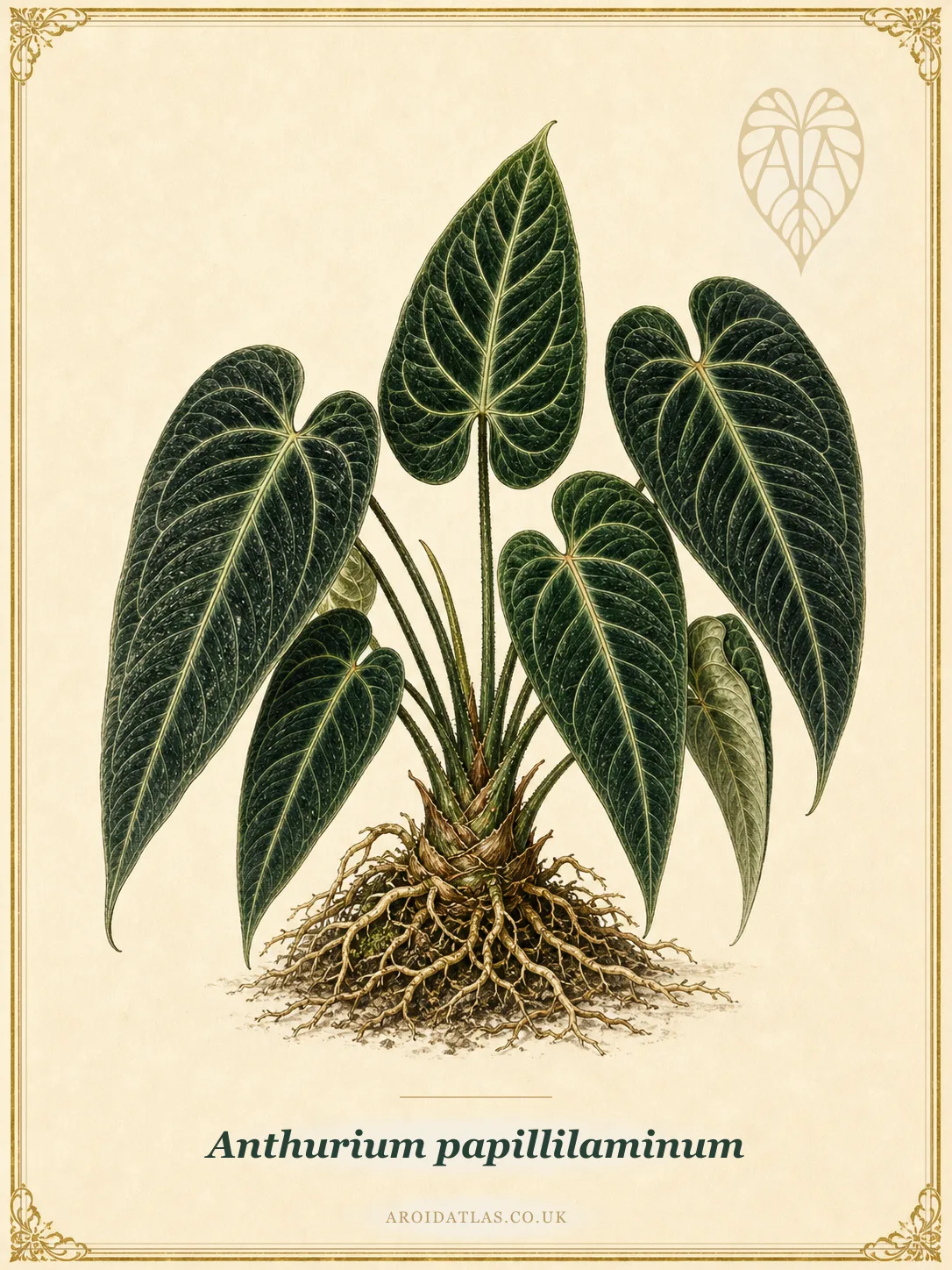
It's easy to lump Anthurium nigrolaminum in with the velvet-leaf crowd purely on colour, but the leaf surface tells a different story: smooth and genuinely glossy, almost lacquered, rather than the matte bullate texture of papillilaminum or luxurians. That gloss is exactly why it crosses so well with true velvet species: 'Gigi', the premium clone behind several well-known hybrids on this site, is simply an exceptional individual selection of this species, not a separate taxon. If you're chasing the parentage behind a hybrid and it mentions nigrolaminum, this is the plant standing behind the name, whether or not the specific clone is named.