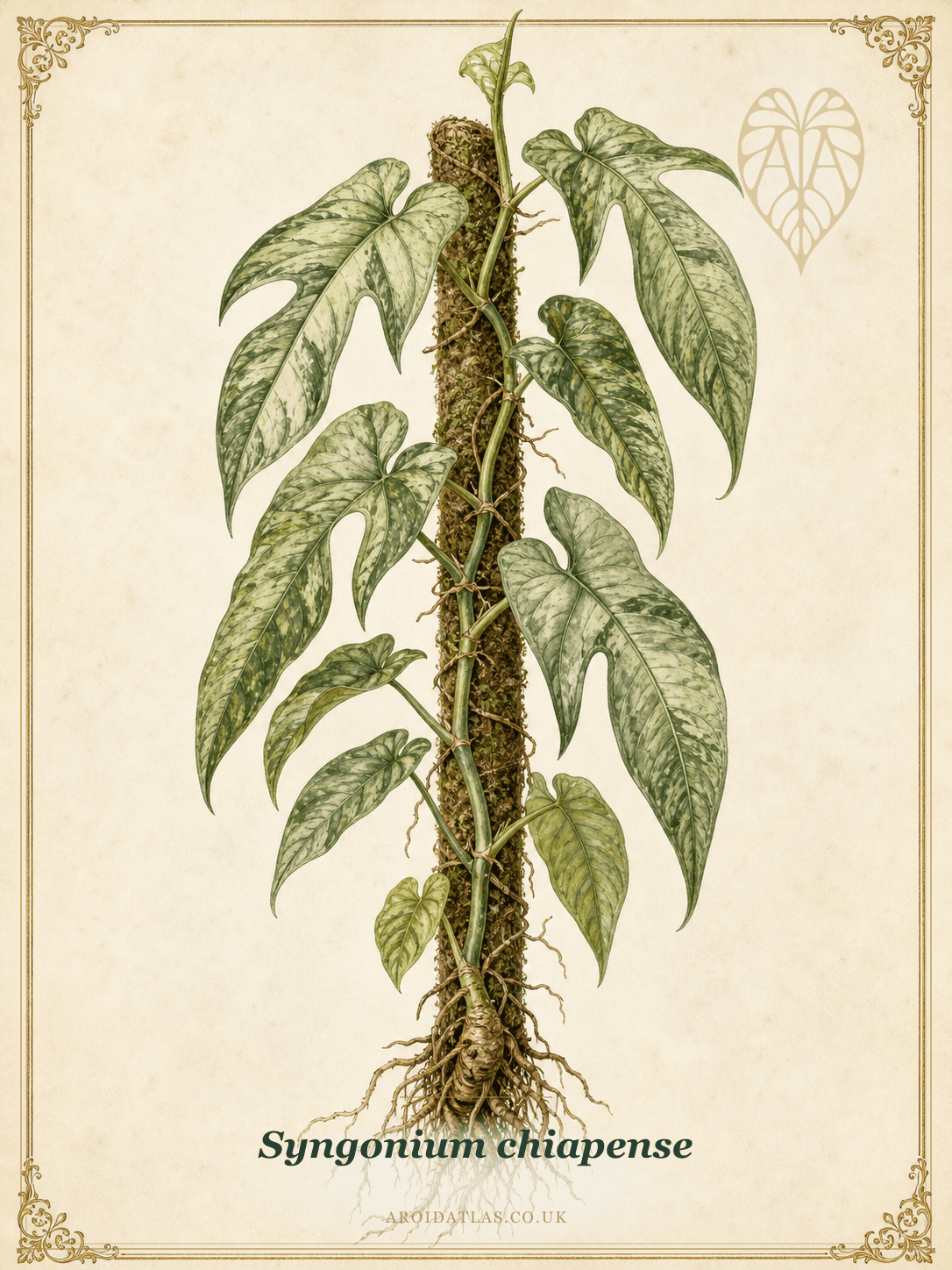
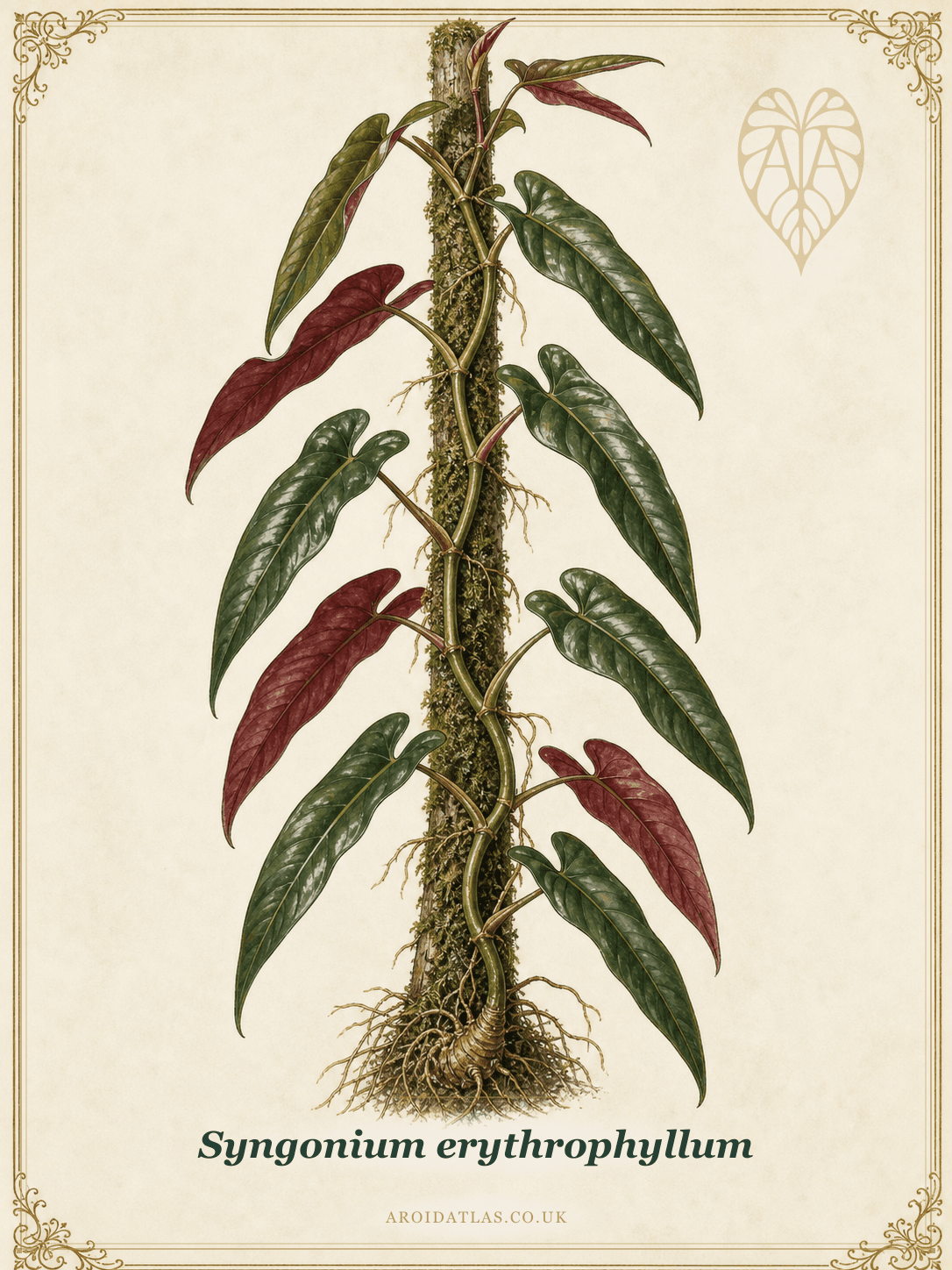
Full Specimen Plate
Syngonium hoffmannii
Hoffmannii Syngonium
Aroid Atlas Price Guide
Select Plant Size
Pricing Data Key
Syngonium hoffmannii Morphology
About Syngonium hoffmannii
Syngonium hoffmannii is a lesser-known Costa Rican species with elongated, glossy leaves and a robust climbing habit, remaining relatively obscure in cultivation compared to the widely available Syngonium podophyllum cultivars. It is sought out mainly by collectors specifically interested in true species diversity within the genus rather than named colour-form cultivars.
Native Range
Costa Rica
Market Analysis
Syngonium hoffmannii Price Guide & Auction Value
Historical eBay auction metrics and live retailer listings updated weekly.
No eBay auction history available yet. Data is collected automatically as sales appear on eBay UK.
Before You Buy
Species-specific things to check when evaluating a listing
- Verify the seller's species ID against reference photos, as this is an uncommon species with limited comparison material available
- Check stem nodes are firm and undamaged
- Confirm the plant is rooted before purchasing if buying an unrooted cutting
Propagation Guide
How to Propagate Syngonium hoffmannii
3-6 weeks
Cultivar character is preserved through vegetative cuttings
Roots readily from stem or node cuttings in water or moist substrate.
Care Guide
Syngonium hoffmannii Care Guide & Growing Conditions
Standard well-draining houseplant mix: 60% potting compost, 25% perlite, 15% orchid bark.
Allow the top few centimetres of substrate to dry between waterings.
60-80% for best leaf size.
Balanced liquid fertiliser at half strength every 4 weeks during the growing season.
Every 12-18 months, or when root-bound.
Common Problems
Leggy, sparse growth
Insufficient light
Move to brighter indirect light; pinch growing tips to encourage bushier habit
Slow establishment after purchase
Root disturbance during shipping
Keep in stable warm, humid conditions and avoid repotting immediately after purchase
A Genuinely Obscure Species
Hoffmannii doesn't have a flashy trade name or a dramatic colour trait to sell itself on; it's included here simply because it's a real, distinct Syngonium species that rarely gets any coverage at all, and true species diversity matters for a reference site as much as the eye-catching cultivars do.