Scroll to explore forms of Syngonium chiapense
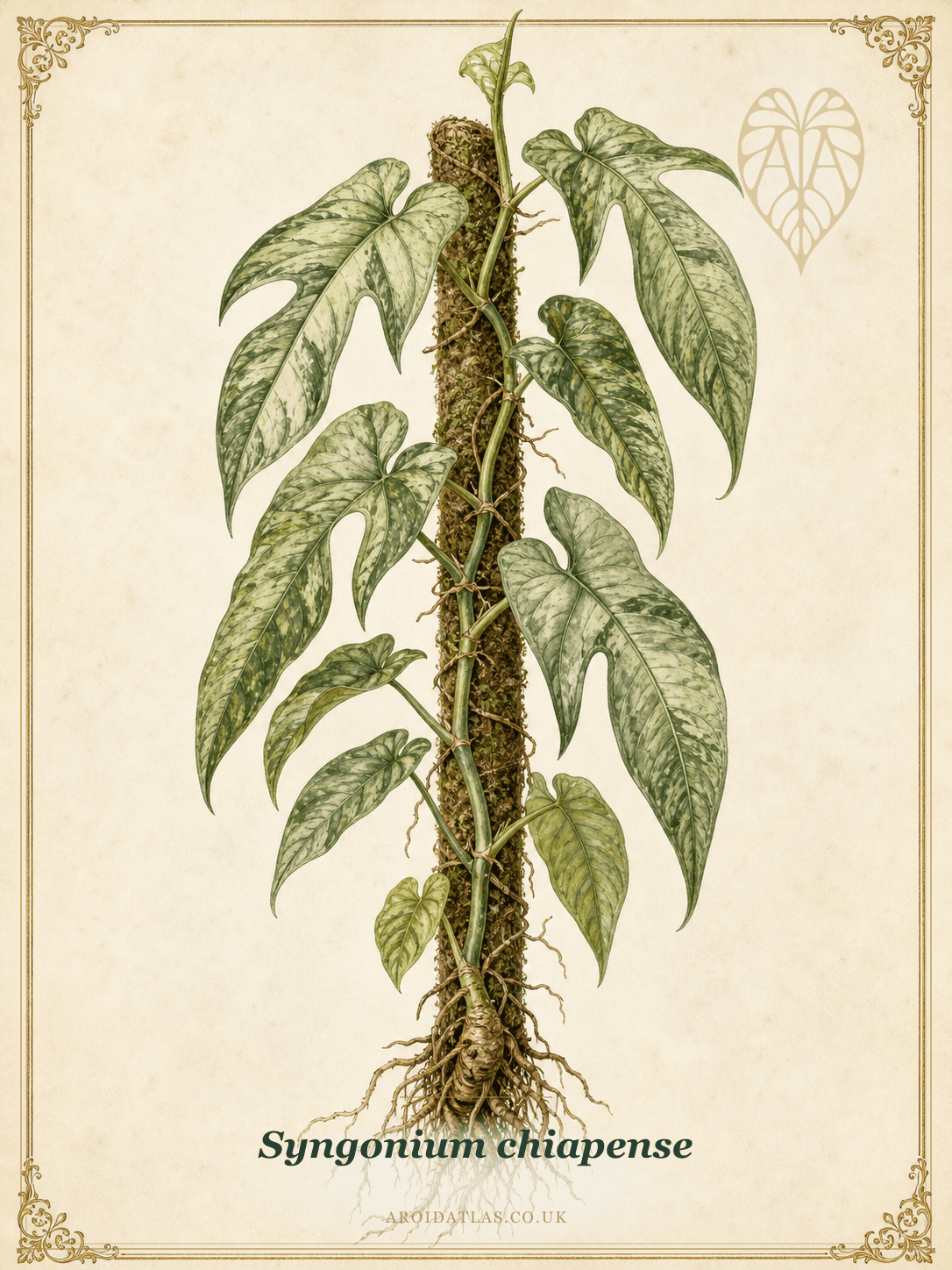
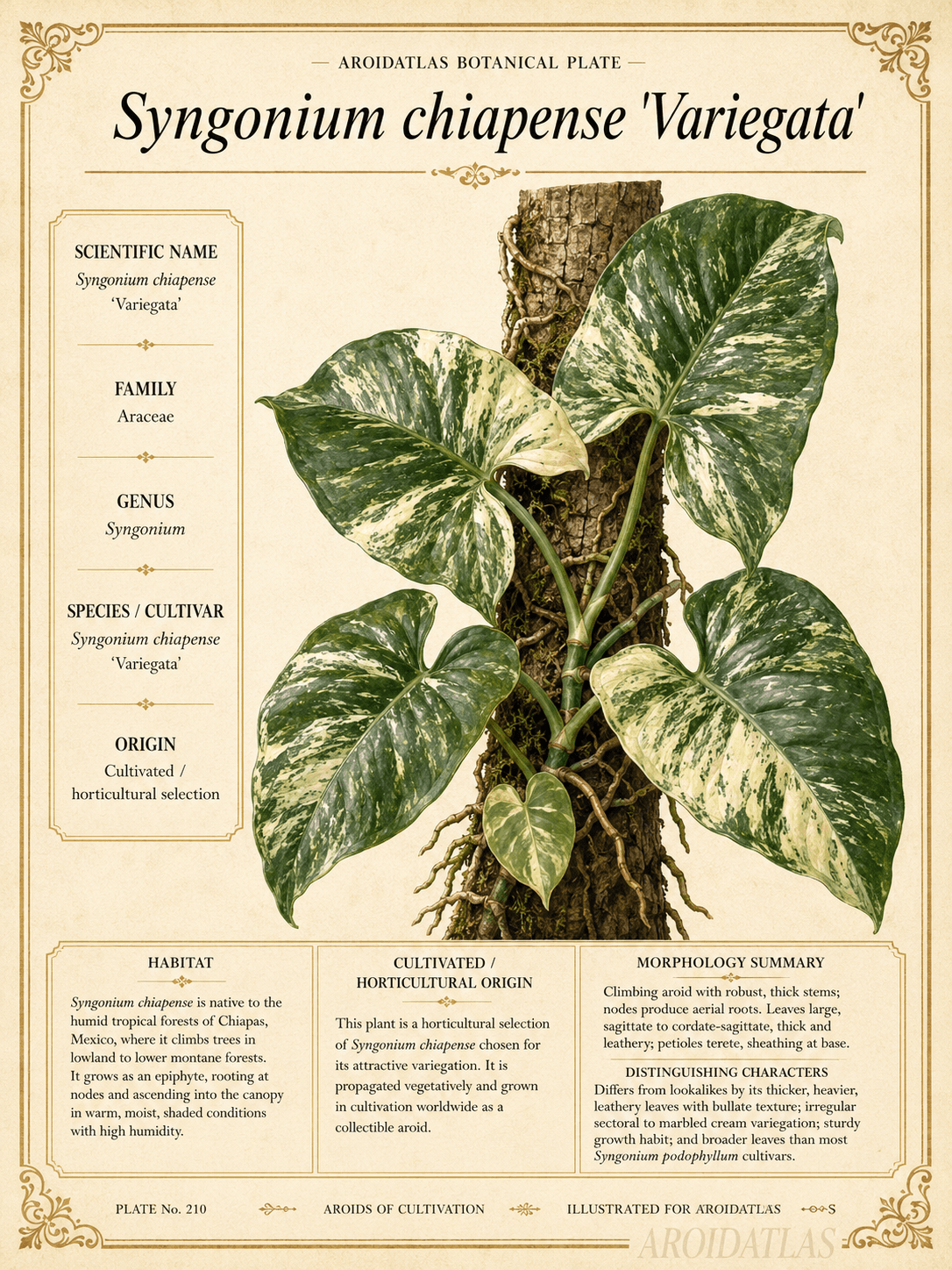
Full Specimen Plate
Syngonium chiapense 'Variegated'
Variegated Chiapense
Aroid Atlas Price Guide
Select Plant Size
Pricing Data Key
Community price estimate based on limited sales history
Other colour-form prices
Syngonium chiapense 'Variegated' Morphology
About Syngonium chiapense 'Variegated'
Syngonium chiapense 'Variegated' is a horticultural selection derived from the species native to the humid tropical forests of Chiapas, Mexico. As an epiphyte, it displays a robust climbing habit with thick, leathery leaves that are noticeably broader and sturdier than common Syngonium podophyllum varieties. The plant is distinguished by its unique bullate texture and vibrant, irregular sectoral to marbled cream variegation. It thrives in warm, moist, and shaded environments with high humidity, making it a prized addition for collectors of rare aroids.
Market Analysis
Syngonium chiapense 'Variegated' Price Guide & Auction Value
Historical eBay auction metrics and live retailer listings updated weekly.
No eBay auction history available yet. Data is collected automatically as sales appear on eBay UK.
Before You Buy
Shared checklist for Syngonium chiapense and its cultivated forms
- Less common than podophyllum — verify the seller's ID against reference photos, as mislabelling is common in the genus
- For the variegated form, confirm the variegation pattern matches photos
- Check stem nodes are firm and undamaged
Propagation Guide
How to Propagate Syngonium chiapense 'Variegated'
Shared across every form of Syngonium chiapense — see this form's own Morphology for variegation-specific propagation notes.
3-6 weeks
Cultivar character is preserved through vegetative cuttings
Roots readily from stem or node cuttings in water or moist substrate, like most Syngonium species.
Care Guide
Syngonium chiapense 'Variegated' Care Guide & Growing Conditions
General care shared across all forms of Syngonium chiapense — cultivated forms may need brighter light or higher humidity than the plain species; check this form's Quick Facts above.
Standard well-draining houseplant mix: 60% potting compost, 25% perlite, 15% orchid bark.
Allow the top few centimetres of substrate to dry between waterings.
55-75% for best leaf size and colour.
Balanced liquid fertiliser at half strength every 4 weeks during the growing season.
Every 12-18 months, or when root-bound.
Common Problems
Leggy, sparse growth
Insufficient light
Move to brighter indirect light; pinch growing tips to encourage bushier habit
Reversion to green on variegated forms
Low light
Increase light levels and prune reverted all-green growth