Scroll to explore forms of Begonia aconitifolia
Full Specimen Plate
Begonia aconitifolia
Aconite-leaf Begonia
Aroid Atlas Price Guide
Select Plant Size
Pricing Data Key
Other colour-form prices
Begonia aconitifolia Morphology
About Begonia aconitifolia
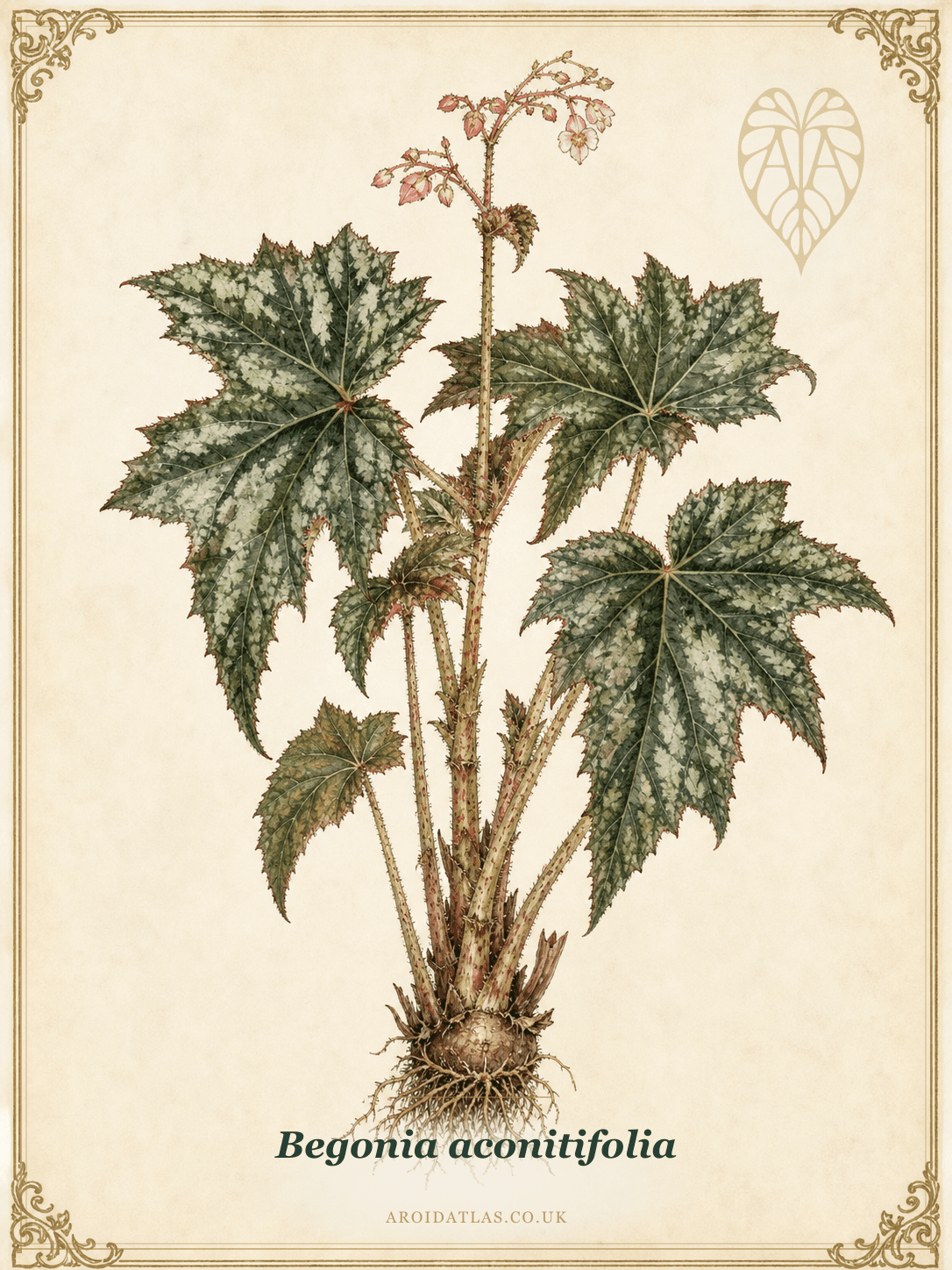
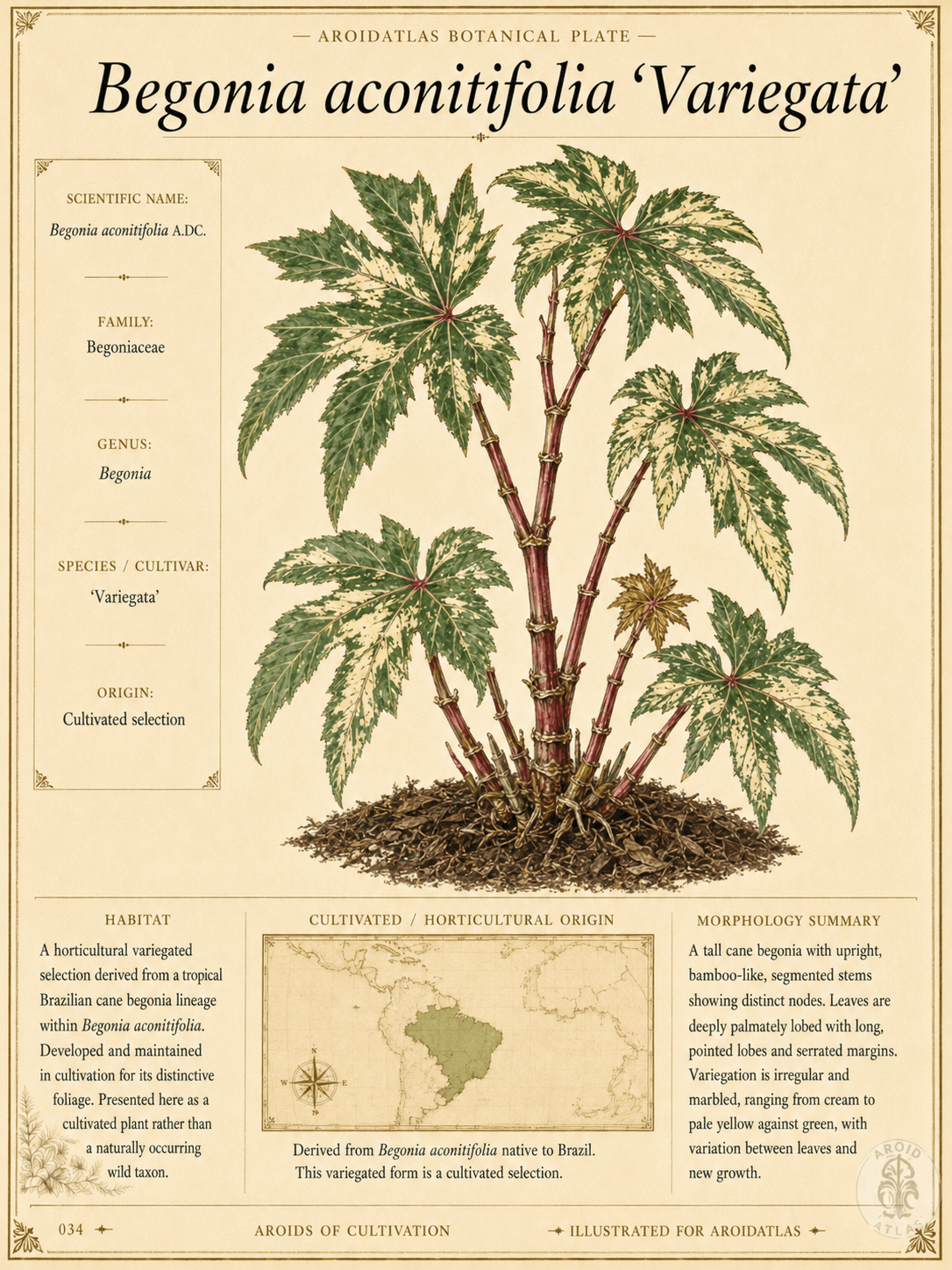
Begonia aconitifolia is a cane begonia from Brazil named for its deeply palmately-lobed leaves, which resemble the foliage of aconite (monkshood) rather than the broad, unlobed leaves typical of most cane begonias. The plain species carries solid deep green, silver-spotted foliage on upright bamboo-like canes. Its variegated selection overlays irregular cream sectoring on this same lobed leaf shape, a considerably rarer and more delicate form than the species.
Native Range
Brazil
Market Analysis
Begonia aconitifolia Price Guide & Auction Value
Historical eBay auction metrics and live retailer listings updated weekly.
No eBay auction history available yet. Data is collected automatically as sales appear on eBay UK.
Before You Buy
Species-specific things to check when evaluating a listing
- Check for powdery mildew on leaf surfaces
- For the variegated form, confirm the cutting shows the characteristic cream sectoring, not reverted all-green growth
- Rhizome/cane sections should be firm, not soft
Propagation Guide
How to Propagate Begonia aconitifolia
3-5 months
Cultivar character is preserved through vegetative cuttings
Roots readily from stem or node cuttings, like most cane begonias. The variegated form needs a cutting taken at a visibly variegated node to preserve sectoring.
Care Guide
Begonia aconitifolia Care Guide & Growing Conditions
Light, well-draining mix: 50% perlite, 30% potting compost, 20% orchid bark.
Allow the top half of the substrate to dry between waterings. Water at the base.
50-70%.
Balanced liquid fertiliser at quarter strength every 2-3 weeks during the growing season.
Every 12-18 months in spring.
Common Problems
Powdery mildew
Poor air circulation with high humidity
Improve airflow and avoid wetting leaves
Leggy stems
Insufficient light
Move to brighter indirect light
A Cane Begonia That Doesn't Look Like One
Most cane begonias in the trade carry broad, unlobed leaves. Aconitifolia is the exception: five to seven deep palmate lobes, veins radiating out from the petiole junction along each lobe, give it a shape closer to aconite (monkshood) foliage than to typical begonia foliage. The plain species keeps this lobed outline solid green with silver spotting; the variegated selection layers cream sectoring over the same shape rather than changing it. *Worth remembering when comparing listings*: a plant sold under this name with rounded, unlobed leaves isn't this species, regardless of what the label says.