Propagating Zamioculcas
ZZ Plant grows from an underground rhizome and stores enough energy in it to regrow from a single leaflet, the slowest, and most distinctive, propagation method in this catalogue.
Three methods, three speeds
Zamioculcas zamiifolia grows from a swollen underground rhizome that stores enough water and energy for the plant to survive extended drought in its native East African grasslands. That same stored energy is what makes rhizome division the fastest propagation method, since a division already comes with an established growth point attached. A full leaf stem, cut at the base with its several leaflets still attached, has less stored energy but still forms a new rhizome at a reasonable pace. A single leaflet, pulled or cut individually, carries the least stored energy of the three and can take several months just to form a small tuber, longer still before it pushes an actual shoot; it's the slowest method here by a wide margin, but it's also the one that turns one healthy plant into the most new starts.
The near-black 'Raven' cultivar propagates by exactly the same methods as the standard species. New growth from any method emerges bright green first and darkens to its characteristic near-black colour only as it matures, which isn't a sign of reversion.
Step by Step
Follow the trail below, one component at a time — each illustrated in the same antique botanical plate style used across our species archive.
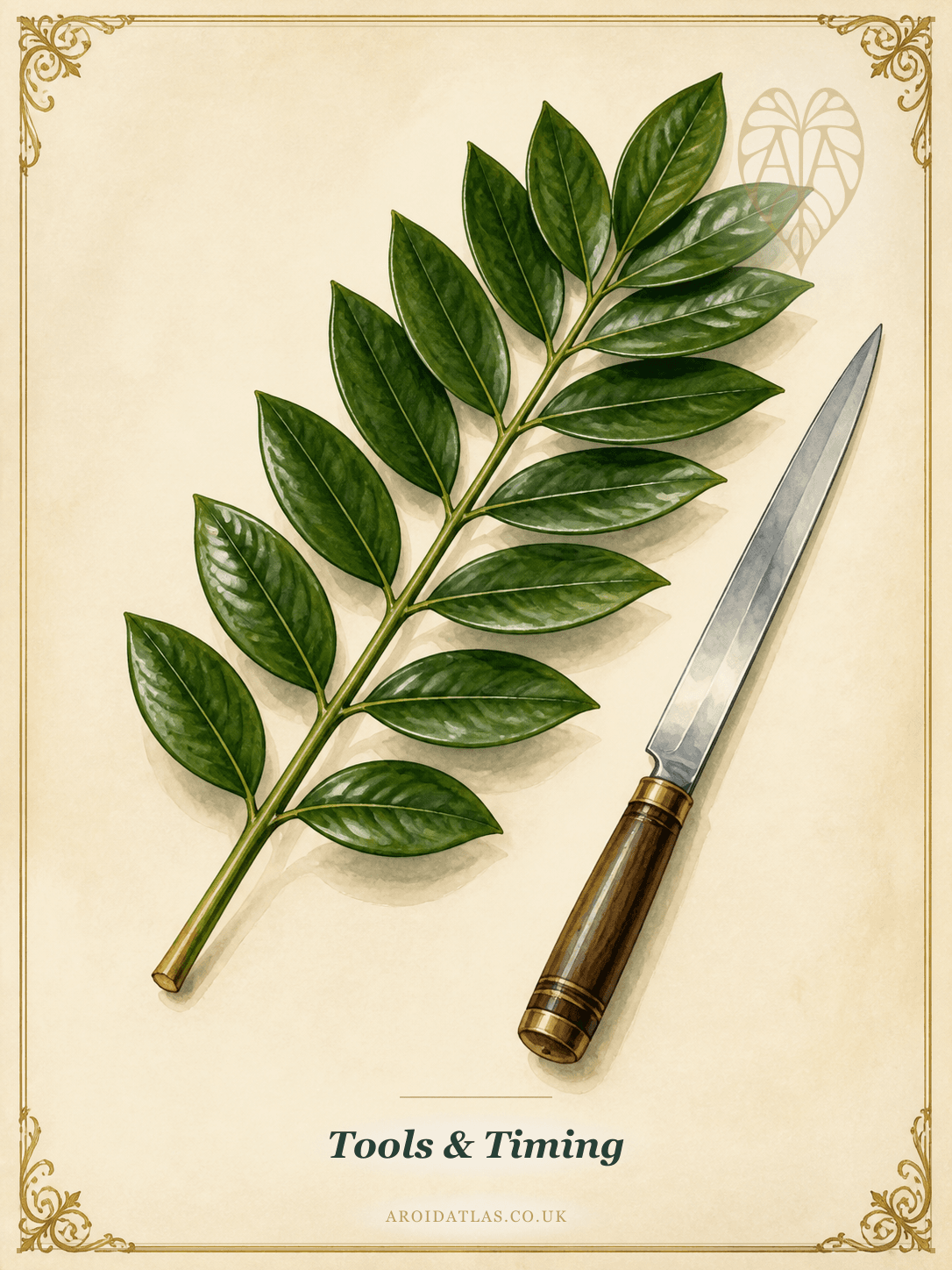
Tools & Timing
A clean, sharp blade is sufficient for any of the three methods. Propagate during active growth in spring or summer; Zamioculcas slows down considerably over winter, and cuttings taken then are markedly slower to form a tuber.
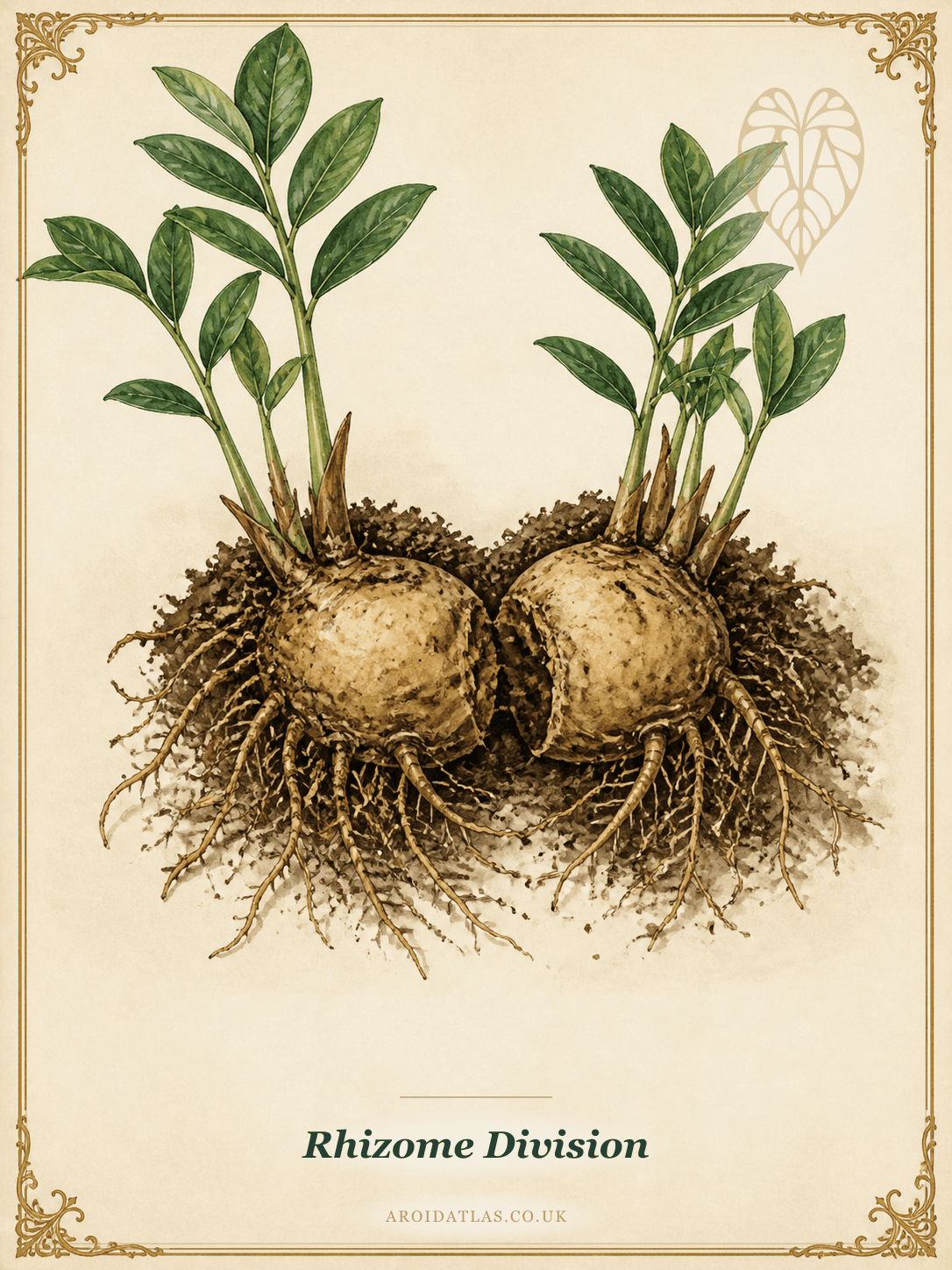
Rhizome Division (Fastest)
Ease the whole root ball out of its pot and locate the divisions between separate rhizome sections, each with its own stems and roots attached. Separate a division by hand or with a clean cut through any connecting tissue, keeping as much of its own root system intact as possible, then pot it directly. This method skips the tuber-forming wait entirely, since the division already has one.
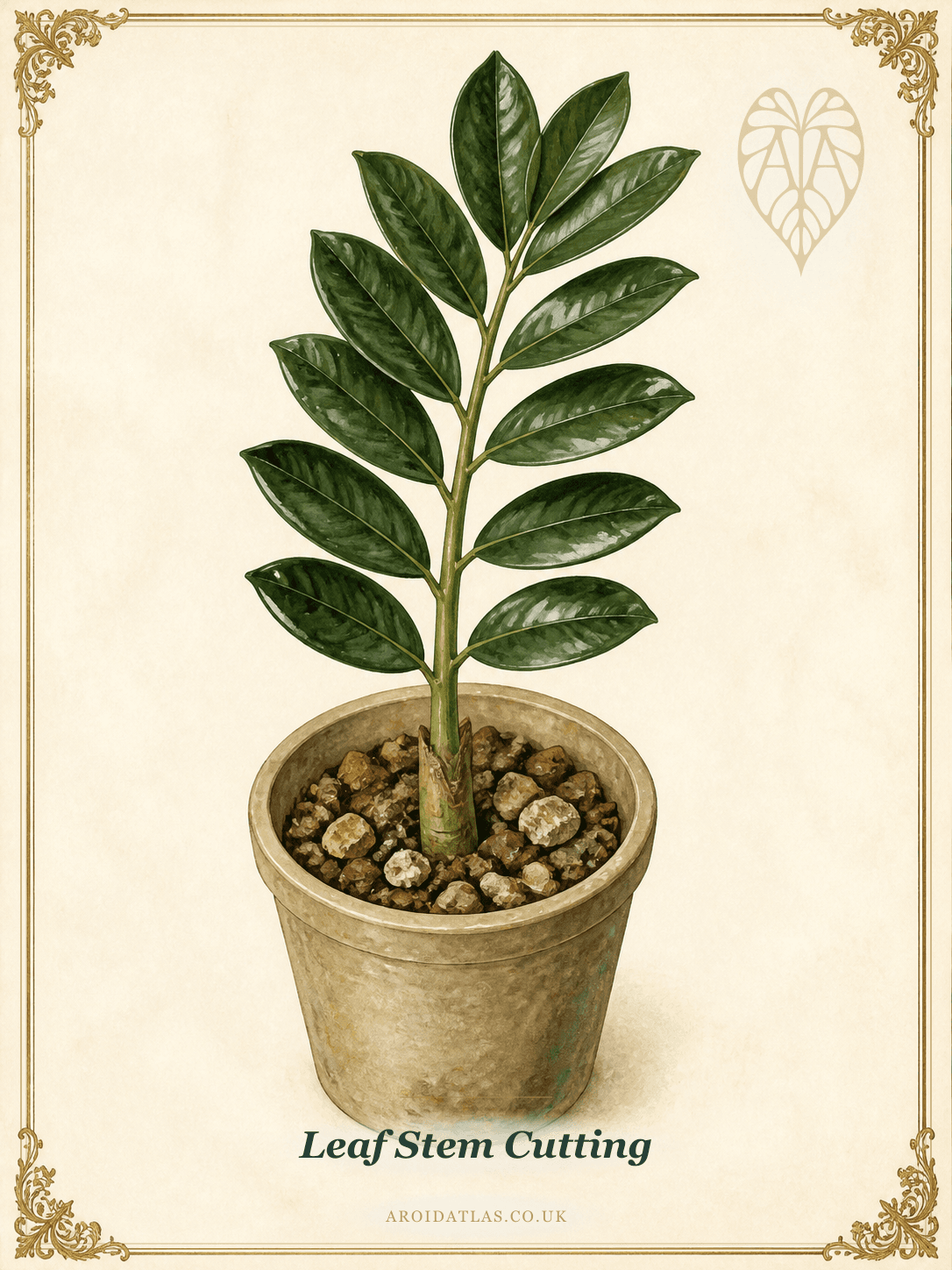
Leaf Stem Cutting (Moderate Speed)
Cut a full compound leaf stem at its base, where it meets the rhizome, keeping its several leaflets attached. Let the cut end callus for a day before inserting the base into a well-draining mix. A full stem carries enough stored energy to form a new rhizome faster than a single leaflet, while still being a genuinely slow process measured in months, not weeks.
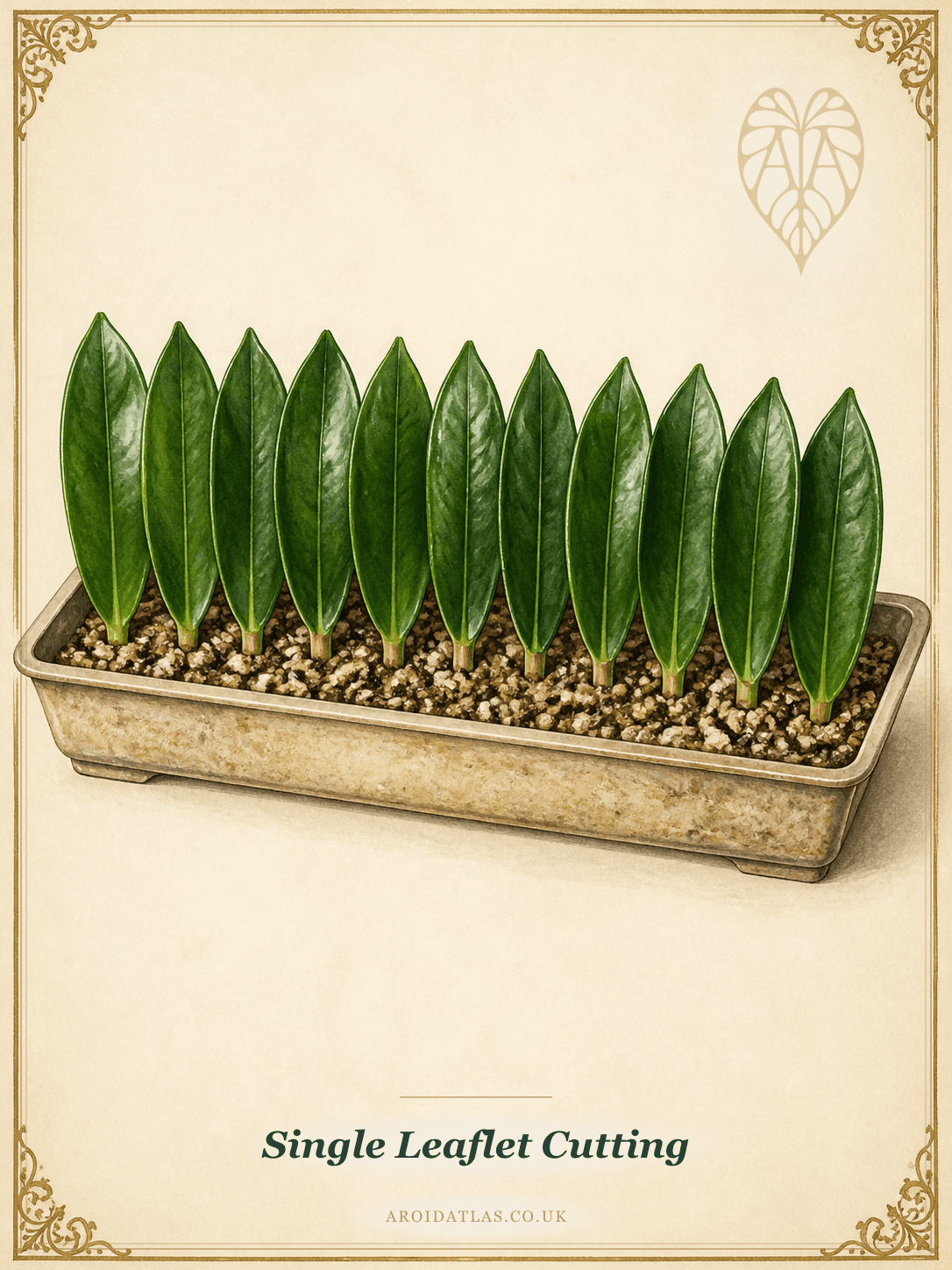
Single Leaflet Cutting (Slowest, Highest Yield)
Individual leaflets can be gently pulled or cut from a leaf stem and inserted upright into well-draining substrate. Each leaflet carries the least stored energy of the three methods and can take several months to form even a small tuber, with a visible shoot often taking longer still. But a single leaf stem can yield a dozen or more individual leaflet cuttings, making this the method that produces the most new plants from the least material.
Resist the urge to tug on a leaflet cutting to check for a tuber; the wait genuinely runs to months, and disturbing it repeatedly slows things down further.
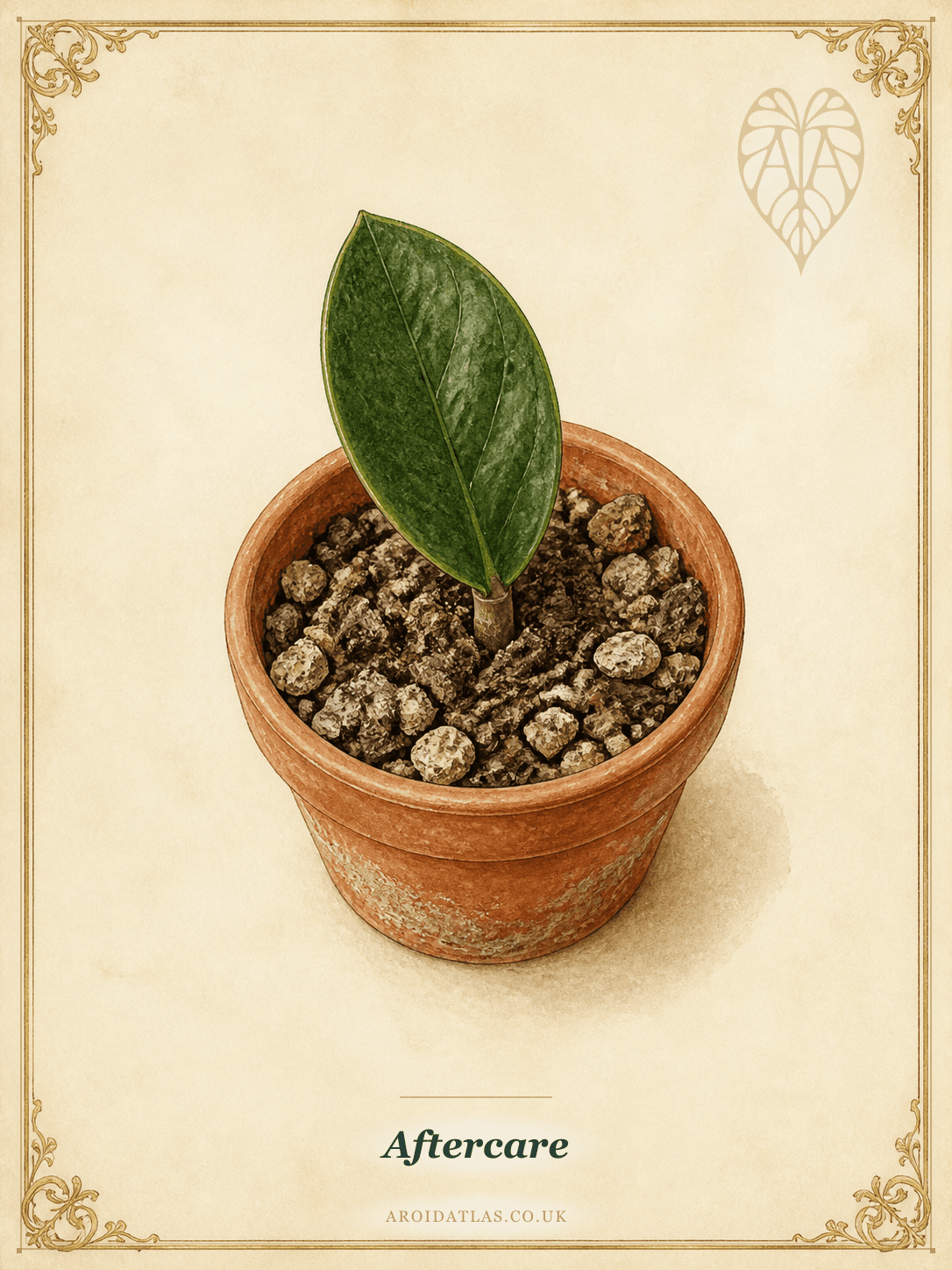
Aftercare
Water sparingly across all three methods. Zamioculcas is markedly more drought-tolerant than most plants in this catalogue, and overwatering an unrooted cutting or fresh division is a far more common failure point than underwatering it.
No visible growth for months doesn't mean failure
Leaflet and leaf-stem cuttings can sit with no visible aboveground change for two to three months while a small tuber forms underground before anything else happens; this is normal for the genus, not a sign the cutting has failed.
Rhizome division is the only method for splitting an established clump
If the goal is simply reducing the size of an overgrown plant rather than maximising the number of new starts, division is the only one of the three methods that does that directly: leaflet and stem cuttings only add new plants, they don't reduce the parent.
'Raven' cuttings emerge green, not black
New growth from a Raven cutting or division, by any of the three methods, unfurls pale green and only darkens toward the cultivar's near-black colour over several weeks as the leaf matures; an early green leaf is expected, not a reversion to the standard species.
Overwatering kills far more cuttings here than underwatering
Zamioculcas stores water in its rhizome by design. Keeping substrate on the drier side for an unrooted cutting or division mimics the dry conditions the genus is naturally suited to, and is safer than erring toward more frequent watering.