Propagating Aglaonema & Dieffenbachia
Both genera grow upright on a jointed cane rather than a climbing vine, and both propagate the same three ways: top cuttings, cane sections, and base division.
A cane, not a vine
Aglaonema and Dieffenbachia both grow as an upright, unbranching cane studded with leaf scars and nodes, closer in habit to a Dracaena than to a climbing Philodendron. That structure is what makes three separate propagation methods all viable on the same plant: the growing tip can be cut and rooted on its own, older bare sections of cane can be cut into pieces and laid down to sprout new growth from their nodes, and a multi-stemmed clump can simply be divided at the base.
Both genera commonly lose their lower leaves as the cane grows taller, leaving a bare stem below an actively growing crown. This is normal growth habit rather than decline, and it's exactly the bare cane material that cane-sectioning propagation uses.
Step by Step
Follow the trail below, one component at a time — each illustrated in the same antique botanical plate style used across our species archive.
Tools & Timing
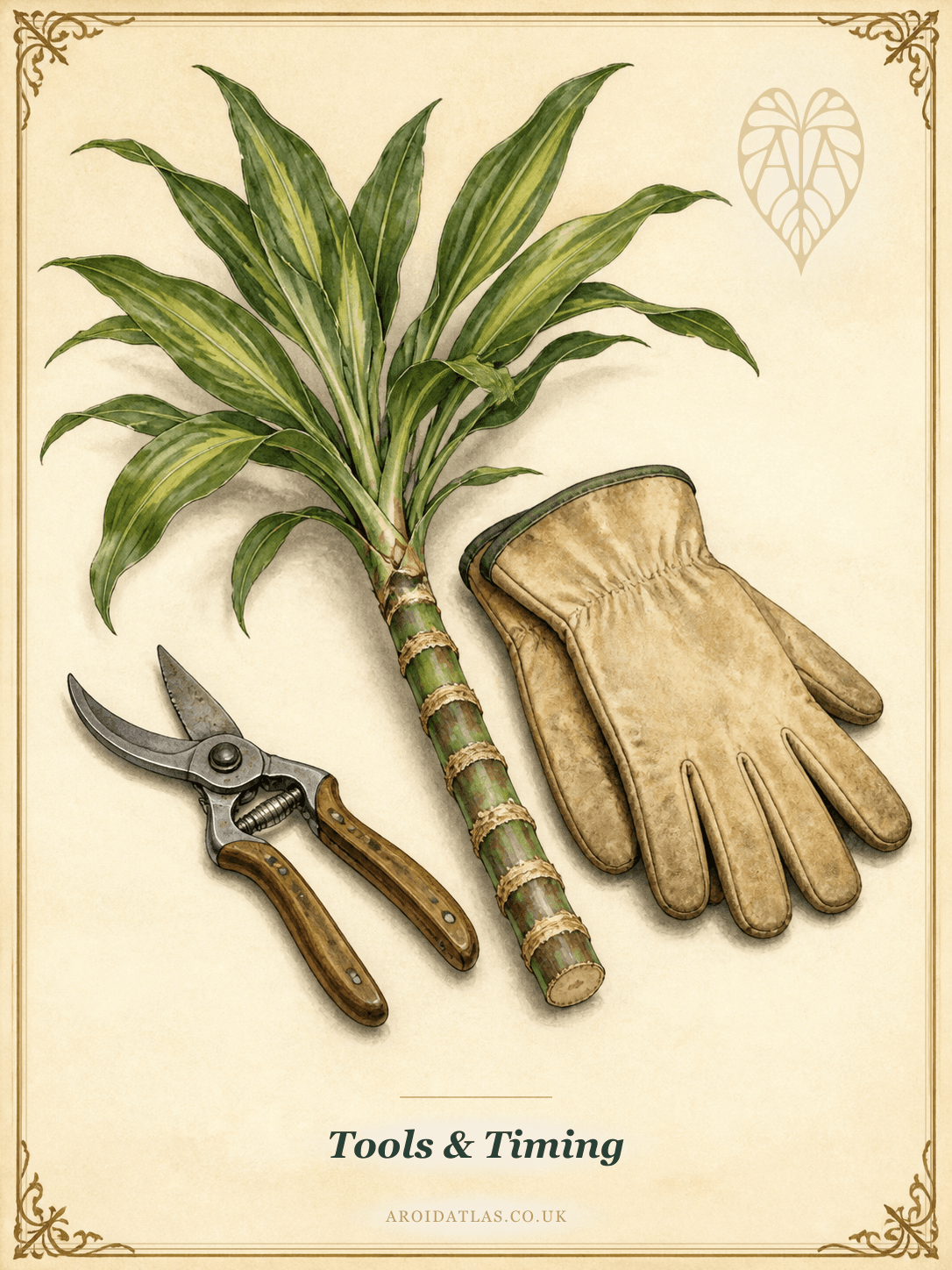
A clean, sharp blade or snips wiped with isopropyl alcohol between cuts is sufficient. Propagate during active growth in spring or summer; cane sections cut while a plant is dormant or stressed are markedly slower to sprout.
Wear gloves throughout. Both genera's sap is a genuine skin and mucous-membrane irritant, not just a folk warning.
Top Cutting
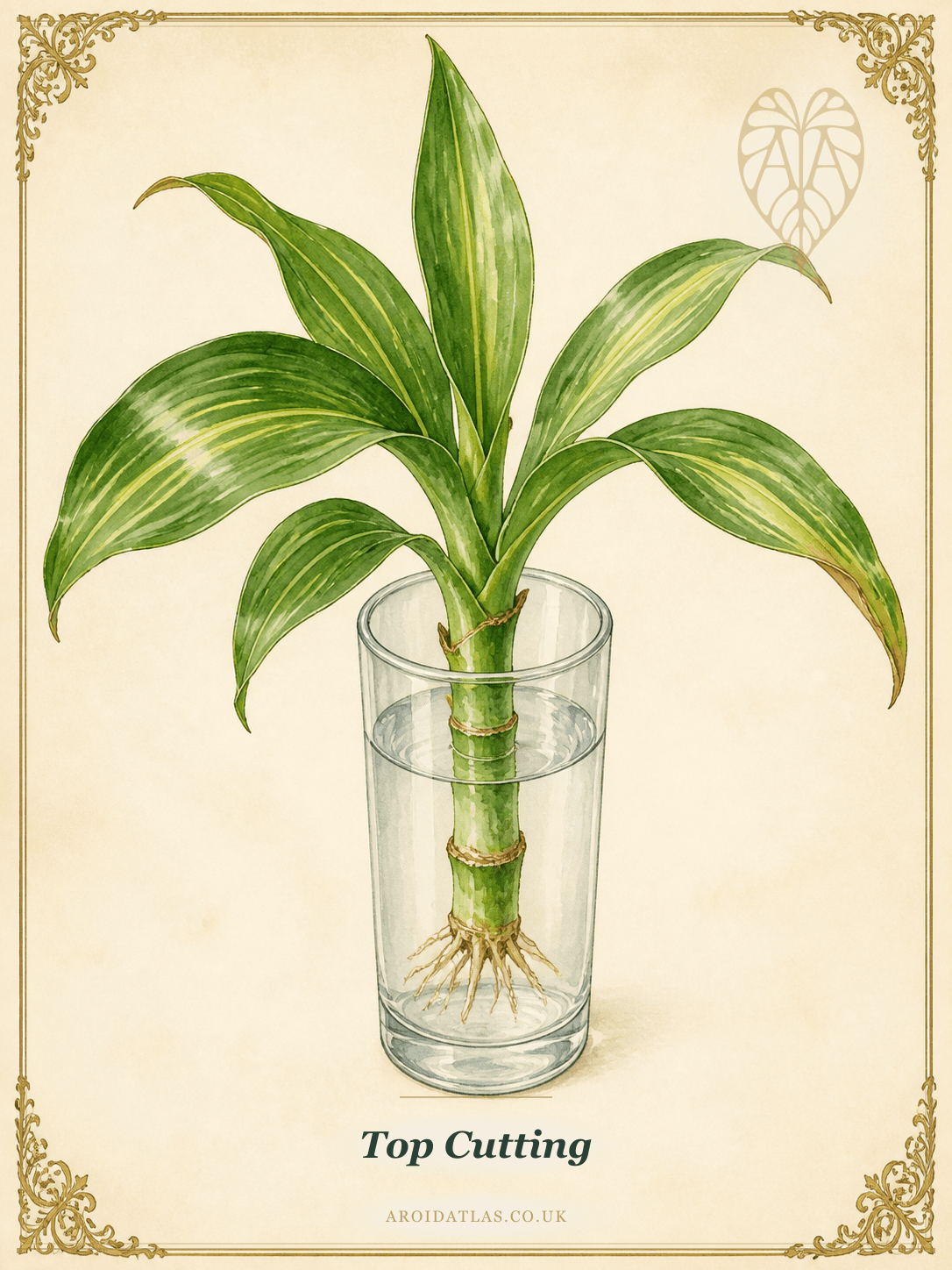
Cut the top few inches of an actively growing crown, just below a node, leaving several leaves attached. Root it in water or damp substrate the same way as a climbing aroid cutting. This is the fastest of the three methods and gives you an immediately attractive, leafy plant.
Cane Sectioning
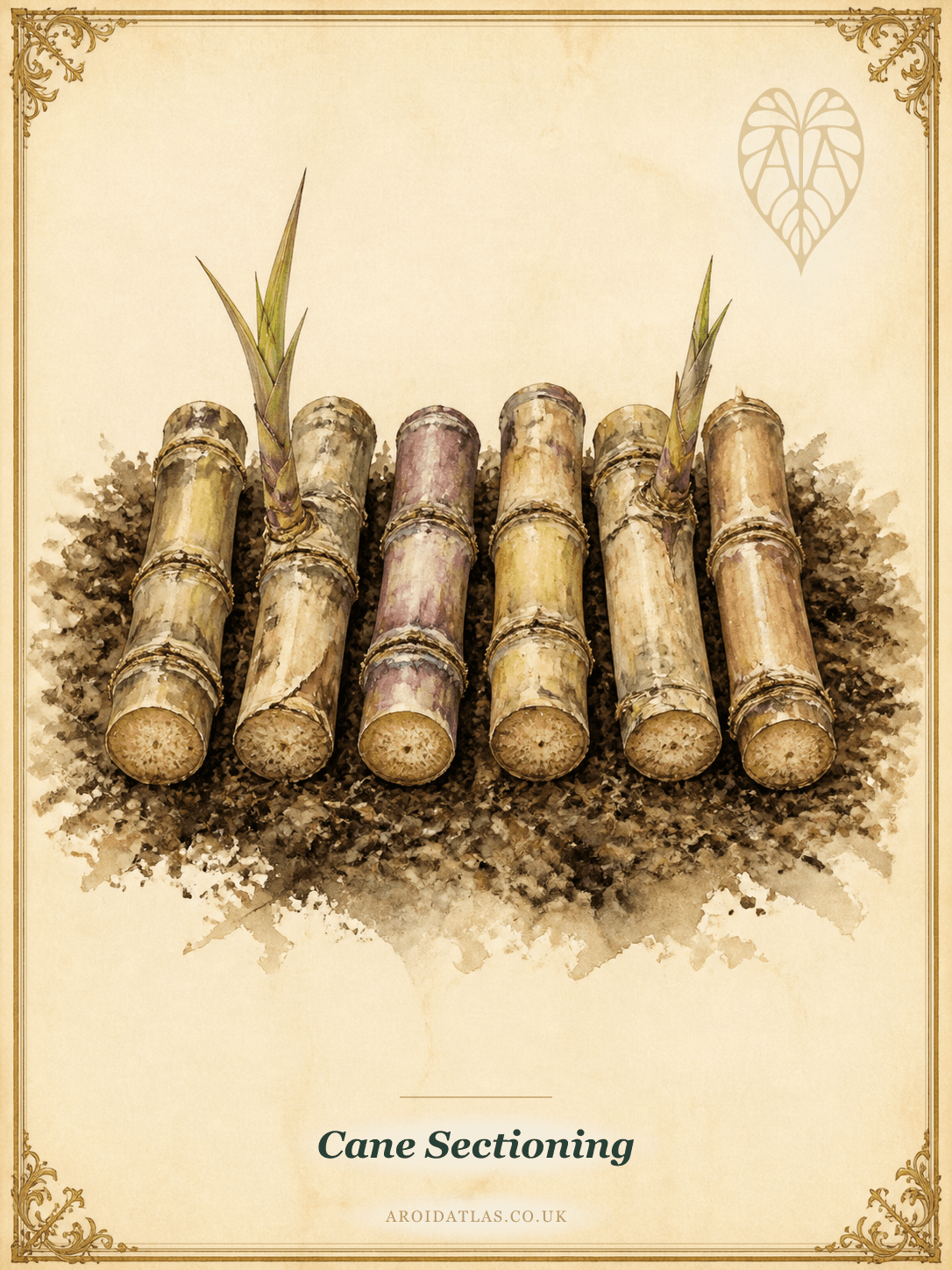
The bare lower cane left behind after a top cutting isn't waste. Cut it into sections a few centimetres long, each containing at least one node, and lay them horizontally on top of (not buried in) moist substrate. New shoots emerge directly from the nodes along the cane's length over the following weeks.
Keep sectioned cane pieces horizontal, not vertical; laying them flat exposes more of each node to the substrate surface and light, which speeds up shoot emergence.
Base Division
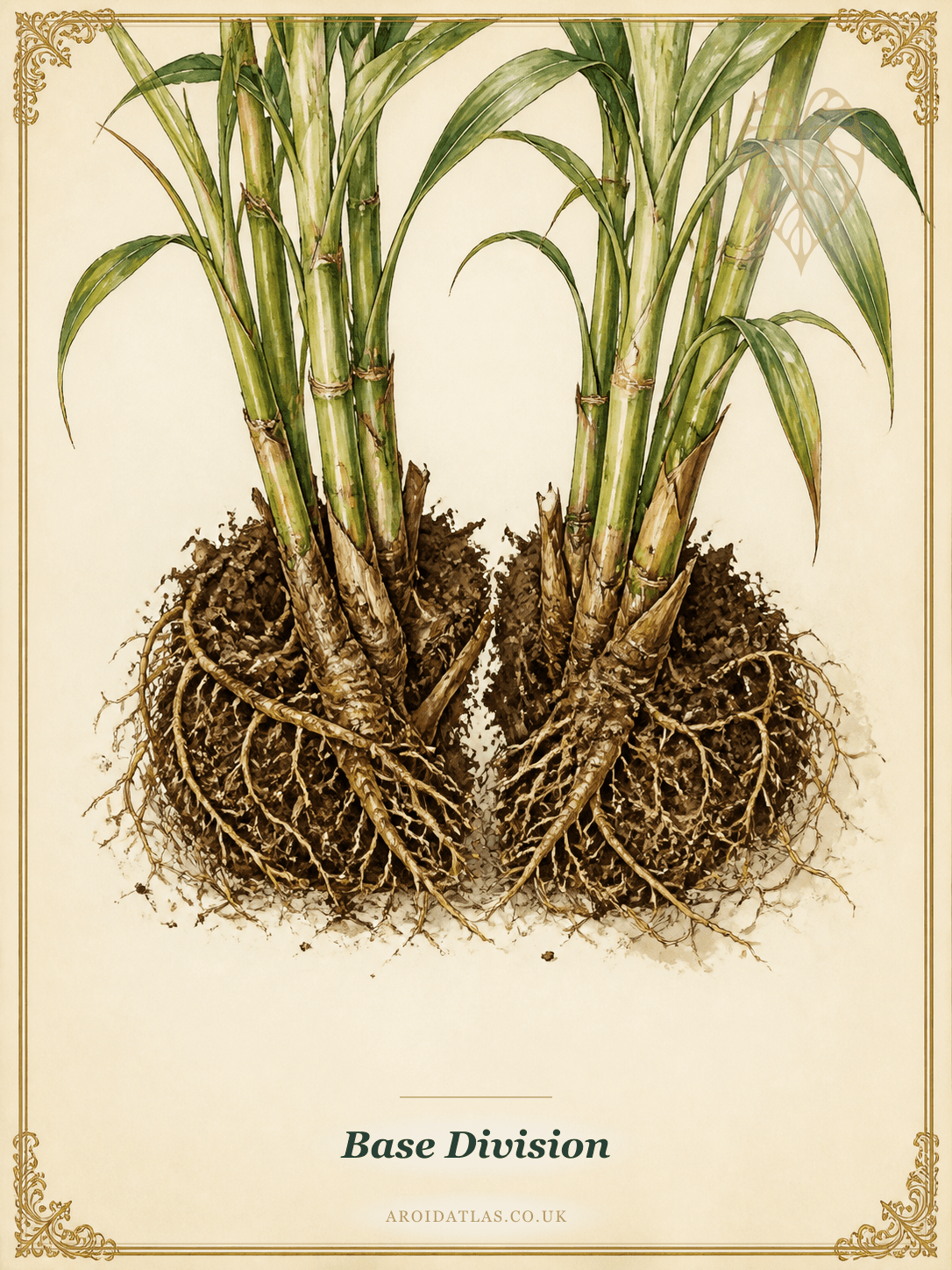
For plants that have produced multiple stems or basal offsets, ease the root ball out of its pot and gently separate a rooted stem away from the main clump by hand or with a clean cut through any connecting tissue, keeping as much of the offset's own root system intact as possible.
Aftercare
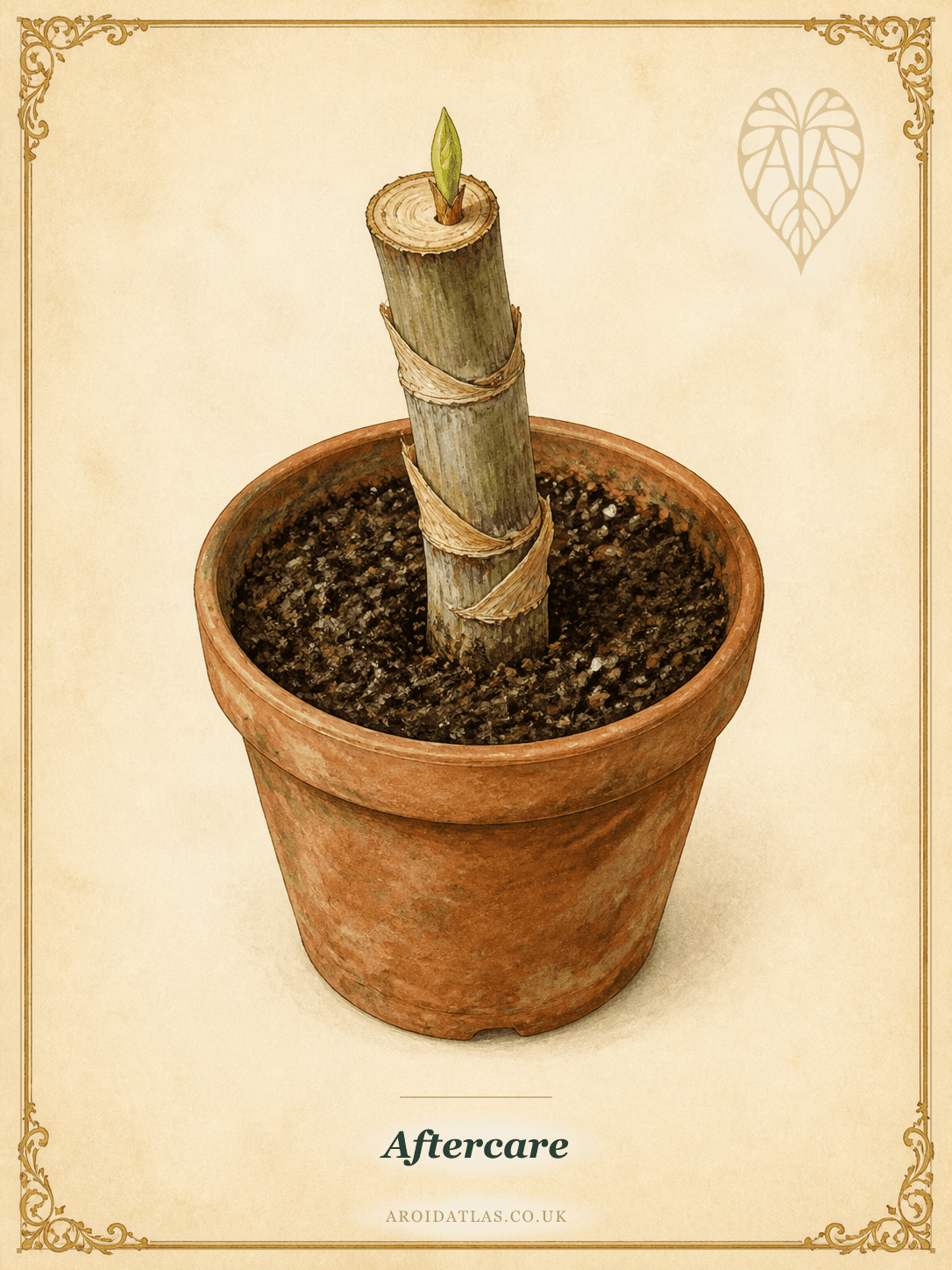
Whichever method you used, keep new cuttings and divisions out of direct sun and in consistently moist (not waterlogged) substrate until clear new growth appears. A new leaf point or shoot is the clearest sign a piece has successfully established.
The oxalate safety note
Dieffenbachia takes its common name 'dumb cane' from the effect of chewing its sap, which is rich in calcium oxalate raphides, needle-like crystals that cause immediate, painful irritation to the mouth and throat. Aglaonema sap carries the same compound at lower concentration. Wear gloves when taking cuttings from either genus, and keep cut material away from pets and children.
A bare cane can sprout more than once
A single sectioned cane piece can produce multiple new shoots if it has more than one viable node; don't assume you'll only get one plant per section.
Air layering skips the risk of a blind cutting
Wrapping a node on an intact, still-attached cane in damp sphagnum and plastic wrap until roots visibly form through the moss, then cutting below the new root mass, avoids committing to a cutting before you know it will root.
Red and pink Aglaonema cultivars root the same as green ones
Strongly pigmented cultivars like Red Peacock and Siam Aurora don't need a different propagation approach: the pigmentation is a light-dependent trait, not a structural difference in how the cane roots.
A leftover bare stem often resprouts on its own
If you take a top cutting and leave the bare lower cane in its original pot rather than discarding it, it will frequently push new growth from a node on its own, without needing to be cut into sections at all.
Related Species
This guide applies directly to the following genera in our archive: