Is This a Fair Price? Reading a Rare Aroid Listing
There is no single correct price for a rare aroid. Node count, root state, variegation percentage, and where the sale happens all move the number. Here is what to check before you commit.
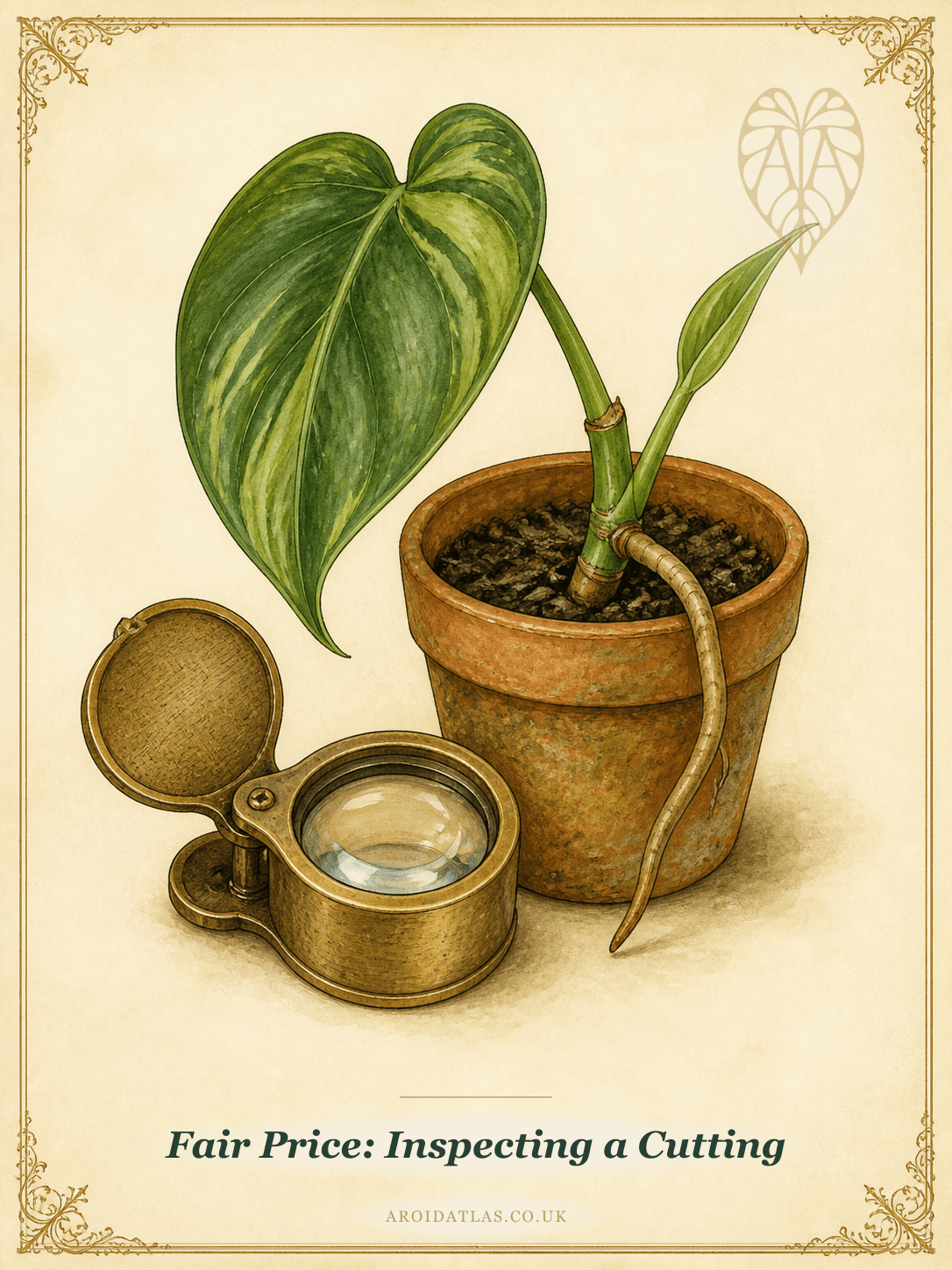
A single rooted cutting under close inspection, the level of detail worth checking before treating an asking price as fair.
Why 'fair price' is a range, not a number
Two listings for the same cultivar, posted the same week, can differ by a factor of three and both be reasonable. A single-node cutting with no roots is not the same product as an established plant with three mature leaves, even though a search engine or a casual scroll through a marketplace treats them as the same search term. The AA Price shown on each plant's page is a median drawn from completed UK eBay sales, which smooths out these differences across many listings; it is a useful anchor, not a price any individual listing has to match exactly.
The gap between a fair price and an inflated one usually comes down to whether the seller is charging for the plant in front of you, or for the story attached to it. A plant described as 'extremely rare, grab it before it's gone' with a stock photo instead of the actual specimen is a pricing-by-narrative listing. A plant photographed from three angles with roots visible and a size stated in centimetres is pricing the object.
What actually moves the number
Node count and rooting state matter more than any other factor for cuttings: an unrooted single-node cutting, a rooted single-node cutting, and a rooted two-node cutting are three different products even of the identical cultivar, and the price should step up accordingly at each stage.
Variegation percentage swings price hard within a single cultivar, particularly on chimeric (unstable) forms. A leaf that is 10% white is not the same purchase as one that is 60% white: heavier variegation carries more risk of the plant losing vigour or reverting. Ask for the specific leaf ratio if it isn't stated.
Seller reputation, location, and sale format also move price independently of the plant itself. An auction format tends to produce a wider price spread than a fixed Buy-It-Now, since auctions can end low on a quiet listing or spike when two buyers compete. A seller with years of completed plant sales and clear return terms can reasonably charge a small premium over an anonymous or brand-new account, simply because the risk of a dead-on-arrival dispute is lower.
Reading the listing itself
Photos of the actual plant, not a stock or reference image, are the baseline requirement. If a listing shows only a top-down leaf shot, ask the seller for a photo of the roots and the underside of the leaves before buying; healthy roots should be firm and pale, not black or slimy, and undersides should be free of the fine speckling or webbing that signals pests.
Compare the asking price against the AA Price for that exact cultivar rather than the base species. A variegated form or named cultivar within a genus can be priced many multiples above the plain species, so checking the specific variant page rather than a genus-level average avoids a false read on whether a price is high or low.
Frequently Asked Questions
Is the AA Price the price I should expect to pay?
It's the median of completed UK eBay sales for that plant, so it's a realistic midpoint rather than a floor or a ceiling. A well-rooted, larger-than-average specimen reasonably sells above it; a bare single-node cutting reasonably sells below it.
Why does the same plant sell for different amounts within the same week?
Auction-format listings are the main driver. A quiet auction with one bidder can close near the starting price, while the next listing for the same cultivar can close much higher if two collectors want it at the same time. Fixed-price listings are more stable but still vary with node count and root state.
Should I avoid a listing with no root photo?
Not automatically, but ask for one before paying. A seller unwilling to show roots on request, on a plant priced as an established specimen rather than a bare cutting, is a reasonable reason to look elsewhere.
Related Species
This guide applies directly to the following genera in our archive: