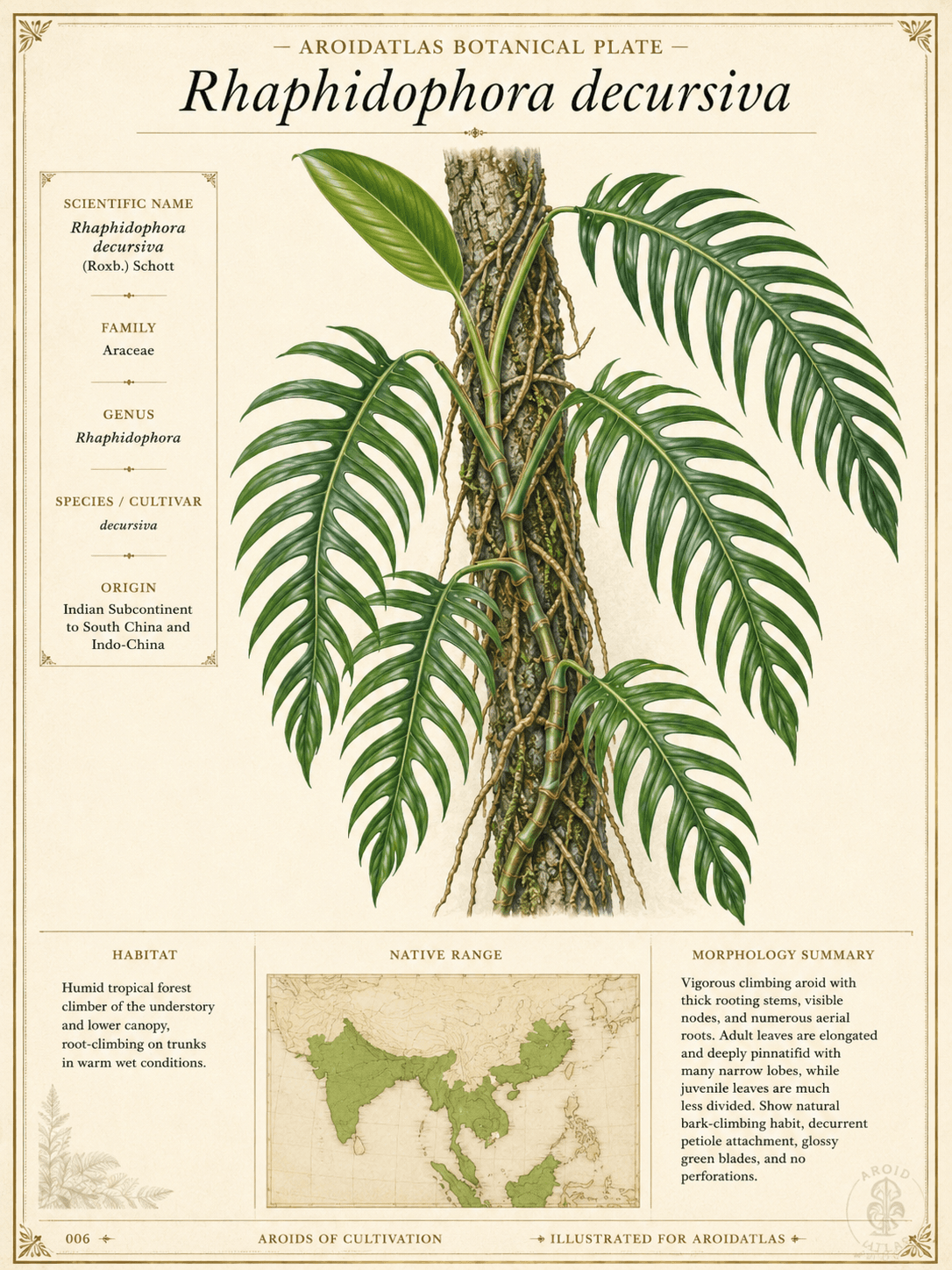
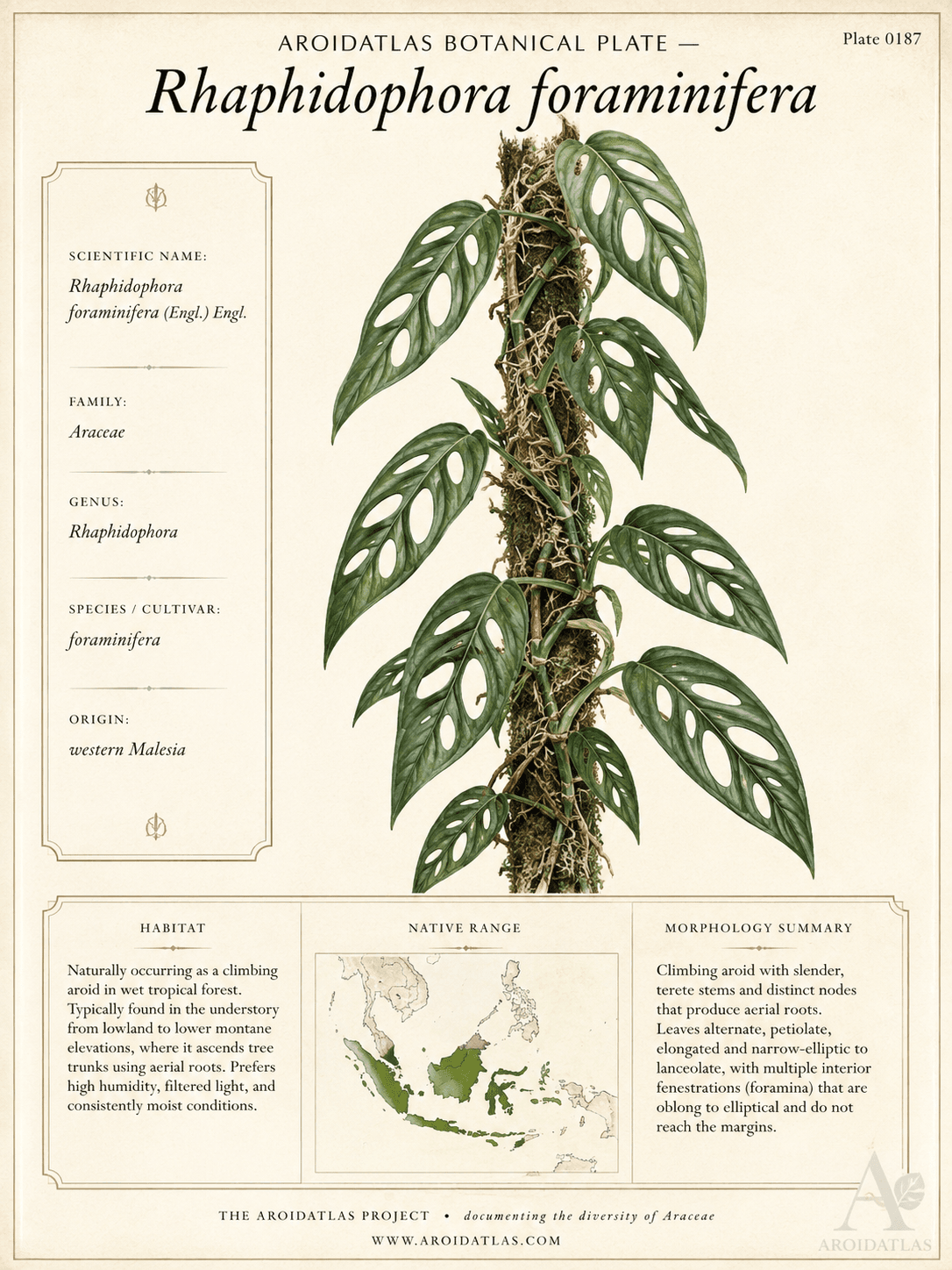
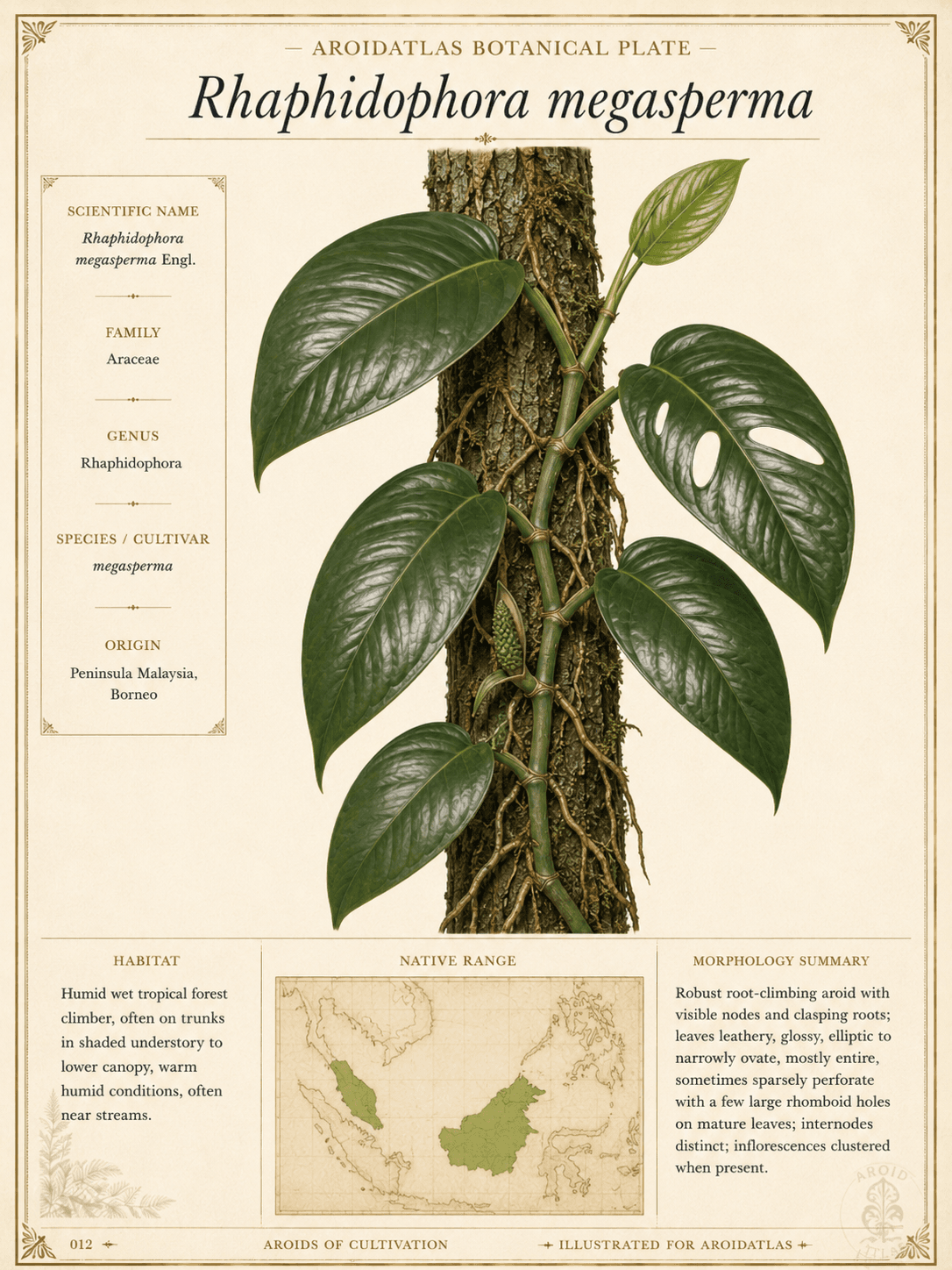
Scroll to explore forms of Rhaphidophora megasperma
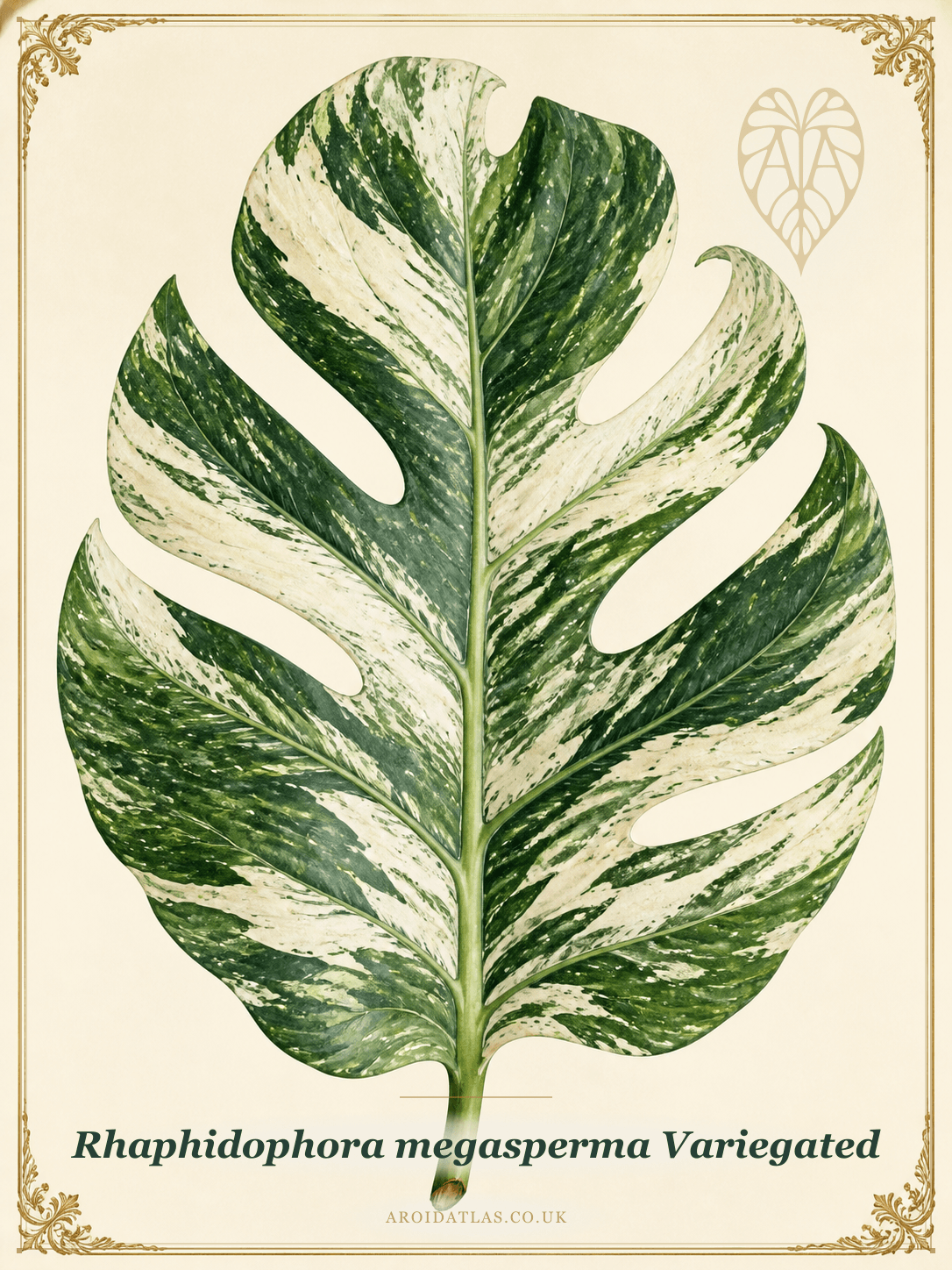
Leaf Detail Portrait
Rhaphidophora megasperma Variegated
Variegated Fishtail Rhaphidophora
Aroid Atlas Price Guide
Select Plant Size
Pricing Data Key
Rhaphidophora megasperma Variegated Morphology
About Rhaphidophora megasperma Variegated
A single recorded colour break of an already scarce Bornean species: very few sold listings exist, so pricing should be treated as provisional pending more sales data. Rhaphidophora megasperma Variegated shares the same underlying form and growth habit as Rhaphidophora megasperma (deeply lobed, pinnatifid, fishtail-like leaves on climbing vining stem growth), with cream-white marbled variegation across the deeply lobed, fishtail-shaped mature leaf.
Native Range
Borneo
Market Analysis
Rhaphidophora megasperma Variegated Price Guide & Auction Value
Historical eBay auction metrics and live retailer listings updated weekly.
No eBay auction history available yet. Data is collected automatically as sales appear on eBay UK.
Before You Buy
Shared checklist for Rhaphidophora megasperma and its cultivated forms
- Ensure there is at least one healthy node present; a cutting without a node cannot produce new growth
- For variegated forms, check that the variegation pattern appears on the newest growth and shows no signs of reversion to green
- Inspect the underside of leaves for spider mites (fine webbing or stippling) which are common on pothos-family plants
- Confirm the cutting has visible roots or a healthy node before purchasing, since unrooted cuttings require propagation experience to succeed
Propagation Guide
How to Propagate Rhaphidophora megasperma Variegated
Shared across every form of Rhaphidophora megasperma — see this form's own Morphology for variegation-specific propagation notes.
4-7 months
Care Guide
Rhaphidophora megasperma Variegated Care Guide & Growing Conditions
General care shared across all forms of Rhaphidophora megasperma — cultivated forms may need brighter light or higher humidity than the plain species; check this form's Quick Facts above.
Well-draining mix: 40% perlite, 40% potting compost, 20% orchid bark.
Water when the top 3–4 cm is dry. These are generally forgiving and will tolerate slight drought better than overwatering.
50–70% preferred. Most varieties in this group are more adaptable to typical indoor conditions than true aroids.
Balanced liquid fertiliser at half strength every 2 weeks in spring and summer. Monthly in winter.
Every 12–18 months when root-bound. These vining plants grow quickly and may need annual repotting in peak years.
Common Problems
Yellowing leaves
Overwatering or too little light
Allow to dry more between waterings; move to a brighter position
Loss of variegation (for variegated forms)
Insufficient light causing reversion to green
Move to a brighter position; variegated leaves need more light to maintain their pattern
Root rot
Overwatering or compacted substrate
Repot into fresh well-draining substrate; reduce watering frequency