Full Specimen Plate
Anthurium polydactylum
Many-Fingered Anthurium
Aroid Atlas Price Guide
Select Plant Size
Pricing Data Key
Anthurium polydactylum Morphology
About Anthurium polydactylum
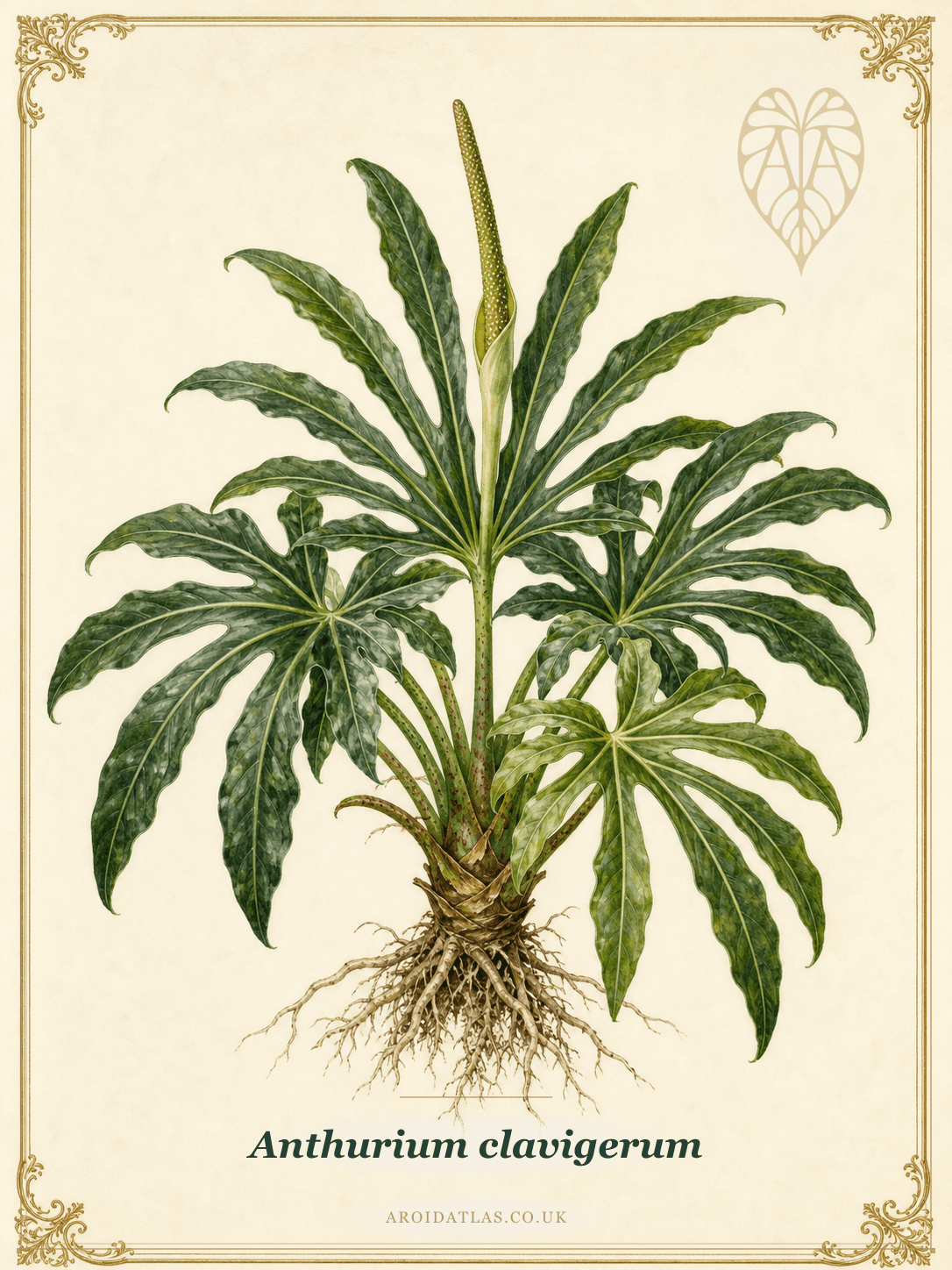
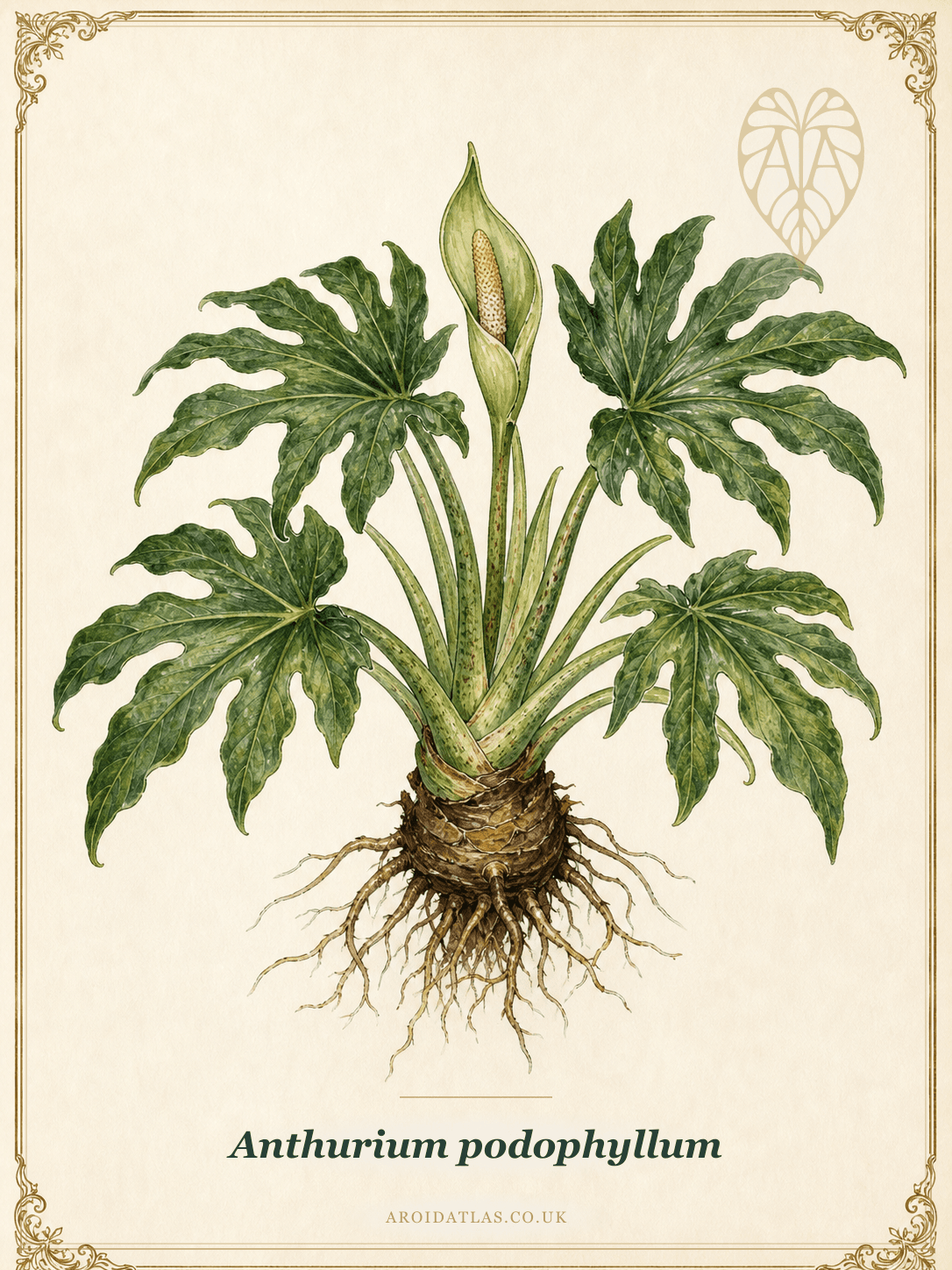
Anthurium polydactylum takes its name from its finely divided, many-fingered mature leaves: an even more intricately dissected relative of Anthurium clavigerum and podophyllum, with slender lobes radiating from a central point. It is a slower, less commonly seen species in cultivation, valued by collectors specifically seeking out the most extreme examples of the palmate-leaved Anthurium group.
Native Range
Colombia
Market Analysis
Anthurium polydactylum Price Guide & Auction Value
Historical eBay auction metrics and live retailer listings updated weekly.
No eBay auction history available yet. Data is collected automatically as sales appear on eBay UK.
Before You Buy
Species-specific things to check when evaluating a listing
- Understand this species is slower to mature into its divided leaf form than clavigerum or podophyllum
- Check root health: firm, white to tan roots
- Confirm seller identification against verified mature reference photos, since juvenile plants are easy to mislabel
Propagation Guide
How to Propagate Anthurium polydactylum
8-14 months
Cultivar character is preserved through vegetative cuttings
Slow to establish; divide only well-rooted mature clumps with multiple growth points.
Care Guide
Anthurium polydactylum Care Guide & Growing Conditions
Chunky, highly aerated aroid mix: 40% orchid bark, 30% perlite, 20% potting compost, 10% charcoal.
Water when the top few centimetres of substrate are dry.
65-85% preferred; this species is sensitive to dry indoor air.
Balanced liquid fertiliser at quarter strength every 4 weeks in spring and summer.
Every 18-24 months, or when roots fill the pot.
Common Problems
Leaves remain simple and undivided for a long time
Plant is still juvenile
The finely divided mature leaf form takes considerably longer to develop than in other palmate Anthurium species, so patience is required
Slow or stalled growth
Insufficient humidity or light
Increase both bright indirect light and ambient humidity
The Most Divided Leaf in the Genus
Polydactylum pushes the palmate-leaf Anthurium theme further than clavigerum or podophyllum: more, narrower lobes, and a slower path to get there. A specialist's pick within an already specialist corner of the genus.