Scroll to explore forms of Alocasia peltata
Full Specimen Plate
Alocasia peltata
Peltate Alocasia
Aroid Atlas Price Guide
Select Plant Size
Pricing Data Key
Alocasia peltata Morphology
About Alocasia peltata
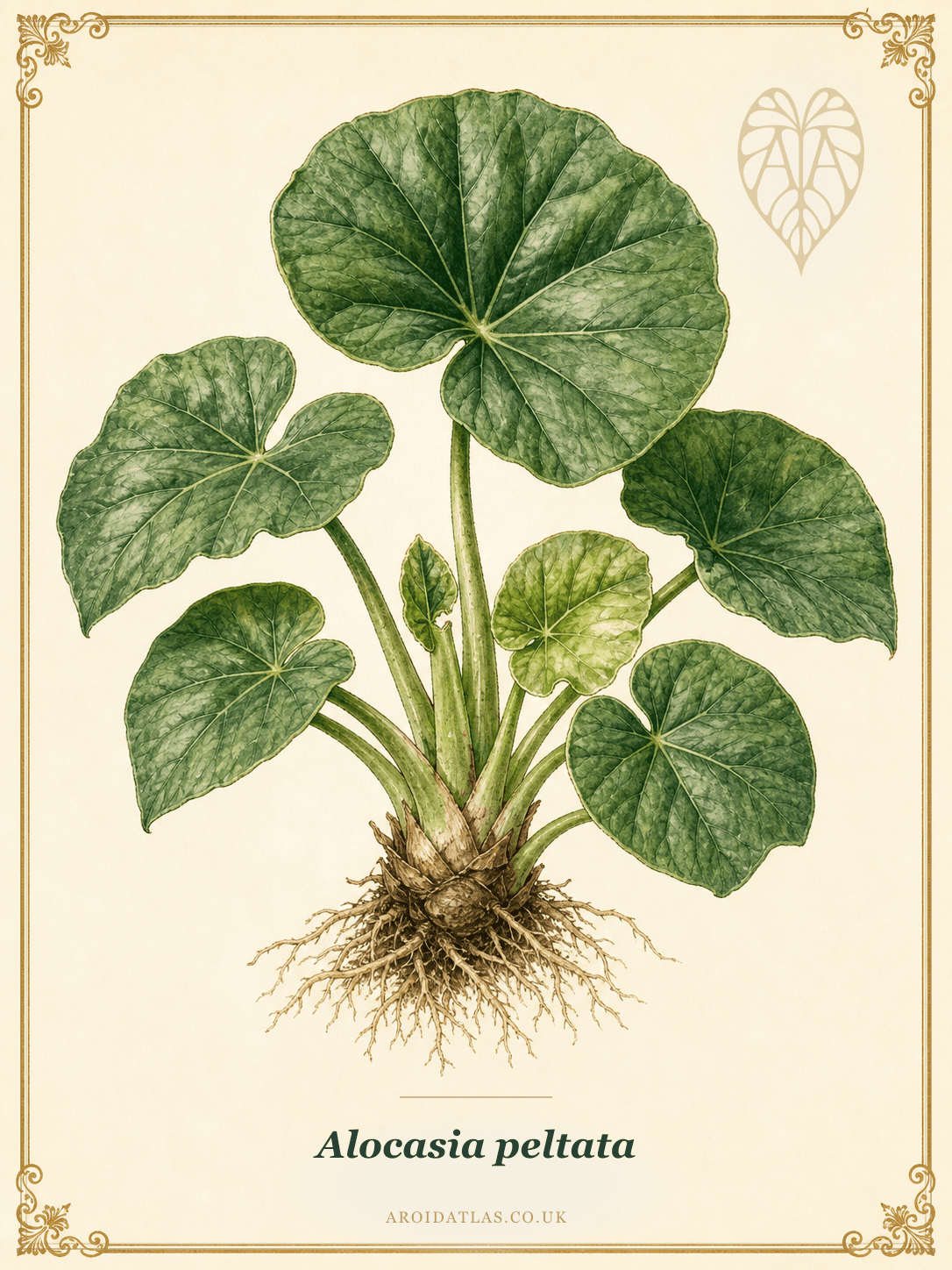
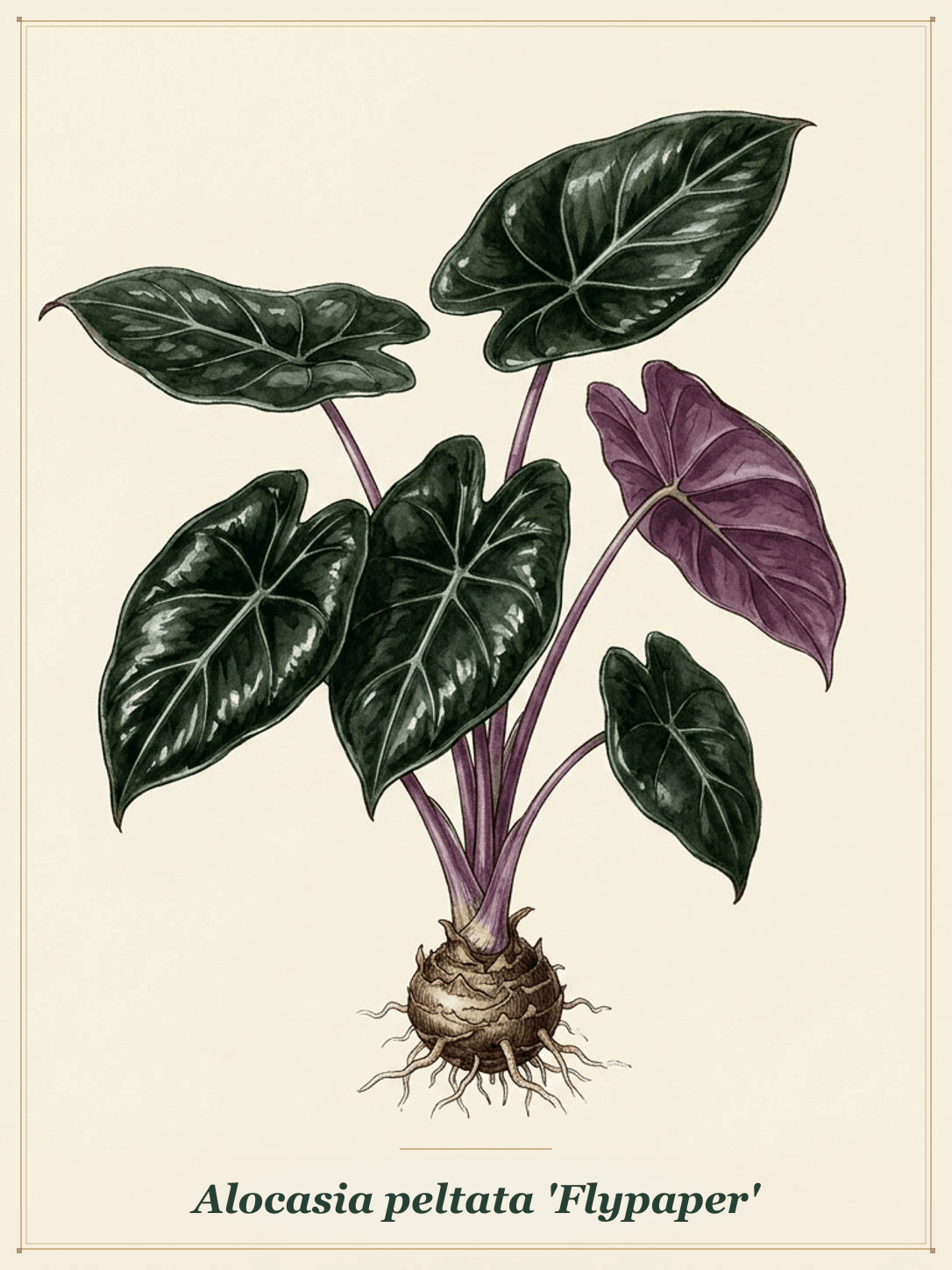
Alocasia peltata is a Bornean species with a semi-erect, creeping habit and dark to grey-green, leathery, peltate leaves: the petiole attaches inside the leaf margin rather than at its edge, a distinctive structural trait shared with a handful of other Alocasia species. It is documented in botanical literature (Kew's Plants of the World Online, GBIF) but remains uncommon in cultivation. The trade name 'Flypaper' is used by collectors for a specific selected form of this species.
Native Range
Sarawak, Malaysian Borneo
Market Analysis
Alocasia peltata Price Guide & Auction Value
Historical eBay auction metrics and live retailer listings updated weekly.
No eBay auction history available yet. Data is collected automatically as sales appear on eBay UK.
Before You Buy
Species-specific things to check when evaluating a listing
- A genuinely uncommon species outside specialist collections; verify seller reputation given the price point
- Check the rhizome is firm, not soft or discoloured
- For 'Flypaper', ask the seller what distinguishes this form from the plain species, as the name isn't formally documented
Propagation Guide
How to Propagate Alocasia peltata
3-5 months
Cultivar character is preserved through vegetative cuttings
Propagates from rhizome division, given its creeping growth habit. Limited cultivation data given its rarity outside specialist collections.
Care Guide
Alocasia peltata Care Guide & Growing Conditions
Chunky, fast-draining aroid mix: 40% orchid bark, 30% perlite, 20% potting compost, 10% charcoal.
Allow the top 2-3cm of substrate to dry between waterings.
65-85%.
Balanced liquid fertiliser at quarter strength every 3-4 weeks during active growth.
Every 12-18 months, using a wide, shallow pot suited to the creeping rhizome.
Common Problems
Root/rhizome rot
Overwatering combined with dense substrate
Repot into fresh chunky mix and reduce watering
Spider mites
Low humidity
Increase humidity and treat with insecticidal soap
A Structural Trait, Not Just a Look
Peltata's defining feature is structural rather than cosmetic: the petiole attaches inside the leaf margin rather than at its edge, a trait called peltate that only a handful of Alocasia species share. It's documented in botanical databases like Kew's Plants of the World Online and GBIF, though it remains genuinely uncommon in cultivation compared to the jewel Alocasia species that dominate the collector market. The 'Flypaper' trade name refers to a specific selected form of this species rather than a separate plant, and its exact distinguishing traits aren't formally documented, so it's worth asking a seller what sets their 'Flypaper' apart from the plain species.